Who is this choice relevant to?

Housemates who regularly wash guest bedding

If you often wash sheets and duvet covers as well as your own laundry, weigh a typical sorted load to see whether you would really make use of a larger drum. The Dutch Consumers’ Association explains that the stated capacity applies to cotton laundry.

Residents with limited laundry space

If you’re putting a machine in a cramped shared space, consider its dimensions, the access route and the clearance needed to open the door. The Dutch Consumers’ Association recommends placing the machine on a stable surface to help reduce noise and vibration.

Housemates who share the costs

If you’re sharing the cost, consider not only the purchase price but also the energy and water consumption shown on the label, along with any delivery or installation charges. The European Commission explains the EU energy labels for washing machines, while the Dutch Government lists additional costs such as delivery or installation.

What should you look for?

What to consider What should you check? Who is this most important for?
Suitable drum capacity Weigh a typical sorted load and check the maximum load for the programme, as well as the space around the drum and door opening. The stated capacity applies to cotton laundry, according to the Dutch Consumers’ Association. If I regularly wash guest sheets with our everyday laundry, I want a capacity that suits what we actually wash. Around 33% of consumers mainly want to match the machine to their load size.
Installation and noise Measure the space, access route and clearance for the door. Compare spin-cycle noise figures taken on the same basis; the Dutch Consumers’ Association notes that its test measurements may differ from those on the energy label. It also recommends a stable surface to help reduce disturbance. In a shared home, I want to know whether the machine will fit and whether its position will work for my housemates. Around 27% of consumers prioritise installation and noise.
Shared running costs Compare kWh per 100 cycles and water per cycle using the eco 40-60 label figures. Also check which delivery and installation charges apply; the Dutch Government lists these as additional costs. If we’re sharing the costs, I want to be able to factor in both the label figures and any additional charges beforehand. Around 20% of consumers focus mainly on total shared costs.
Programmes and fabrics Read the care label and check the suitable temperature, maximum programme load and programme duration. A duvet is not always suitable for machine washing, according to the Dutch Consumers’ Association. For guest bedding that can be machine-washed, I want to choose a programme that suits the fabric’s care label. Around 20% of consumers prioritise fabric care and suitable programmes.

Avoiding common buying mistakes

  • Choosing a larger drum just for the occasional guest

    A larger capacity won’t automatically benefit you when washing everyday laundry. The Dutch Consumers’ Association warns that load detection does not always adjust consumption accurately for smaller loads.

    Weigh your usual sorted load and see whether you would regularly use the extra capacity.

    A higher purchase price may offer little value if the extra capacity is usually left unused.

  • Assuming Eco 40-60 is suitable for every type of laundry

    The description of an eco programme doesn’t mean every fabric can be washed at 60 °C, or that this temperature is always needed. The fabric type and care label are what matter.

    Check the care label and choose a suitable programme. If you have a specific hygiene requirement, consider it separately and follow the fabric care instructions.

  • Measuring only the width of the recess

    Depth, the access route and clearance for an open door all matter too. The Dutch Consumers’ Association recommends a stable surface; delivery or installation may also involve additional charges.

    Measure the space and access route in advance, and ask the retailer what delivery and installation include.

    A tricky installation may require extra practical adjustments or installation work.

Relevant brands to consider

Bosch

The Bosch Serie 6 WGG244FMNL is a Dutch-market model with a 9 kg capacity, making it a useful reference if you expect to wash larger loads regularly.

  • Bosch lists a 9 kg capacity and a maximum spin speed of 1400 rpm for the WGG244FMNL.
  • Check the dimensions, programme load and space for your bedding; the stated capacity doesn’t mean every duvet will fit.

AEG

The Dutch-market AEG models LF628600 and LR73844 are examples of front-loading machines with an 8 kg capacity.

  • AEG lists a maximum spin speed of 1600 rpm and a depth of 577 mm for the LF628600. For the LR73844, AEG lists 28 kWh per 100 eco cycles and a maximum depth of 602 mm.
  • These figures apply to the specific models listed. Compare them on the same basis against your available space and the programmes you need.

Miele

The Dutch-market Miele WEA135 WCS 8kg Active is an example of a front-loading machine with an 8 kg capacity.

  • Miele lists a maximum spin speed of 1400 rpm, 43 kWh per 100 eco cycles, 72 dB during spinning and an appliance depth of 636 mm for this model.
  • The manufacturer’s claim about long-lasting laundry care is not an independent test result. Check that the dimensions, label figures and programmes suit the way you’ll use it.

Washing machines for shared use

This selection includes 8 kg and 9 kg front-loading machines for households that wash guest bedding alongside everyday laundry. Compare the stated capacity with your own loads, and always check the care label and the space you have available.

Samsung WW90DG6U25LE washing machine, 9 kg

Samsung WW90DG6U25LE, 9 kg

An option to compare if you regularly wash larger loads; check that the drum capacity suits the way you’ll use it.

Front-loader; 9 kg; 1400 rpm; energy class A.

The product name also mentions SuperSpeed and Wi-Fi (SmartThings).

View at Joybuy
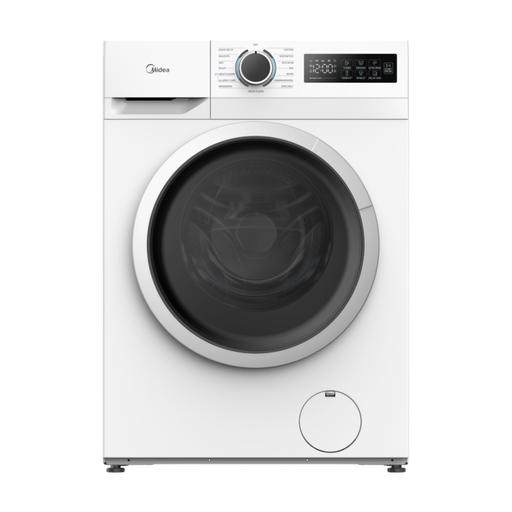
Midea MF110W80BA10/W-NL washing machine, 8 kg

Midea MF110W80BA10/W-NL, 8 kg

An 8 kg front-loader to consider if your everyday laundry and guest bedding fit within that capacity.

8 kg; 1400 rpm; energy class A-10%; 15 wash programmes.

View at Joybuy
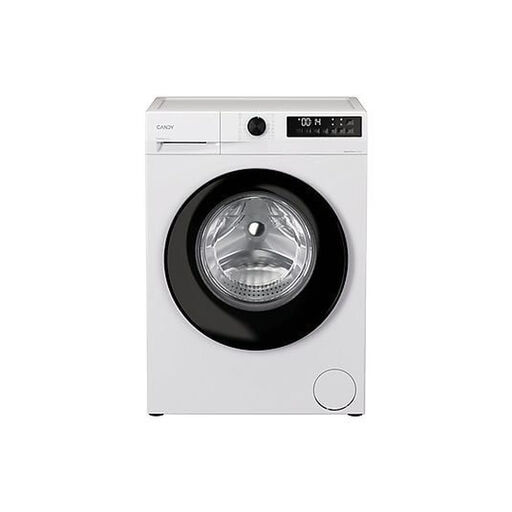
Candy GD 49B8-S washing machine, 9 kg

Candy GD 49B8-S, 9 kg

A 9 kg front-loader to weigh up against your usual load size and the space you have available.

9 kg; 1351 RPM; energy class A; 16 wash programmes.

View at Joybuy
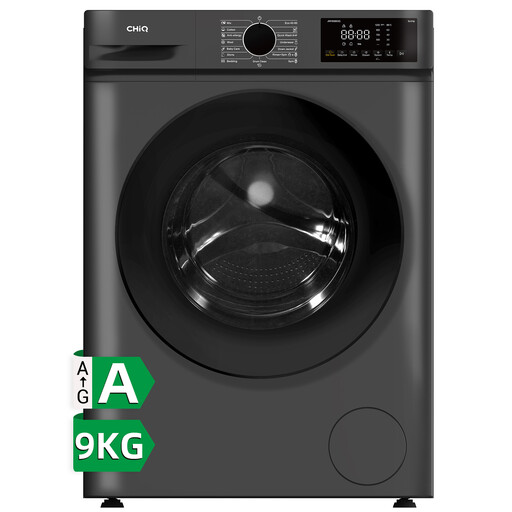
CHiQ JW95883G washing machine, 9 kg

CHiQ JW95883G, 9 kg

A 9 kg front-loader to compare if larger loads are a regular occurrence; measure the available space first.

9 kg; 530 mm large drum; 1400 RPM; 16 programmes; steam.

View at Joybuy
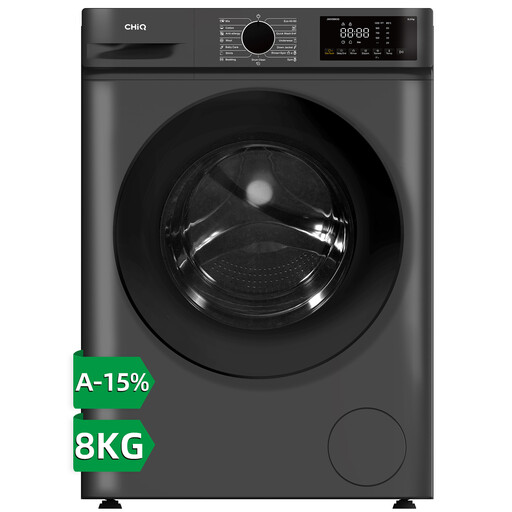
CHiQ JW85883G washing machine, 8 kg

CHiQ JW85883G, 8 kg

An 8 kg front-loader to consider if your loads fit within that capacity and its stated depth suits your laundry space.

8 kg; 530 mm large drum; 1400 RPM; 16 programmes; steam.

View at Joybuy

Frequently asked questions

Should we always wash guest bedding at 60 °C?

No, check the care label first. Milieu Centraal recommends 60 °C in some situations, including when someone in the household has a contagious illness or is allergic to dust mites; even then, check that the fabric can withstand that temperature. A duvet is not always suitable for machine washing either, according to the Dutch Consumers’ Association.

How do we work out what capacity we need?

Weigh a typical sorted load, then check the maximum load for the programme you want to use. According to the Dutch Consumers’ Association, the nominal capacity applies to cotton laundry; the permitted load may be lower for delicates or synthetic fabrics. For a duvet, also check that the care label allows machine washing and that it will fit comfortably in the drum.

What should we check before installing a machine in a shared home?

Measure the laundry space, access route and clearance for the open door, and check the connections and installation instructions. A stable surface helps reduce noise disturbance, according to the Dutch Consumers’ Association. Ask the retailer in advance what delivery and installation include and whether there are any additional charges.

Are washing machines in the Netherlands always covered by exactly two years’ legal guarantee?

No. According to the Dutch Government, the Netherlands does not have a fixed statutory guarantee period; what you can expect from a product depends, among other things, on the product and the purchase information. If something goes wrong, contact the retailer. A manufacturer’s guarantee or an extended guarantee you’ve bought is separate from your statutory rights.

Which figures on the EU energy label are useful to compare?

Compare the energy class, consumption in kWh per 100 cycles, water consumption per cycle, programme duration and spin-cycle noise, using the same label basis. The European Commission states that, since 1 March 2021, the EU label for washing machines has used a scale from A to G; the consumption figures are based on the eco 40-60 programme.
