Choose a washing machine with a drum capacity suited to your usual loads and programmes that match the care labels on your clothes. Milieu Centraal advises against buying a larger machine than you need. In a shared utility room, also compare spin noise, positioning and water protection, as recommended by Consumentenbond. Keep clothes that may have pesticide residues separate and follow the instructions on the product label.
Who should consider this?
Gardener with muddy clothes
You want to wash garden clothes separately and follow their care labels. If there may have been exposure to pesticides, University of Minnesota Extension advises keeping the clothes separate and reading the instructions on the product. The Dutch government stresses that pesticides should be used according to the product label.
User of a shared utility room
You share the space with others, so you’ll want to consider spin noise, a stable position and the potential impact of a leak. Consumentenbond advises placing the washing machine on a firm, level and stable surface.
Washer with varying load sizes
You want to choose a drum size that suits the amount of washing you usually do, rather than focusing only on the maximum capacity. Milieu Centraal advises choosing a washing machine that is no larger than necessary.
Which factors should you prioritise?
| Factor |
What should you look for? |
Who should give this more weight? |
| Washing garden clothes |
Follow the care label; keep clothes that may have pesticide residues separate and follow the product label (University of Minnesota Extension; Dutch government). |
If I want to wash garden clothes separately, I look for a programme that suits the fabric and take any possible product residues into account. Around 31% of consumers prioritise suitable treatment of dirty garden clothes. |
| Noise, positioning and leaks |
Compare the stated spin noise level and water protection; check that the machine can stand firmly and level (Consumentenbond). |
If I share the utility room, I want to minimise noise and know how the appliance will fit in the available space. Around 25% of consumers give shared use of the space the highest priority. |
| Drum size |
Estimate the size of your usual loads rather than choosing based only on the largest load you might ever wash (Milieu Centraal; Consumentenbond). |
For small, separate garden washes, I don’t want a drum that is consistently larger than I need. Around 19% of consumers prioritise a suitable capacity. |
| Energy and water use |
Compare the EU product information and energy label, and weigh them against the drum capacity and your own laundry habits (EUR-Lex; Milieu Centraal). |
If I want to take my consumption into account, I look at both the label and the loads I actually wash. Energy and water use is the top priority for around 13% of consumers. |
| Installation and service |
Check whether delivery, connection and any removal of the old machine are included, and what support is available if something goes wrong (Consumentenbond; ACM ConsuWijzer). |
If the machine is going in a shared space, I want to know in advance whether delivery and installation are straightforward. Around 12% of consumers prioritise the total purchase cost and service. |
Common buying mistakes
-
Choosing the largest drum for mostly small garden washes
A higher maximum capacity is not necessarily useful if you usually wash smaller, separate loads. Milieu Centraal advises choosing a machine to suit your household’s laundry loads.
Before you buy, estimate the size of your usual garden washes and other loads, then choose a capacity to match.
-
Assuming a low stated noise level guarantees a quiet wash
The stated spin noise level doesn’t tell you everything about how noisy the machine will seem in a shared space. Vibrations caused by an unstable position can also be disruptive.
Compare the noise information and make sure the machine can stand firmly and level.
-
Assuming all types of water protection are equally effective
Water protection systems vary in the risks they are designed to reduce. The consequences of a leak also depend on where the machine is installed.
Check which system the exact model has and consider the potential impact of a leak in the shared space.
-
Treating clothes that may have pesticide residues like ordinary muddy washing
Instructions for clothes that have come into contact with pesticides may differ from the guidance for ordinary garden mud. A standard wash is not a universal solution for every situation.
Keep these clothes separate and follow the instructions on the product label; don’t assume a standard wash is enough.
Brands to compare
Bosch
The Dutch Serie 6 WGG244ZONL is a front-loading machine with a maximum capacity of 9 kg. Consider it if that capacity suits your usual load.
- Bosch lists 1400 rpm and delivery and installation options.
- These features don’t prove that the model washes better or is suitable for small garden washes.
AEG
The LF628600 from the 6000 ProSense range is an 8 kg front-loading machine to compare if you’re looking for a model that adjusts to the load.
- According to AEG, ProSense measures the load and adjusts the washing time and water and energy use.
- This is the manufacturer’s description of this particular model, not an independent comparison of how well it washes garden stains.
Siemens
The Dutch WG44G2ZLNL is a 9 kg front-loading machine to consider if water protection and available space are important to you.
- Siemens lists aquaStop and dimensions of 845 × 598 × 588 mm.
- Check that this version will fit; the listed specifications don’t tell you how noisy it will seem in use.
Miele
The Dutch WSA123 WCS 8kg Active is a W1 front-loading machine to compare if you’re considering clothes-care features.
- Miele lists 1400 rpm, CapDosing and AddLoad.
- Consider whether you’ll use these features; the specifications don’t prove there’s a benefit for muddy garden clothes.
Samsung
The Dutch WW90DG6U85LBU3 is a 9 kg model to compare if smart controls or available space are considerations.
- Samsung lists an A energy label and dimensions of 600 × 850 × 550 mm.
- A manufacturer’s claim about energy savings is not an independent measurement of how much you’ll save in your own home.
Joybuy products for this laundry need
This selection includes washing machines for everyday laundry and larger combined loads, as well as foldable mini washing machines for small, separate washes. Always follow the care label for garden clothes and deal with possible pesticide residues according to the instructions on the product.
 No image available
Samsung WW90DG6U25LE, 9 kg
Worth comparing if you regularly wash larger combined loads.
Capacity: 9 kg; spin noise: 72 dB; dimensions: 600 × 550 × 850 mm.
The description lists programmes for cotton, delicates, wool and pre-wash.
View at Joybuy
 No image available
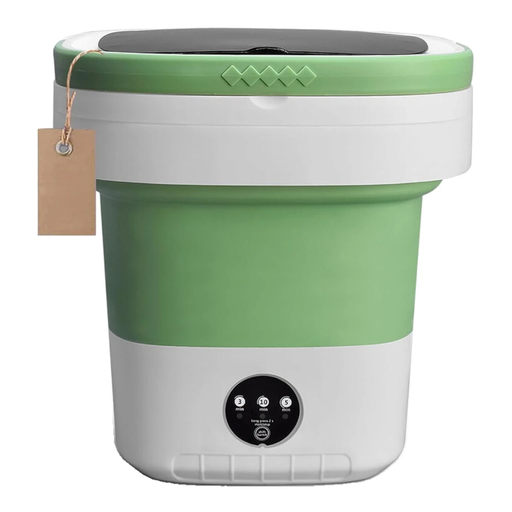
Foldable mini washing machine, 12 litres
An option to compare for small, separate washes and limited storage space.
Capacity: 12 litres; maximum load: 1.5 kg; the title lists 50 dB and a spin-dryer basket.
Check that the capacity suits the clothes you want to wash.
View at Joybuy
 No image available
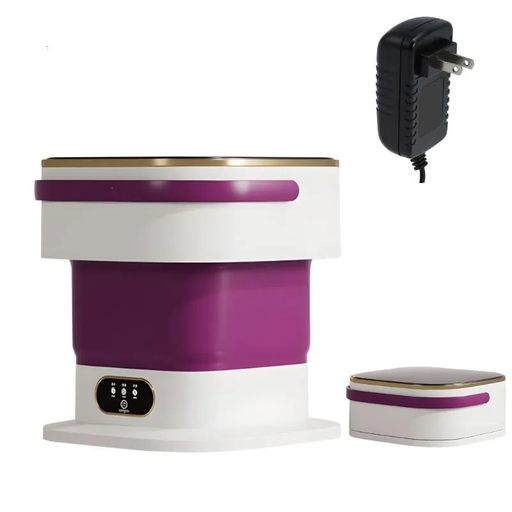
Foldable mini washing machine, 15 litres
Worth comparing if you want to wash small, separate loads and be able to store the machine away.
Capacity: 15 litres; maximum load: 1.9 kg; the title lists 50 dB and a spin-dryer basket.
The stated maximum load is 1.9 kg.
View at Joybuy
 No image available
Candy GD 48B9-S, 8 kg
Worth comparing if you’re looking for a front-loading machine for everyday loads.
Capacity: 8 kg; spin speed: 1351 RPM; energy label A.
The description lists 16 programmes, including cotton, delicates and wool, and a spin noise level of 69 dB(A).
View at Joybuy
 No image available
Beko BM3WFU38412CW, 8 kg
Worth comparing if you have varying load sizes and want programmes for different fabric types.
Capacity: 8 kg; spin speed: 1400 rpm; energy label A.
The description lists load detection and programmes for delicates, wool, jeans and stains. The stated spin noise level is 76 dB(A).
View at Joybuy
Frequently asked questions
Can clothes with pesticide residues go in with an ordinary garden wash?
Don’t treat these clothes as ordinary muddy washing. University of Minnesota Extension advises keeping clothes that may have pesticide residues separate from personal laundry and reading the instructions on the product. The Dutch government requires pesticides to be used according to the instructions on the product label; this is not general permission to wash contaminated clothes in a shared machine.
How can I minimise disruption when installing a machine in a shared utility room?
Place it on a firm, level and stable surface, and compare the spin noise levels. Before buying, check the available space and connections, and agree how the shared space will be used with the others who use it.
Are installation and removal of the old machine included?
It depends on the offer. According to Consumentenbond, installation is sometimes included with the purchase and sometimes costs extra. Check with the retailer exactly what delivery, connection and any removal service include.
What warranty applies if a machine develops a fault in the Netherlands?
In addition to any retailer or manufacturer’s warranty, you have a statutory guarantee. According to ACM ConsuWijzer, the retailer must offer a solution if the product breaks sooner than you could reasonably expect under normal use. There is no single fixed statutory lifespan that applies to every washing machine.
What European product information can I use when choosing?
EU ecodesign and energy labelling rules apply to household washing machines. Use the product information and energy label to compare models; this doesn’t mean that one particular label class is compulsory for every user.


