What should you look for?
Start by checking the care label and the load limit for the programme you actually need. The Consumers’ Association stresses that the energy label figures apply to eco 40-60 and don’t necessarily show the consumption of a synthetics or delicates programme.
| What to consider |
What to look for |
Who it matters most to |
| Football shirt care |
Check whether you can adjust the temperature and spin speed, and whether there’s a programme for synthetics or delicates. |
If I wash printed or synthetic shirts, I want to be able to choose settings that suit the care label. Around 36% of consumers give shirt care top priority. |
| Capacity for varied loads |
Compare your usual sorted laundry with the maximum load for cotton, mixed and synthetics programmes in the manual. |
When I have different types of laundry in a typical week, I want to know how much each programme can take. Around 29% of consumers prioritise suitable capacity for varied loads. |
| Consumption for the programmes you use |
Compare energy and water use on the EU energy label. For programmes you use often, look for consumption information specific to the model. |
If I do laundry regularly, I want to take consumption into account without assuming the label figures apply to every programme. Around 21% of consumers prioritise ongoing energy and water use. |
| Space and controls |
Measure the space available and check the external dimensions. Make sure the programmes and settings suit your laundry routine. |
If space is limited or I need separate settings for shirts and weekly laundry, I want to be sure the machine will fit and be easy to use at home. Around 14% of consumers give installation and ease of use top priority. |
Washing machines at Joybuy
These washing machines are options to compare for washable shirts and everyday weekly laundry. Check the load limit for each model’s programmes and always follow the care label on each shirt.
 No image available
Samsung WW90DG6U25LE, 9 kg
Worth considering if you’re looking for a front-loader with programmes for shirts and synthetic fabrics.
The product information lists a capacity of 9 kg, 1400 rpm and energy class A. Programmes include Blouse/Shirt, Synthetics and Delicate/Silk.
View at Joybuy
 No image available
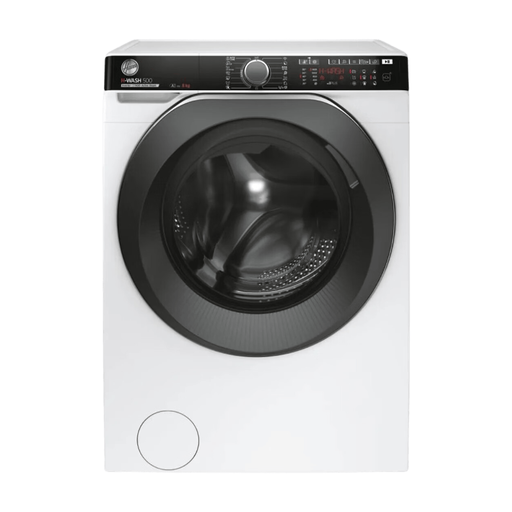
HWP 48AMBC7/1-S, 8 kg
An option to compare if you’re looking for an 8 kg front-loader for different types of laundry.
The product information lists 1400 rpm and energy class A. Auto Care is described as a feature that adjusts settings to the fabric type and load; nine care cycles are also listed.
View at Joybuy
 No image available
Midea MF110W80BA10/W-NL, 8 kg
An option to compare if you want to explore programmes for mixed loads and delicates alongside the machine’s capacity.
The product information lists 1400 rpm and 16 wash programmes, including Mixed Load, Easy Care, Wool and Delicate.
View at Joybuy
 No image available
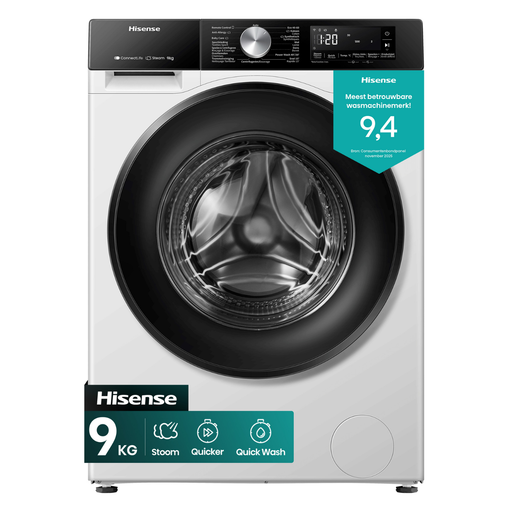
Hisense WF3S9043BW3, 9 kg
An option to compare if your usual weekly loads make good use of the larger capacity.
The product information lists 1400 rpm and 15 programmes, including Quick 15'. It also mentions a function that lets you pause a wash and add laundry.
View at Joybuy
 No image available
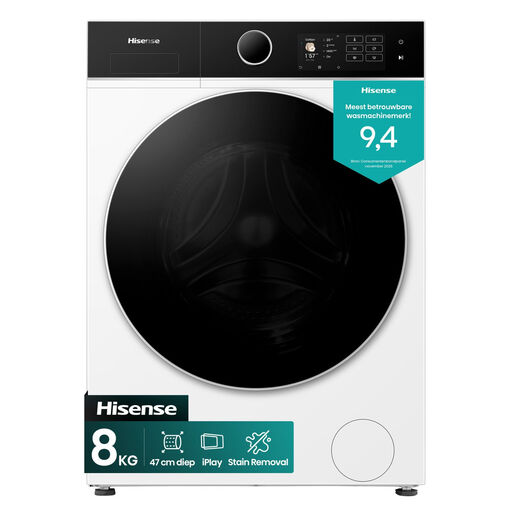
Hisense WF5I8043BWF, 8 kg
An option to compare if you’re looking for an 8 kg front-loader and need to consider the available depth.
The product information lists a depth of 47 cm, 1400 rpm and 18 programmes. A steam function is also mentioned; check that the programme you choose suits the shirt’s care label.
View at Joybuy
Frequently asked questions
Can I wash my football shirt on eco 40-60 with my regular laundry?
Don’t decide based on the programme name alone. Eco 40-60 is designed for normally soiled cotton that can be washed at 40 °C or 60 °C according to its care label. For your shirt, follow the fabric type, maximum temperature and gentle-care instructions on its own label.
How should I wash a printed shirt?
Start by following the shirt’s care label. Nike Netherlands’ jersey care advice includes washing shirts inside out and using a low spin speed, but that advice won’t necessarily apply to every football shirt.
What does the energy label tell me about my usual weekly laundry?
The label shows details including energy use per 100 cycles and water use per cycle, but the consumption figures are based on eco 40-60. The Consumers’ Association advises against assuming those figures apply to a synthetics or delicates wash.
How can I tell if a washing machine is big enough for my weekly laundry?
Compare the stated capacity with your usual sorted load and with the load limit for the programmes you use most often. The Consumers’ Association points out that the maximum load can vary from one programme to another.
What can I do if my washing machine smells musty after frequent cold washes?
The Consumers’ Association advises running the machine regularly at 60 °C, leaving the door and detergent drawer open to dry after use, and checking the filter. Also follow the care instructions for your specific model.


