
For a narrow alcove
If width is your main constraint, a top-loader could be a good space-saving option. Just remember to leave enough clearance above it for the lid to open.


Choose a slim top-loading machine if width is limited or there isn’t enough room for a front door, and the lid can open freely above it. Choose a shallower front-loader if you have enough width and space for the door to open. Match the drum capacity to the total amount of laundry you usually wash, not just your flannels: the Dutch Consumers’ Association notes that automatic load detection doesn’t adjust consumption in exact proportion to the load. Choose the temperature according to how soiled the laundry is and the care label; flannels don’t automatically need to be washed at 60 °C.
If width is your main constraint, a top-loader could be a good space-saving option. Just remember to leave enough clearance above it for the lid to open.
A shallower front-loader could fit if you have enough width and space in front of the machine. Allow room for the hoses and an open door too; the Dutch Consumers’ Association highlights that these need to be taken into account when positioning a machine.
If you often wash just a few flannels at a time, it’s best to match the drum capacity to the total amount of laundry you usually wash. The Dutch Consumers’ Association points out that the maximum capacity applies to cotton laundry.
| What to consider | What to look for when buying | Who should pay particular attention? |
|---|---|---|
| Will it fit? | Measure the alcove, height and depth; check there’s room for the hoses and to open the lid or door. | When my laundry nook is cramped, I need to know not only whether the machine will fit, but whether I can open it properly. Around 36% of consumers say that fitting a machine into their space is their main concern when buying. |
| Drum capacity | Weigh a typical load of laundry and compare it with the machine’s capacity and the load allowance for your chosen programme. | I want a drum that suits my usual laundry, not just my flannels. Around 29% of consumers say getting the right load capacity is their top priority. |
| Programme and temperature | Check the care labels and make sure the model has the cotton and temperature settings you need. | If I want to choose between a suitable programme for everyday laundry and a warmer setting when needed, that flexibility comes first. Around 21% of consumers say programmes and hygiene are their main considerations. |
| Consumption and installation | Compare consumption figures on the same label basis, and check what delivery, connection and disconnection include. | I want to know in advance about running costs and what needs to be arranged for installation. Around 14% of consumers pay most attention to ongoing costs and aftercare. |
A machine may look as though it will fit in the alcove on paper, but still be difficult to position or open properly. Hoses, the door and, for a top-loader, the lid all need space too.
Measure the alcove and the access route, then check the exact model’s external dimensions and the clearance needed to open it.
The maximum capacity applies to cotton laundry. According to the Dutch Consumers’ Association, automatic load detection doesn’t adjust consumption precisely to the amount of laundry.
Compare the drum capacity with the total amount of laundry you usually wash and the load allowed for your chosen programme.
The European Commission describes Eco 40-60 as an eco-cycle for normally soiled cotton laundry that, according to its care label, can be washed at 40 °C or 60 °C. So the programme name doesn’t mean every wash takes place at 60 °C.
Choose the programme and temperature according to how soiled the laundry is and its care label; check which warmer settings are available if you have a particular need.
When you buy a similar new appliance, the Dutch take-back scheme for private customers applies. Collection of the old machine is not the same as dismantling it or connecting the new one.
Check in advance what delivery, connection and disconnection include, and arrange the handover of your old machine.
AEG offers top-loaders for anyone looking to save on width; the LTR6363A is one example for a narrow laundry nook.
The TW 6521S SENSE WASH BE top-loader is worth considering if width is limited and there’s room above the machine.
The CO4474TWM6/1-S front-loader is an example for anyone with enough width but looking to keep depth to a minimum.
This selection includes freestanding front-loaders for different available depths and laundry loads, plus a foldable mini washing machine for small, separate loads.
 No image available
This freestanding front-loader could suit a laundry nook with room for a standard-width machine; check the alcove, hoses and door clearance too.
Listed features: 8 kg, 1,400 rpm, ProSense, Inverter Motor+ and energy efficiency class A.
 No image available
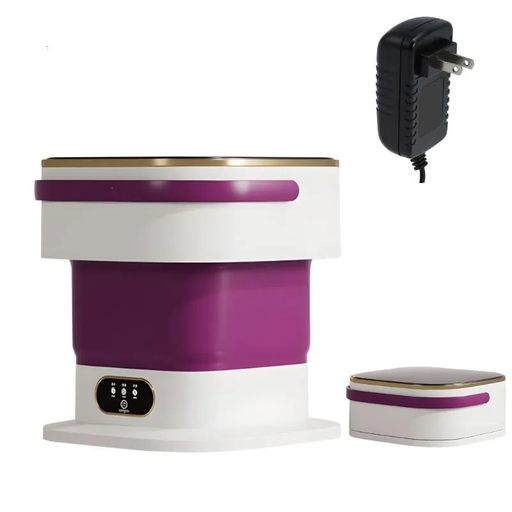
This portable mini washing machine is designed for small, separate loads; check that its capacity is right for the items you want to wash.
The product name lists a 15-litre capacity and a spin-drying basket. It also describes a foldable design.
 No image available
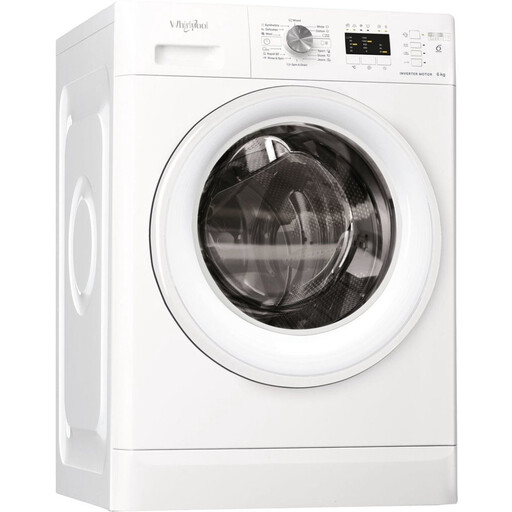
This freestanding front-loader could suit a smaller typical load, provided there’s enough width and space for the door to open.
Listed features: 6 kg and 1,200 rpm.
 No image available
This front-loader could be worth considering if depth is limited; remember to leave room for the door and connections.
The product name lists a 7 kg capacity and a stated design depth of 400 mm. Check the dimensions of the exact version.
 No image available
Its stated depth of 45 cm makes this model worth considering when space is limited; as a front-loader, it also needs room for the door and connections.
The product name lists a 6 kg capacity, a 15-minute quick wash programme and a steam wash.
No, flannels don’t automatically need to be washed at 60 °C. Choose the temperature according to how soiled they are and their care label; Milieu Centraal recommends 60 °C in certain situations, such as for washing-up cloths.
Check the water supply and drainage, remove the transit bolts and level the machine according to the installation instructions. The Dutch Consumers’ Association recommends connecting it to an earthed socket; if you’re unsure whether your laundry nook is suitable, ask someone to check the connection.
The EU energy label lists, among other things, the energy efficiency class, energy consumption per 100 cycles and water consumption per cycle, based on the label’s testing conditions. It doesn’t predict exactly how much energy your small load will use; according to the Dutch Consumers’ Association, automatic load detection doesn’t adjust consumption in exact proportion to the load.
If a product is faulty, the seller is your point of contact for a solution under Dutch government guidance and must not refer you solely to the manufacturer. Also check in advance which installation and servicing options are offered separately.
When you buy a new, similar appliance, the Dutch take-back scheme for private customers applies: the seller must take back your old appliance free of charge. Arrange the practical handover in advance for delivery; dismantling and installation are separate services.