What should you look for when choosing?
Start with the size of your usual sorted load, then check that the programmes, energy use and dimensions suit your needs.
| What to consider |
What should you check? |
Who is this important for? |
| Capacity |
Sort and weigh a typical load, then compare it with the maximum capacity and the capacity of the programmes you want to use. |
If I sort flannels with my usual weekly laundry, I want a drum that suits the loads I typically wash. Around 36% of consumers prioritise suitable capacity above all else. |
| Programmes and temperature |
Check the programmes for the fabrics you wash, and whether you can run a separate wash at 60 °C when the circumstances and care label call for it. |
If I wash flannels alongside other fabrics, I want to be able to choose the right programme and temperature for each fabric, including when extra hygiene is needed. Around 29% of consumers prioritise separating laundry and hygiene. |
| Energy and water |
Compare the energy use per 100 cycles, water use per cycle and programme duration on the EU energy label. The European Commission lists these as details provided on the label. |
If I wash frequently, I want to take electricity and water use into account without assuming that every programme is equally efficient. Around 21% of consumers put running costs first. |
| Location and purchase |
Measure the space where the machine will go and the route to get it there; check the external dimensions and what’s included with delivery, connection and any removal service. |
If I’m buying a new machine, I want to know in advance whether it will physically fit and which practical services are included with my purchase. Around 14% of consumers prioritise installation and the overall purchase decision. |
Washing machines at Joybuy
This selection includes 7 kg and 8 kg machines for mixed laundry and sorted weekly loads. Compare the capacity with the loads you typically wash.
 No image available
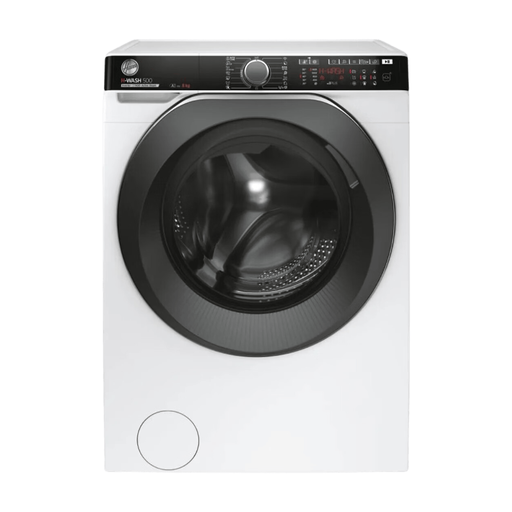
Hoover HWP 48AMBC7/1-S, 8 kg
An option to compare if your sorted weekly loads need more space.
The product name lists an 8 kg capacity, 1400 rpm, an inverter motor, Wi-Fi and Bluetooth, and steam.
Only use a 60 °C programme for fabrics whose care labels allow this temperature.
View at Joybuy
 No image available
Midea MF110W80BA10/W-NL, 8 kg
An 8 kg option to compare if your usual sorted loads need more capacity.
The product name lists an 8 kg capacity, 1400 rpm and steam.
View at Joybuy
 No image available
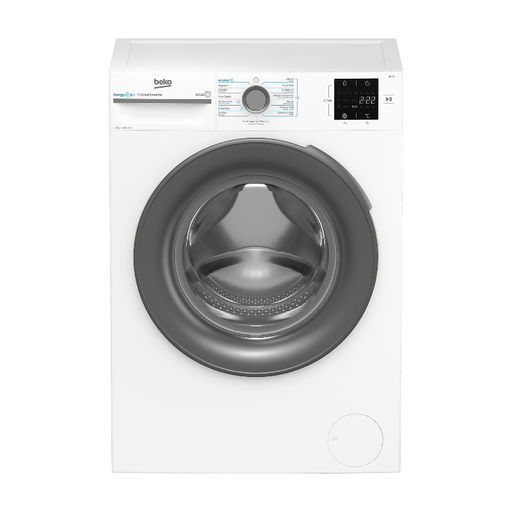
Beko BM3WFU3741S, 7 kg
A 7 kg option to compare for modest, sorted loads of flannels and other fabrics.
The product name lists a 7 kg capacity, 1400 rpm and 15 wash programmes.
View at Joybuy
 No image available
Comfee' CFP01EW70W-JD, 7 kg
A 7 kg option to compare for smaller, sorted loads.
The product name lists a 7 kg capacity, One-Touch Speed Wash and a design with a stated measurement of 400 mm.
Only use the listed Baby Care programme at 60 °C for fabrics whose care labels allow this temperature.
View at Joybuy
 No image available
Coocaa Galaxy A3 Series F702A3AВC0, 7 kg
A 7 kg option to compare for modest, sorted loads.
The product name lists a 7 kg capacity, BLDC motor, 15 programmes, steam wash and a 15-minute quick wash.
Only use the listed 60 °C cycle for fabrics whose care labels allow this temperature.
View at Joybuy
Frequently asked questions
Do flannels always need to be washed at 60 °C?
No, there’s no general recommendation to wash all everyday flannels at 60 °C. Milieu Centraal does recommend this temperature in certain situations, such as when someone at home has a contagious illness. Also check whether the fabric’s care label allows washing at 60 °C.
Is Eco 40-60 the same as a separate wash at 60 °C?
No. Eco 40-60 is intended for normally soiled laundry that the care label says is suitable for 40 or 60 °C. The programme name doesn’t mean the load is given a separate wash at 60 °C.
What should I look out for when installing and maintaining my machine?
Follow the installation instructions and remove the transit bolts before using the machine for the first time; Bosch warns that leaving them in can cause damage. Clean and maintain the machine regularly too, to help prevent problems such as odours or blockages.
What does a washing machine’s energy label tell me?
The EU energy label provides information for comparison, including energy use per 100 cycles, water use per cycle, programme duration and noise. The European Commission describes these details on the label; they don’t guarantee that your energy use will be the same for every programme.
Does the manufacturer’s guarantee replace my statutory rights?
No. According to ACM ConsuWijzer, your statutory guarantee applies alongside any guarantee offered by the retailer or manufacturer. If a product used normally breaks down sooner than you could reasonably expect, the retailer is responsible for providing an appropriate solution; there isn’t one fixed statutory guarantee period for every washing machine.
Can I hand in my old washing machine when a new one is delivered?
When a private customer buys a similar new appliance, the Dutch government’s old-for-new scheme applies, including to online purchases. The shop can’t charge for taking the old appliance away. Agree with the retailer in advance how the handover will work when your new machine is delivered.


