
Holiday-let owner with quick guest changeovers
You want to know how long useful programmes take and how much laundry they can hold, so you can plan the wash between bookings.


Choose a drum size based on the weight of a typical load: flannels call for a different capacity calculation if you wash them on their own rather than with towels or bedding. If guests change over quickly, check the actual programme duration, temperature and maximum load in the manual too. Compare energy labels on the same eco 40-60 basis, as the Consumers’ Association advises matching the machine size to a standard wash.
You want to know how long useful programmes take and how much laundry they can hold, so you can plan the wash between bookings.
You often wash flannels on their own and want to choose a drum size that suits your usual load, not just the maximum capacity.
You also wash towels or bedding when it makes sense, so you take capacity, installation and ongoing running costs into account.
Start with the weight and contents of a typical load. Then check that the programmes and available space suit your changeover schedule and property.
| What to consider | What to look for when buying | Who is this important for? |
|---|---|---|
| Suitable wash programme | Check the care labels and consult the manual for the temperature options and maximum load for each programme. Eco 40-60 is a programme name, not a promise that the water will reach 60 °C. | If I want to match the wash to the cloths and the next guest, I look for a programme that suits the care labels. Around 29% of consumers put a suitable cleaning programme first. |
| Wash time between bookings | Compare the duration and permitted load of the programme you actually plan to use, and allow time for drying too. | When there’s a quick changeover, I want to know whether washing and drying will be finished in time. For around 23% of consumers, wash time between bookings is their main concern. |
| Drum size | Weigh a representative dry load, and include towels or bedding only if you really wash them together and the care labels allow it. | If I usually wash flannels on their own, I don’t want to choose a drum size based on an unusually large load. Around 18% of consumers are mainly looking for a suitable drum size. |
| Energy and water use | Compare the energy label and product information sheet for the exact models on the same eco 40-60 basis; other programmes and loads may differ. | If ongoing running costs are my priority, I want to compare the stated figures on a like-for-like basis. This is the main concern for around 18% of consumers. |
| Installation and noise | Measure the space, including room for the door and connections, and compare the dimensions and stated spin noise levels of the models. | If the machine is near guests or in a tight space, I want to know whether it will fit and work well there. Around 12% of consumers start by considering installation, noise and maintenance. |
Your usual load of flannels may be much smaller than the stated drum capacity.
Weigh a typical load, and include other laundry only if you really wash it together and the care labels allow it.
The programme name doesn’t guarantee that the water will reach 60 °C.
Check the temperature and load information for your chosen programme, and follow the care label on the cloths.
A function name alone doesn’t prove what results you’ll get for your level of soiling, temperature and laundry load.
Check the programme instructions for the specific load, and don’t treat function names as independent proof of a wash result.
The rights and service terms for a business buyer aren’t automatically the same as those for a consumer.
Discuss your intended rental use with the seller before buying, and check which terms apply to your agreement.
The BM3WFT3841W and BM3WFT3941W models offer a comparison between stated capacities of 8 and 9 kg.
The 6000 ProSense LR63864 is an 8 kg model to compare if you’re considering variable loads and an extra rinse option.
The Serie 6 WGJ23400NL is an 8 kg front-loader you can compare with other models for capacity and programmes.
The WWC380 WCS PWash&Steam&8kg is an 8 kg model to compare if you also want to assess QuickPowerWash and its higher stated spin speed.
These models include front-loaders with a stated capacity of 8 or 9 kg, for small loads or combined guest laundry. Check the actual programme load and conditions for each model before making your choice.
 No image available
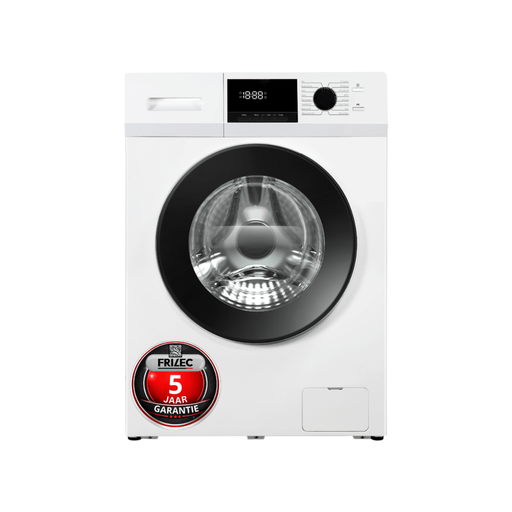
An 8 kg front-loader to consider if you want to match the capacity to your usual laundry load.
Stated capacity: 8 kg. Stated spin speed: 1400 rpm.
The stated 14-minute Daily Xpress programme is intended for lightly soiled laundry; check the permitted load and conditions for your wash.
 No image available
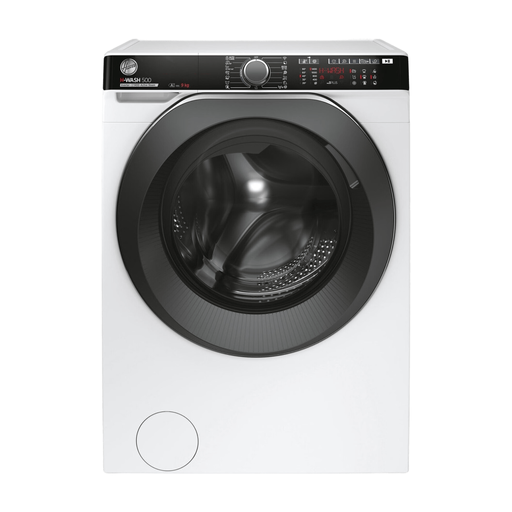
An 8 kg front-loader to compare with your usual load and preferred programme settings.
Stated capacity: 8 kg.
 No image available
The stated capacity of 9 kg is useful if you want to include other guest laundry as well as flannels in the load.
Stated capacity: 9 kg. Stated spin speed: 1400 rpm.
 No image available
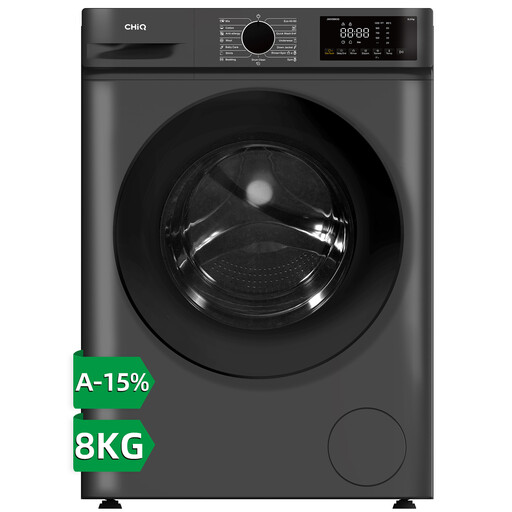
An 8 kg front-loader to compare if you wash other types of guest laundry as well as flannels.
Stated capacity: 8 kg. Stated spin speed: 1400 rpm. The product name lists 16 programmes.
 No image available
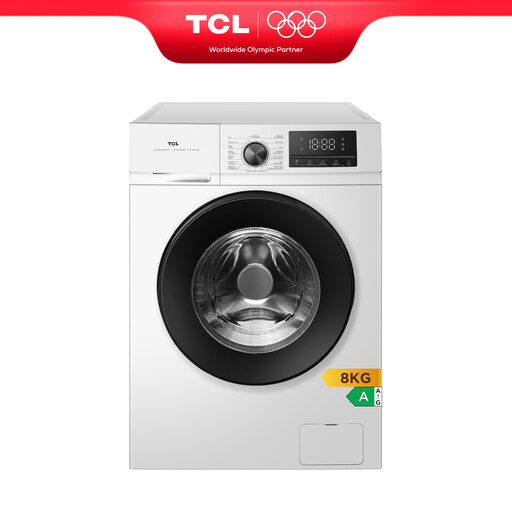
An 8 kg front-loader to compare if its capacity suits your usual laundry load.
Stated capacity: 8 kg. Stated spin speed: 1400 rpm.
The Quick 15' cycle is described as suitable for lightly soiled laundry; check the permitted programme load and conditions for your load.
No, 60 °C isn’t a general rule for every flannel. Follow the care label and take the level of soiling into account. Milieu Centraal sometimes recommends 60 °C, for example for dishcloths or during a stomach infection. Eco 40-60 is also a programme name, not a promise of a 60 °C wash.
Follow the maintenance instructions for your chosen model. Milieu Centraal recommends, among other things, running a 60 °C wash once a month to help prevent detergent and dirt residue and unpleasant smells. This is maintenance advice, not a legal requirement.
The label shows information including the efficiency class and water use, measured on a standardised basis. The European Union assesses the efficiency, programme duration and water use of washing machines on the eco 40-60 basis; these figures don’t directly tell you the costs of other programmes or loads.
No, don’t assume that it does. ACM ConsuWijzer states that businesses usually have less protection than consumers under contracts, although exceptions may apply depending on the situation. Before buying, discuss who the buyer is, how the machine will be used and which guarantee and service terms apply.
Yes, the Dutch government lists washing machines among the appliances that must have an energy label. According to the European Commission, domestic washing machines have used a scale from A to G since 1 March 2021. This is a product and sales rule, not a requirement to buy only a machine with an A label.