What should you look for when buying?
Start with the load you usually wash. Then compare programmes and energy use, and check that the machine will fit in your chosen space before you buy.
| What to consider |
What to look for when buying |
Who is this important for? |
| Drum capacity |
Weigh a typical load and compare it with the stated capacity. Check the external dimensions too, especially the depth. |
If I want to wash shorts with the usual family laundry, I’m looking for a drum that suits that load. Around 36% of consumers give a suitable capacity for the family wash their top priority. |
| Cotton wash and rinsing |
Check the care label and which cotton and eco programmes are available. In a Consumentenbond test, eco 40-60 cleaned slightly less effectively and rinsed detergent out less thoroughly than cotton 40 °C on most of the machines tested. |
When shorts have different care labels, I want to be able to choose a suitable programme and pay attention to cleaning and rinsing. Around 29% of consumers put wash results for cotton clothes first. |
| Electricity and water use |
Compare the energy rating, consumption per 100 eco cycles, water use and programme duration on a like-for-like basis. The label does not describe every programme. |
If I wash often, I want to weigh up energy use against how I use the machine and the programmes I need. Around 21% of consumers give economical use over repeated washes their top priority. |
| Positioning and connections |
Measure the space and access route. Check the position of the water inlet, drain and socket, and ask what delivery and installation include. |
When space is limited, I want to know in advance whether the machine will fit and can be connected. Around 14% of consumers put positioning and installation first. |
Washing machines at Joybuy
These Joybuy products range from 7 to 11 kg and include models with cotton and eco programmes; compare the capacity with your usual family load.
 No image available
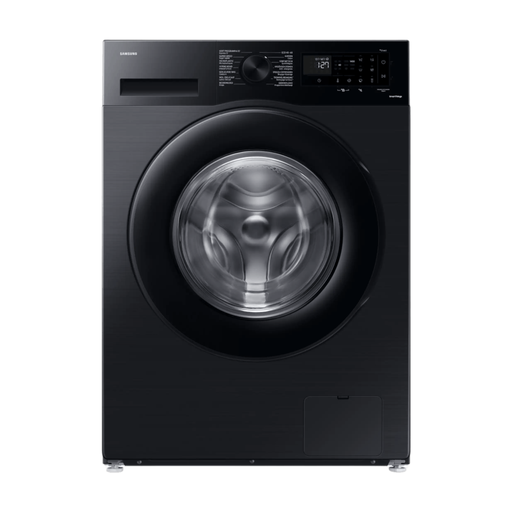
Samsung WW1UDG5B25ABEN, 11 kg, black
For anyone who regularly washes larger family loads and makes use of the stated capacity.
Capacity: 11 kg. The product description lists Cotton and Eco 40-60 °C programmes, plus an option for a half load.
The product title states 1400 rpm and an A-10% energy rating.
View at Joybuy
 No image available
Samsung WW90DG6U25LE, 9 kg, white
For anyone who wants to compare family loads up to the stated capacity with smaller washes.
Capacity: 9 kg. The product description lists Cotton, Eco 40-60 °C, Rinse & Spin and Quick 15min.
The description also states 1400 rpm, an A energy rating and 44 kWh per 100 cycles.
View at Joybuy
 No image available
Bosch WGB2440BFG Serie 8, 9 kg
For anyone who wants to wash larger family loads and also needs an option for smaller washes.
Capacity: 9 kg. The product description mentions Mini Load for small loads or individual items of clothing.
The stated dimensions are 845 × 598 × 590 mm; the description also lists an A energy rating and 1400 rpm.
View at Joybuy
 No image available
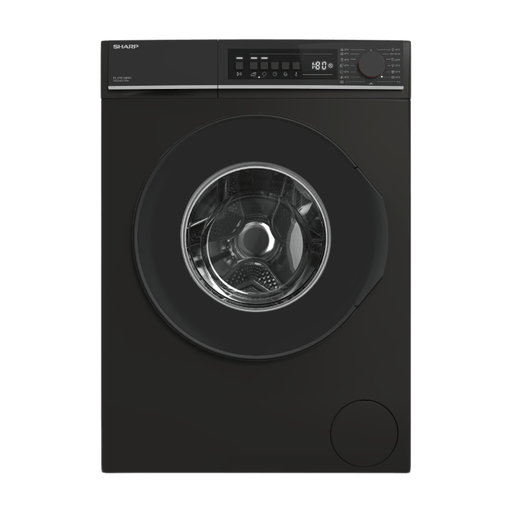
SHARP ESNFB714BBNACB, 7 kg, black
For anyone whose usual family load is suited to the stated capacity.
Capacity: 7 kg. The product description lists cotton as a suitable fabric type and states that there are 15 programmes.
The product title states 1400 rpm and an A energy rating.
View at Joybuy
 No image available
Midea MF110W80BA10/W-NL, 8 kg, white
For anyone looking to compare cotton programmes and an extra rinse option for family laundry.
Capacity: 8 kg. The product description lists Cotton, Eco 40-60 and an Extra Rinse option.
The description also states an A energy rating, 1400 rpm and 42 kWh per 100 cycles.
View at Joybuy
Frequently asked questions
Can all cotton shorts be washed on eco 40-60?
No, check the care label first. Eco 40-60 is designed for normally soiled cotton that can be washed at 40 or 60 °C according to the care label; the name does not mean you can set an actual wash temperature of 40 or 60 °C.
What should I check before using the washing machine for the first time?
Follow the manual for your chosen model and check the space and connections. For its machines, Bosch recommends, among other things, a stable surface, accessible water inlet and drain, an earthed socket and removing the transit bolts before use.
How can I stop my washing machine from smelling musty?
Use the amount of detergent recommended in the instructions and leave the door and detergent drawer open to dry after washing. Consumentenbond also recommends checking the door seal and filter regularly and running a standard hot programme periodically; eco 40-60 does not replace this maintenance advice.
What can I do if my new washing machine turns out to be faulty?
Contact the retailer. According to the Rijksoverheid, the retailer must supply a product that works properly; if it is faulty, you can ask for an appropriate solution, including a free repair or replacement. An additional manufacturer’s warranty does not replace this statutory right.
Do washing machines have an energy label, and can I return my old appliance?
Washing machines covered by EU energy labelling rules have an energy label with an A–G scale; this scale was introduced on 1 March 2021. According to the Rijksoverheid, when a private customer buys a new, similar appliance, the shop must take back the old appliance free of charge. This also applies to online purchases; ask how collection is arranged if the appliance cannot be taken away straight away.


