What should you look for when buying?
Start with the amount of laundry you usually build up between washes. Then compare the available programmes and label information with your washing routine and the space where the machine will go.
| Key consideration |
What should you look for? |
Who is this most important for? |
| Suitable drum capacity |
Compare the stated capacity with your usual dry laundry load, and measure the available space and doorway too. |
I want to wash my usual family laundry in suitable loads without usually running a large drum half full. Around 33% of consumers are mainly looking for a drum that suits their needs. |
| Wash programme and results |
Check which cotton programmes and temperature settings are available; follow the care label and take the level of soiling into account. |
If getting my cotton T-shirts clean and rinsing them well are my priorities, I want to be able to choose a programme accordingly. Around 27% of consumers say this is their main concern when buying. |
| Energy and water use |
Compare kWh per 100 eco 40-60 cycles and water per eco cycle on the same label basis; check the manual for other programmes. |
I want to compare ongoing electricity and water costs with the programmes I usually use. Around 20% of consumers are mainly concerned about these running costs. |
| Installation and support |
Measure the installation space and delivery route, and check the water supply, drainage and socket. Also check what installation and service are available with the model. |
The machine needs to fit in the space available in my home, and I want to know how connection and support will be arranged. Around 20% of consumers want to make sure of this first. |
Washing machines on Joybuy
This Joybuy selection includes front-loaders with capacities from 7 to 11 kg, for anyone comparing models for everyday family laundry and larger loads.
 No image available
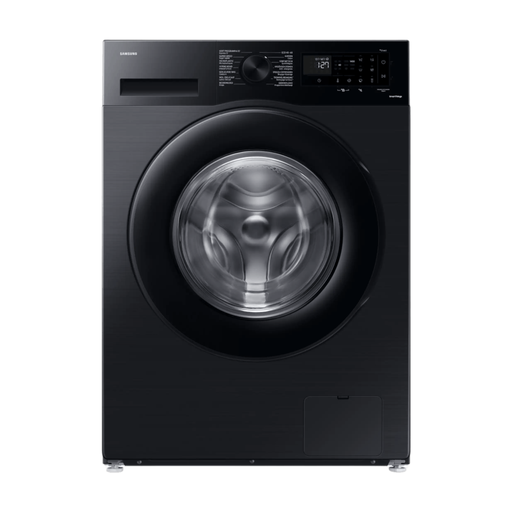
Samsung WW1UDG5B25ABEN, 11 kg, 1400 rpm
The capacity suits anyone who regularly builds up large loads of family laundry.
Capacity: 11 kg. Listed programmes: Cotton and Eco 40-60. Spin speed: 1400 rpm.
Joybuy
 No image available
Samsung WW90DG6U25LE, 9 kg, 1400 rpm
The 9 kg capacity is worth comparing if you regularly wash larger loads.
Capacity: 9 kg. Listed programmes: Cotton, Eco 40-60 and Quick 15min. Spin speed: 1400 rpm. Stated energy use: 44 kWh per 100 cycles and 50 litres per cycle.
Joybuy
 No image available
Bosch WGB2440BFG Serie 8, 9 kg
This 9 kg version is worth comparing if you want to combine programmes for larger washes with one for smaller loads.
Capacity: 9 kg. Mini Load programme listed; White/Coloured and Wool/Hand Wash are also among the programmes. Stated energy class: A.
Joybuy
 No image available
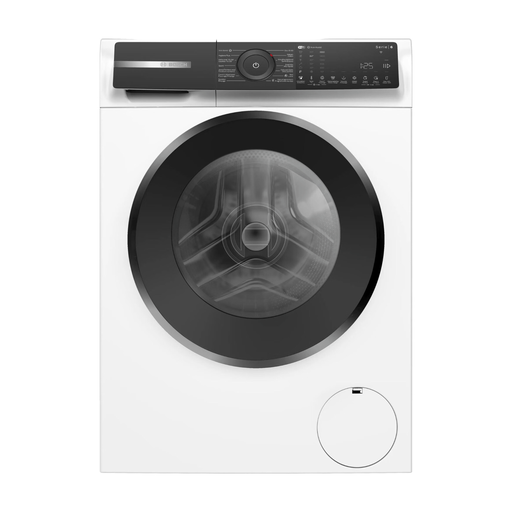
Bosch WGH25605FG Serie 6, 10 kg, 1600 rpm
The capacity is worth considering when comparing machines for larger family washes.
Capacity: 10 kg. Spin speed: 1600 rpm. Listed programmes include White/Coloured and Wool/Hand Wash; a Mini Load programme is also mentioned. Stated energy class: A.
Joybuy
 No image available
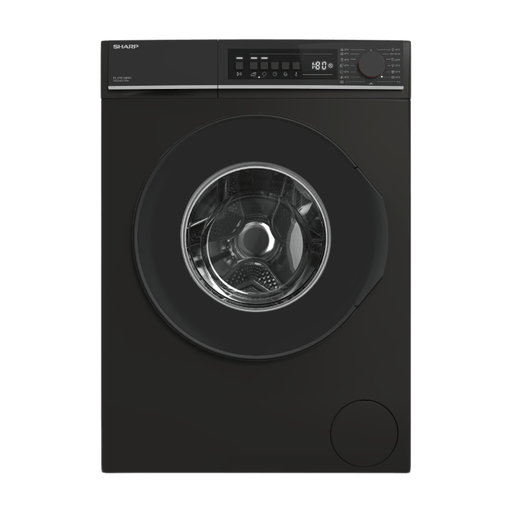
Sharp ESNFB714BBNACB, 7 kg, 1400 rpm
With a 7 kg capacity, this model is worth comparing for everyday family loads and cotton laundry.
Capacity: 7 kg. Spin speed: 1400 rpm. The description lists cotton programmes and 15 programmes in total. Stated energy class: A.
Joybuy
Frequently asked questions
Can I always wash cotton T-shirts on eco 40-60?
No. Follow the care label and use eco 40-60 only if the label says the T-shirt can be washed at 40 or 60 °C. Consumentenbond reports that, in the test cited, eco rinsed less effectively than cotton 40 °C. So also take the level of soiling and the results you want into account.
What should I check before running the washing machine for the first time?
Follow the manual for the version you have bought. Bosch recommends using a stable surface, ensuring the water supply and drainage are suitable, using an earthed socket and removing the transit bolts before use.
Do my rights end after the two-year manufacturer’s warranty?
No. ACM ConsuWijzer distinguishes between commercial warranties and statutory rights. If a product is faulty despite being used normally, the retailer is responsible. How long you could reasonably expect a product to work depends on the circumstances, not on a single fixed two-year time limit in the Netherlands.
Does the shop have to take my old washing machine when I buy a new one?
For a private purchase in the Netherlands, the retailer must take back an old, similar appliance free of charge, according to the Dutch government. This also applies to online purchases; arrangements for handing it over or having it collected may vary.
Is an energy label required for a new washing machine?
Yes. According to the Dutch government, washing machines are among the appliances that must have an energy label. As well as comparing energy classes, check the consumption figures and bear in mind that the label information relates to the eco 40-60 programme.


