
Families with large cotton loads
You wash tablecloths with your usual family laundry and want a drum that suits your regular load, without often running an oversized drum half-empty.


Choose a drum that fits your usual sorted family wash and lets your cotton tablecloth lie loosely inside; a higher capacity isn’t automatically a better choice. The Consumentenbond and Milieu Centraal recommend matching capacity to your usual laundry load. Then compare the cotton programme, permitted stain treatments and the consumption of the programmes you actually use. A slimline top-loader may be a solution if a front-loader won’t fit, but it usually has less capacity.
You wash tablecloths with your usual family laundry and want a drum that suits your regular load, without often running an oversized drum half-empty.
You want to know how the care label, cotton programme and any stain treatment suit tablecloths that get dirty during family meals.
You need to check whether a front-loader will fit with its door and connections, or whether the lower capacity of a top-loader is an acceptable compromise.
Best for: your usual family load fits, and the folded tablecloth can go into the drum without being crammed in.
The trade-off: there’s less room for a tablecloth alongside a lot of other laundry than in a 9 kg drum.
Best for: your usual cotton load or large tablecloths make use of the extra space, and the machine fits where you plan to put it.
The trade-off: don’t choose it just for the higher capacity. A larger drum that is often only partly full isn’t automatically more efficient or better for washing performance, according to the Consumentenbond.
Best for: limited width or less bending is a priority, and your usual load fits within the smaller capacity.
The trade-off: the lid needs room to open upwards and the drum usually has less capacity; check that the tablecloth fits comfortably inside.
| What to consider | What should you check? | Who is this most important to? |
|---|---|---|
| Capacity and drum space | Weigh a usual sorted load and compare it with the stated cotton capacity, the opening and the space available for the tablecloth. The Consumentenbond notes that the stated capacity applies to cotton. | If I want to wash the tablecloth with my usual family laundry, I want to know whether everything fits loosely in the drum. Around 31% of consumers prioritise capacity and usable space. |
| Stains and fabric care | Read the care label and check that the cotton programme and any pre-wash or stain option are suitable for the permitted temperature and washing method. An option doesn’t guarantee a stain-free result. | When there are food stains on my tablecloth, I want to choose a suitable treatment without washing the fabric incorrectly. Around 25% of consumers prioritise stains and fabric care. |
| Energy and water consumption | Compare kWh per 100 eco 40-60 cycles on a like-for-like basis, and check the manual for other programmes you use frequently. Energielabel.nl points out that the label doesn’t show the consumption of other programmes. | If I often use the same washing programmes, I want to be able to assess consumption for those usual settings. Around 19% of consumers prioritise running costs. |
| Fit and connections | Measure the height, width and depth, check the clearance needed for the door or top lid, and see where the connections are located. | In a tight utility room, I need to be able to position and open the machine without the lid or door being blocked. Around 13% of consumers prioritise fitting the machine into their space. |
| Noise and leak protection | Compare the noise level during the spin cycle and check which parts of the water supply and machine are protected against leaks. | If my utility room is close to a living or sleeping area, or a leak could cause significant damage, I want to take these points into account. Around 12% of consumers prioritise noise or leak risk. |
A larger drum that is often only partly full isn’t automatically as efficient or as good for washing performance; load detection doesn’t change that by itself, according to the Consumentenbond.
Weigh your usual sorted load and also check that the tablecloth fits loosely in the drum.
The energy label is based on eco 40-60 and doesn’t show how much another cotton, stain or quick programme uses, according to Energielabel.nl.
Compare label information on a like-for-like basis, and check the manual if you often use another programme.
A top-loader may need less width, but it usually has a smaller capacity and needs to be accessible from above.
Measure the whole space, including the clearance above the lid, and check whether your usual load and the tablecloth fit in the drum.
Delivery, installation and taking away an old machine may each have different arrangements and conditions.
Before ordering, check separately what’s included for delivery, connection, disconnection and taking away your old washing machine. The Consumentenbond recommends checking the installation conditions; the Dutch Government also explains the old-for-new scheme for similar appliances.
According to Beko Nederland, the freestanding BM3WFU38412CW is an 8 kg front-loader with a cotton programme, pre-wash and StainExpert.
The Serie 6 WGG244ZONL is a 9 kg front-loader and an option to compare if your usual laundry load makes use of the extra space.
According to Samsung Nederland, the WW90DG6U25LEU3 is a 9 kg front-loader with smart and quick-wash features.
The LTR6162K is a 6 kg top-loader; this type of machine is worth considering when the available width determines your choice.
These Joybuy product picks are intended for family laundry and cotton tablecloths. Compare the stated capacity with your usual load and check which programmes suit your washing habits.
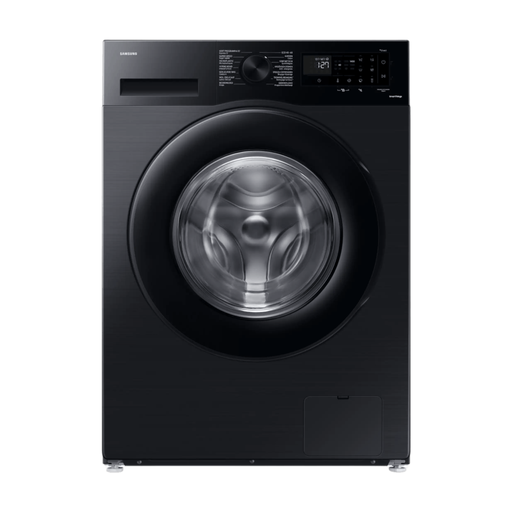 No image available
The stated capacity may be relevant if your usual family load makes use of the extra drum space.
The product name lists 1400 rpm and an A energy rating.
 No image available
This capacity is worth considering if your usual load makes use of the extra space.
The product name lists 1400 rpm, an A energy rating and an NL/FR panel.
 No image available
An 8 kg capacity may suit you if your usual family load and the tablecloth fit together inside.
The product name lists 1400 rpm.
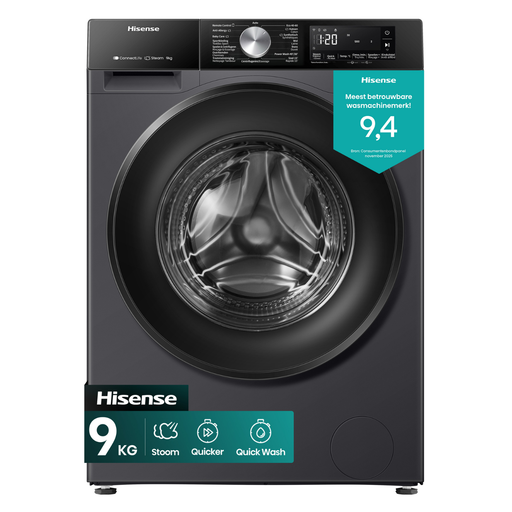 No image available
The stated capacity may suit larger family loads if you regularly make use of the extra space.
The product name lists 1400 rpm.
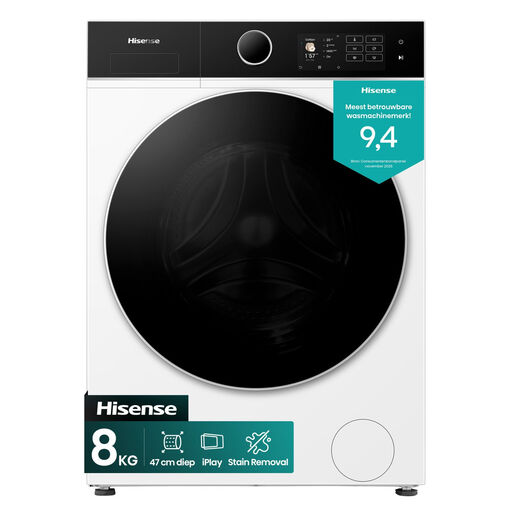 No image available
An 8 kg capacity may suit you if there’s enough room for your usual family laundry and the tablecloth together.
The product name lists 1400 rpm.
No, check the care label first. It shows, among other things, the maximum permitted temperature and how gently the item should be washed. Eco 40-60 is intended for normally soiled cotton that can be washed at 40 or 60 °C according to its care label. For a stubborn stain, pre-treatment or another permitted programme may be more suitable, according to the Consumentenbond and Energielabel.nl.
Measure the space and check the connections and that the floor is stable before installing the machine. Follow the model manual for installation, and keep the door, detergent drawer, seal and filter clean in line with the Consumentenbond’s maintenance advice.
No, a manufacturer’s guarantee doesn’t replace your statutory rights. The Dutch Government explains that the Netherlands has no fixed statutory guarantee period: what you can expect from a product depends, among other things, on the product and normal use. If a product is faulty, contact the retailer.
When you buy a new, similar appliance, the Dutch old-for-new scheme applies to private buyers. According to the Dutch Government, the shop must take the old appliance free of charge. Online purchases are also subject to conditions on how you hand over the appliance or arrange for it to be collected.
Don’t assume it is without checking for up-to-date confirmation. In a news report dated 20 March 2026, the Dutch Government described the measure as a bill that still had to be submitted for advice and parliamentary consideration. Statutory guarantees and the applicable EU ecodesign rules are separate frameworks.