What should you look for?
Start by weighing a typical sorted load and checking that your largest duvet cover has enough room to move freely in the drum. Then compare the dimensions, programme load capacity and energy label data on a like-for-like basis.
| What to consider |
What should you check? |
Who is this most important for? |
| Capacity and drum space |
Weigh a typical load and check the door opening, space inside the drum and maximum load for the programme you’ve chosen. The Dutch Consumers’ Association notes that the stated capacity applies to cotton. |
If I want to wash duvet covers without cramming them in, while making sure everyday washes are also suited to the machine, choosing the right drum size is important; around 33% of consumers make capacity their top buying priority. |
| Shared use and cycle length |
Compare the cycle length for the load and programme you actually plan to use. Also check that the controls and maintenance instructions are clear to everyone in the house. |
When several housemates are waiting to use the machine, I want to know when a cycle will finish and the machine will be free again; around 27% of consumers prioritise shared availability and ease of use. |
| Noise and installation |
Measure the space available and the route for getting the machine into position. Compare the spin noise on the energy label and check that the machine can be installed securely on a level surface. |
If the laundry area is near my bedroom or study space, I want to take noise and placement into account before choosing a model; around 20% of consumers prioritise quiet operation and suitable installation. |
| Running costs and purchase |
Compare kWh per 100 cycles and litres per cycle on the energy label. Also check what’s included in delivery, installation and the removal of an old machine. |
If the machine is used regularly by different housemates, I want to be able to compare its stated energy and water consumption; around 20% of consumers consider running costs their top priority. |
The Dutch Consumers’ Association also recommends considering the fabric and care label: the maximum capacity for cotton doesn’t automatically tell you how much delicate or synthetic laundry will fit in a programme. The EU energy label includes information such as energy use per 100 cycles, water use per cycle, programme duration and spin noise. Compare these figures on the same label basis.
Washing machines at Joybuy
This selection of Joybuy products includes front-loading washing machines with a stated capacity of 8 or 9 kg, for households looking to match the drum size to their usual laundry load.
 No image available
Samsung WW90DG6U25LE, 9 kg
An option to compare if you’re looking for a 9 kg front-loader for larger laundry loads.
The product information lists 1400 rpm, energy rating A, AI Wash and a 39-minute Super Speed programme for 5 kg; this cycle duration doesn’t apply to the full nominal capacity.
View at Joybuy
 No image available
AEG LF61R840, 8 kg
The 8 kg capacity may suit housemates looking to match the drum size to their usual loads.
The product information lists 1400 rpm, energy rating A and ProSense load sensing. The Eco 40-60 programme is stated to take 3 hours and 25 minutes at full load; spin noise is listed as 75 dB.
View at Joybuy
 No image available
Bosch WGB2440BFG Serie 8, 9 kg
A 9 kg front-loader to consider if your usual loads are larger and need more room in the drum.
The product information lists 1400 rpm, energy rating A and a Mini Load programme for small loads or a few garments. Spin noise is listed as 69 dB.
View at Joybuy
 No image available
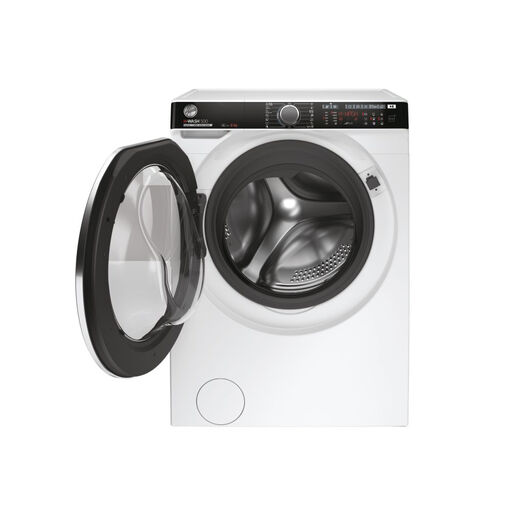
HWP 48AMBC7/1-S, 8 kg
An 8 kg front-loader to compare if you want to match the capacity to your everyday loads.
The product information lists 1400 RPM and energy rating A. The stated programme duration of 3 hours and 38 minutes applies at nominal capacity; spin noise is listed as 76 dB. It also mentions app notifications when a cycle ends.
View at Joybuy
 No image available
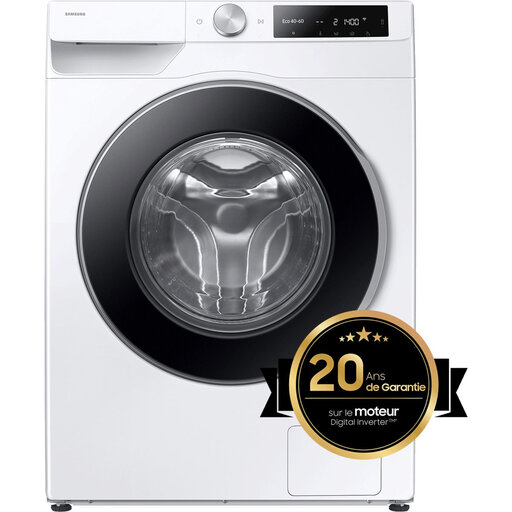
Samsung WW90DG6U85LEU3, 9 kg
A 9 kg front-loader to compare if you regularly have larger laundry loads.
The product information lists 1400 RPM and AI Wash. The 39-minute Super Speed cycle is for 5 kg, not the full nominal capacity; spin noise is listed as 72 dB.
View at Joybuy
Frequently asked questions
Do you need a 9 kg machine to wash a duvet cover?
No. Don’t choose based solely on a set number of kilos. Weigh a typical dry load, follow the duvet cover’s care label and check the programme’s permitted load; the Dutch Consumers’ Association states that the nominal capacity applies to cotton.
What should you consider when installing a washing machine in a student house?
Measure the space available and the route for getting the machine into position, and make sure it stands securely on a level surface. Follow the chosen model’s manual for connection, drainage and first use. Agree in advance who will arrange the space and connection; the permission you need depends on your living arrangements.
How do you keep a shared washing machine fresh?
Agree who will maintain the machine and detergent drawer in line with the manual. Milieu Centraal recommends, among other things, running a 60 °C wash once a month to remove soap and dirt residue; always follow the care label for your bedding.
What warranty arrangements should you check in advance?
Ask the retailer what additional cover is available and what it adds to your statutory rights. According to the Dutch Government, the retailer is your point of contact if a product is faulty; there is no fixed statutory two-year warranty period in the Netherlands.
What information is shown on the energy label for washing machines?
The EU energy label uses ratings from A to G and includes information such as energy consumption per 100 cycles, water consumption per cycle, programme duration and spin noise. Compare models on the same label basis, and bear in mind that the label figures don’t automatically reflect the consumption for every load.


