What should you look for when buying?
Start with the laundry you usually wash and the space available. Then compare programmes and consumption figures.
| What to consider |
What to look for |
Who is this important for? |
| Room for duvet covers and a week’s laundry |
Weigh a typical sorted load and check that the duvet cover fits through the door and can move around in the drum. According to the Consumers’ Association, the maximum drum capacity applies to cotton washes; other programmes may allow less. |
When I have a full week’s laundry, I want enough room for bedding without choosing an unnecessarily large drum for everyday loads. Around 36% of consumers prioritise room for duvet covers and a week’s laundry. |
| A programme that fits your schedule |
Check the maximum load and programme duration for the laundry you want to wash. The Consumers’ Association notes that a special programme often won’t take a full drum. |
When I have little time after a busy school week, I want to know whether my duvet cover fits within the programme’s load limit and running time. Around 29% of consumers put a practical wash time first. |
| Dimensions and connections |
Measure the available height, width and depth, including room for hoses and the door. Compare these measurements with the exact dimensions of the model. The Consumers’ Association also recommends leaving space around the machine. |
When space in the laundry area is tight, I want to know in advance whether the machine will fit practically, with its hoses and door open. Around 21% of consumers prioritise a suitable position and connection. |
| Energy and water use |
Compare energy and water use on the same label basis, and check the figures for the programme you’ll actually use. The European Commission describes the EU energy label as the basis for comparing washing machines. |
If I wash often, I want to take consumption into account without relying solely on the energy rating. Around 14% of consumers prioritise energy and water use. |
Washing machines at Joybuy
This selection includes front-loaders with a capacity of around 8 or 9 kg, for anyone weighing up capacity against a typical week’s laundry and the time available.
 No image available
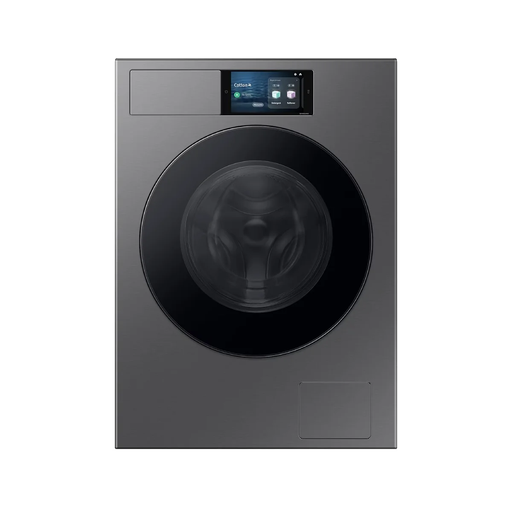
Samsung WF90F09C4SU3
An option to compare if you’re looking for a 9 kg front-loader for larger weekly loads.
9 kg; 1400 rpm; AI Wash; automatic dosing; steam function; delayed start; Wi-Fi (SmartThings); A-55% energy rating.
View at Joybuy
 No image available
Midea MF110W80BA10/W-NL
An 8kg model to compare if you want to wash duvet covers and your load fits within the programme limits.
8 kg; 1400 rpm; 16 programmes, including Bedding and 15- and 45-minute programmes; dimensions 850 × 595 × 475 mm.
View at Joybuy
 No image available
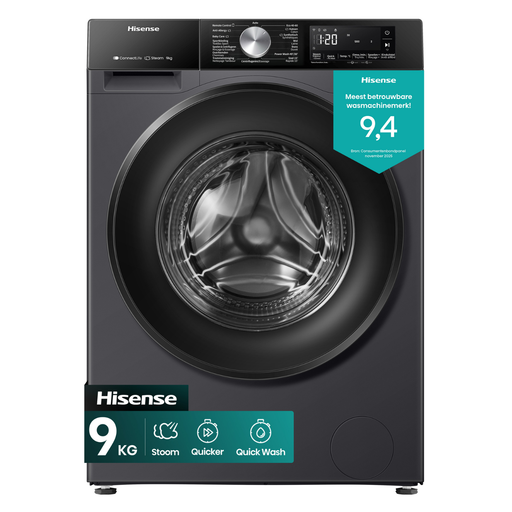
Hisense WF3S9043BB3
A 9kg model to compare if you wash larger weekly loads and can check the space needed in advance.
9 kg; 1400 rpm; dimensions 84,50 × 59,50 × 59 cm. Power Wash 49 minutes is specified for a full load; Quick 15 minutes is for small loads.
View at Joybuy
 No image available
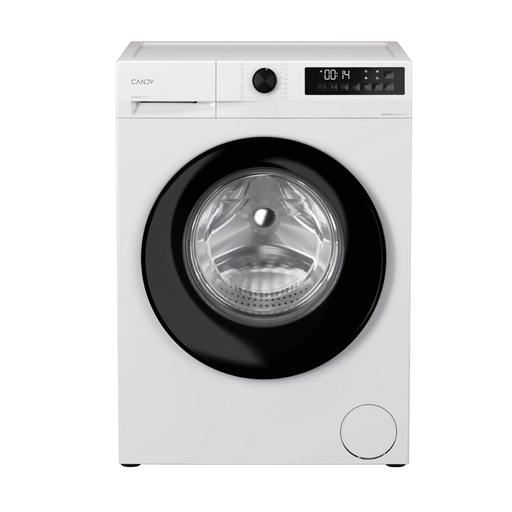
Candy GD 49B8-S
A 9kg model to compare if you have bulky weekly loads; check which programme is right for your duvet cover.
9 kg; 1351 rpm; 16 programmes; quick programmes from 14 to 59 minutes; dimensions 850 × 595 × 601 mm.
View at Joybuy
 No image available
Candy GD 48B9-S
An 8kg model to compare for typical weekly loads; check that your chosen programme leaves enough room for your duvet cover.
8 kg; 61-litre drum capacity; 1351 rpm; quick cycles from 14 minutes; maximum depth 601 mm.
View at Joybuy
Frequently asked questions
Do you need a 9 kg machine to wash a duvet cover?
Not necessarily. Weigh what you usually wash together and check that the duvet cover fits through the door and can move around in the drum. According to the Consumers’ Association, the maximum capacity applies to cotton washes; the permitted load may vary by programme.
Can you wash a duvet cover on a quick programme?
Only if the care instructions and the programme’s maximum load are suitable for the duvet cover. The Consumers’ Association points out that special programmes often won’t take a full drum, and that the actual running time can change depending on the load.
What should you check before connecting your washing machine?
Measure the available space and check that there’s enough room for the hoses and door. Bosch recommends removing the transit bolts when connecting the machine. Follow the installation instructions in the manual for your chosen model.
What does the energy label tell you about quick-wash consumption?
The EU energy label gives consumption figures for the prescribed measurement basis, not for every individual programme. The European Commission describes the scale from A to G. Compare models on the same basis, and remember that your own programme and load will affect actual consumption.
How can you make sure the machine fits in your laundry area?
Measure the height, width and depth of the space, and leave room for the hoses and door too. Compare these measurements with the dimensions of the exact model. The Consumers’ Association stresses that the space needed may be greater than the machine itself.


