
For washing large bedding
You want to wash duvet covers and occasionally have larger loads too. Don’t just look at the load capacity: drum space and the door opening also determine how easily your cover goes in and comes out of the machine.


For duvet covers in a shared laundry room, the largest drum isn’t automatically the right choice. Weigh your usual cotton load and check that the cover fits loosely in the drum and through the door opening, in line with its care label. Then compare spin noise, water protection, dimensions and the consumption of the programmes you actually use; the energy label doesn’t tell you how much other programmes use.
You want to wash duvet covers and occasionally have larger loads too. Don’t just look at the load capacity: drum space and the door opening also determine how easily your cover goes in and comes out of the machine.
You share a laundry room or live close to other people. So check the stated noise level during the spin cycle, that the machine can be positioned securely and the water protection on the exact model.
You need to fit the machine into an existing space or coordinate laundry with other people. Measure the space and connections, and check how long the programmes you want to use take.
First weigh your usual load and check that the cover fits; then compare the space needed, noise, water protection and consumption of relevant programmes.
The percentages below give a general breakdown of the buying priorities mentioned for this choice. A machine with a higher load capacity isn’t automatically a better fit: the stated maximum applies to cotton laundry and, by itself, doesn’t tell you whether your duvet cover will have enough room.
| What to consider | What should you check? | Who is this important for? |
|---|---|---|
| Room for laundry | Weigh a typical sorted load. Check the care label and compare load capacity, drum space and the door opening. | If you wash both everyday laundry and duvet covers, you’ll want to know whether the cover fits without being crammed in. Around 33% of consumers are mainly looking for room for larger loads. |
| Noise and leaks | Compare the dB(A) rating during the spin cycle and check what water protection the exact model has. | If you share the space or other people live nearby, noise and the potential impact of a leak are worth considering. Around 27% of consumers focus on disturbance or the risk of leaks. |
| Space and connections | Measure the space and access route; check the water supply, drainage and an earthed socket, following the installation instructions. | If the machine needs to fit in a fixed space, you’ll want to know in advance whether there’s room for the door and connections too. This is a priority for around 20% of consumers. |
| Consumption and cycle time | Compare the energy consumption stated on the label for eco 40-60 and check the manual for the duration and consumption of the programmes you use. | If you do laundry regularly or need a load to be finished by an agreed time, both consumption and programme duration matter. This is the main consideration for around 20% of consumers. |
The energy label gives consumption for eco 40-60, not for every programme. The noise level on the label refers to the spin cycle; the position of the machine and the floor may also affect noise in a shared space.
The stated load capacity applies to cotton laundry. Drum space and the door opening also determine whether a large duvet cover will fit; a higher capacity isn’t automatically more practical for your usual loads.
Weigh a typical load and check that your duvet cover fits in the drum without being crammed in, in line with its care label. Consumentenbond advises you to consider capacity in relation to the laundry you wash.
A larger machine may be impractical if you usually wash small loads.
The spin cycle is the noisiest part. A machine that isn’t positioned securely and level can also cause disturbance in a shared space.
Compare the stated spin noise and check that the floor is level and sturdy and that the machine is properly levelled.
The connections and installation space need to be suitable. The right type of water protection also depends on the potential impact of a leak in that location.
Before buying, check the connections and water protection on the exact model. Also check which delivery and installation services are included with your order.
The energy label is based on eco 40-60 and doesn’t describe the energy consumption of other programmes.
Check the manual for the exact model if you mainly want to use short or other specific programmes.
Bosch Netherlands lists the WGG244ZONL as a 9 kg front-loading washing machine, with external dimensions of 845 × 598 × 588 mm and AquaStop. Compare these dimensions with your installation space.
Samsung Netherlands lists the WW90DG6U25LKU3 as a 9 kg front-loading washing machine measuring 600 × 850 × 550 mm. Check the full model number and suffix when comparing.
Miele Netherlands lists a 9 kg load capacity, 1400 rpm and QuickPowerWash for the W1 WWD380 WCS PWash&Steam&9kg.
This selection includes front-loading washing machines with different load capacities and features to compare for larger loads and shared laundry rooms. For each model, check that your duvet cover fits and that the dimensions, noise level and connections suit your situation.
 No image available
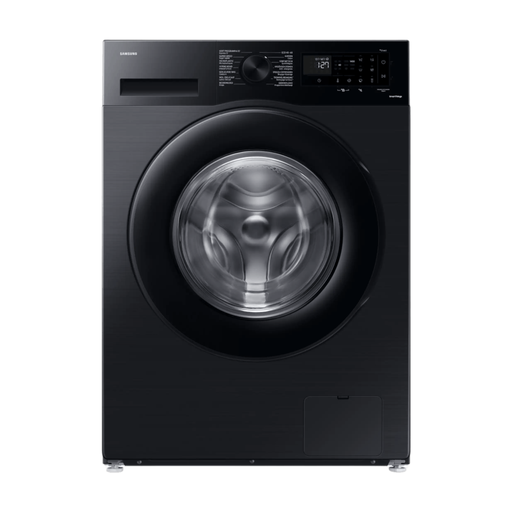
A model to compare if you wash larger loads; check that your duvet cover fits loosely in the drum.
Load capacity: 11 kg. Stated spin noise: 72 dB(A). The product lists a Bedding programme and automatic load detection.
 No image available
A front-loading washing machine to compare if you’re looking for a 9 kg model; also check how much space your duvet cover needs.
Load capacity: 9 kg. Drum: 530 mm. Stated cabinet depth: 57,7 cm. The product information lists 16 programmes and a steam function.
 No image available
An option to consider when comparing models if water protection and stated spin noise matter in a shared space.
Load capacity: 9 kg. Drum volume: 65 litres. Stated spin noise: 69 dB(A). The product information lists AquaStop and a Mini Load programme.
 No image available
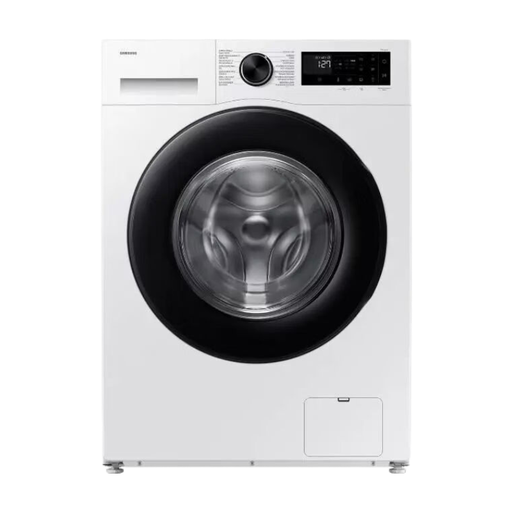
Compare the stated capacity and external dimensions with your usual laundry and available installation space.
Load capacity: 10,5 kg. Dimensions: 600 × 850 × 575 mm. Stated spin noise: 72 dB. According to the product information, Bedding is available via a programme download.
 No image available
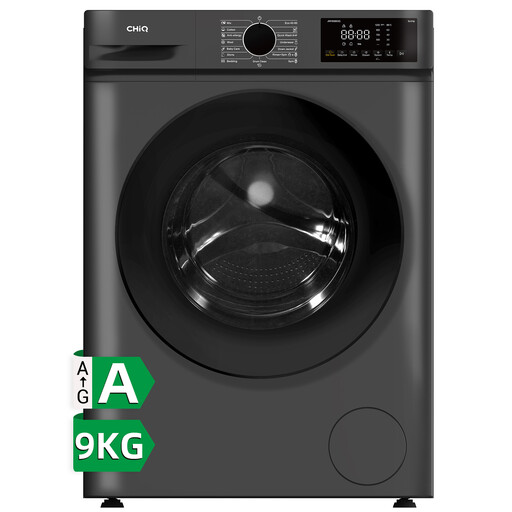
A front-loading washing machine to compare if you’re considering a 9 kg model with several wash programmes. Check that the duvet cover fits without being crammed in.
Load capacity: 9 kg. Drum diameter: 530 mm. Spin speed: 1400 rpm. The product information lists 16 programmes and a steam function.
Not necessarily. The maximum load capacity applies to cotton laundry; also check the drum space, door opening and care label on your duvet cover. Consumentenbond advises choosing a capacity that suits the laundry you actually wash.
Check that the machine can stand securely and level, and that there’s a water supply, drainage and an earthed socket. Follow the installation instructions, remove the transit bolts and agree how the shared space will be used.
Compare the stated spin noise and water protection on the exact model, and position the machine securely and level. The energy label gives the noise level during the spin cycle; the potential impact of a leak also depends on the location.
No. The consumption figure on the Dutch energy label is based on eco 40-60 and doesn’t show the consumption of other programmes. Check the manual for the model and the programmes you want to use.