
Weekly bedding washer
You regularly wash a large duvet cover and want to know whether it can move freely in the drum. Bear in mind that a duvet cover is not the same as a filled duvet: they are different types of laundry.


Start by considering the dry weight and volume of your usual sorted loads, including your largest duvet cover, then choose a capacity to suit. An 8 or 9 kg front-loading machine may be suitable, but the stated capacity is for cotton washing, and a larger drum won’t automatically get small loads cleaner. Also compare the maximum load for each programme, the EU energy label and the full space available for installation.
You regularly wash a large duvet cover and want to know whether it can move freely in the drum. Bear in mind that a duvet cover is not the same as a filled duvet: they are different types of laundry.
You alternate between bedding and smaller, sorted loads, and want a capacity that suits more than just your biggest wash. The Consumentenbond points out that the stated capacity applies to cotton washing.
You need to make sure there’s room not only for the machine, but also for the hoses, door opening and route to the installation spot. The Consumentenbond advises allowing for the clearance needed.
Compare your largest bedding wash with your usual sorted loads. Also check the maximum load for each programme, energy and water use, and the space available for installation.
| What to consider | What should you check? | Who is this most relevant to? |
|---|---|---|
| Room for your duvet cover | Weigh your dry, sorted bedding load and check that the cover can move freely in the drum. Also check the door opening, care label and maximum load for the programme you choose. | If you wash a large duvet cover, you’ll want it to move freely in the drum. Around 36% of consumers give space for bedding their top priority. |
| Varying laundry loads | Compare the drum capacity with your usual sorted loads. Check the permitted load for cottons, synthetics and delicates separately. | If you alternate between bedding and smaller loads, you’ll want to know whether the machine is suitable for both. Around 29% of consumers prioritise good washing results with varying loads. |
| Energy use and programme duration | Compare the energy use in kWh per 100 cycles, water consumption per cycle and programme duration on the EU energy label. The label is based on standardised conditions; your own consumption will also depend on the programme and load size. | If you wash frequently, you’ll want to weigh up the energy use and time involved in your regular routine. Around 21% of consumers prioritise the energy use of recurring washes. The EU label provides these details. |
| Fitting and connecting the machine | Measure the space and the route to it. Check the exact model’s external dimensions and allow for the door opening, hoses and required clearance, as advised by the Consumentenbond. | If the alcove or access route is tight, you’ll want to know in advance whether the machine will fit without any adjustments. Around 14% of consumers give the available installation space their top priority. |
In a test of ten large washing machines, the Consumentenbond found that eight did not wash a cotton load filled to 40% properly. This result applies to the machines and conditions tested; it won’t necessarily apply to every large model.
Choose a capacity to suit your usual sorted loads and check that your largest bedding wash can move freely in the drum.
The stated capacity applies to cotton washing. Other fabric types may have a lower maximum load for their programmes.
Check the programme table before buying and follow the care label on your textiles before washing.
The depth, space for hoses, door opening and access route also affect whether installation is possible. An inaccurate measurement could mean extra work or changes to the installation space.
Measure the full access route and installation space, and check the external and installation dimensions for the exact model.
The Dutch-market 6000 ProSense front-loaders LF628600 and LF694ABC illustrate the choice between an 8 and 9 kg capacity.
The Dutch-market Serie 6 WGG244FSNL is an example of a 9 kg front-loader with a 1400 rpm spin speed.
According to LG, the Dutch-market F4WX809Y combines a 9 kg capacity with AI DD, TurboWash360 and Steam.
The Dutch-market WW90CGC04AAEEN is a 9 kg front-loader with Ecobubble and SmartThings features.
The Dutch-market WWA120 WCS 8kg Active is an 8 kg front-loader with CapDosing and AddLoad.
These 8 or 9 kg front-loaders are for anyone looking to combine bedding washes with varying weekly loads. Check the programme load limits and dimensions of the version you choose.
 No image available
For anyone looking to compare an 8 kg front-loader with programme information for mixed loads.
The product information lists MixLoad 69 and PreciseWash, which adjusts settings based on the weight of the load.
The product name also lists ProSteam, energy rating A and white.
 No image available
An option to compare if you’re looking for an 8 kg machine with programmes for bedding and mixed loads.
The product information lists 16 programmes, including Bedding and Mixed Load, and the option to add laundry during the cycle.
The product name lists white.
 No image available
For anyone looking to include an 8 kg front-loader with a Mixed Load programme in their comparison.
The product information lists OptiSense, which adjusts water, energy use and programme duration to suit the load size.
The product name lists EnergySpin, energy rating A and white.
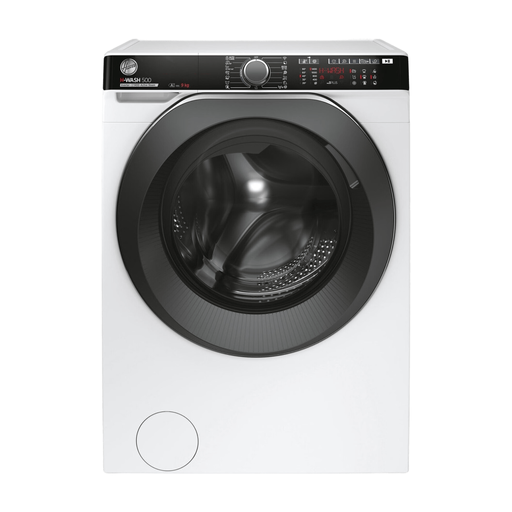 No image available
A 9 kg option to compare if you regularly wash larger bedding loads as well as varying loads.
The product information lists a load sensor, an Auto Care programme and the option to add laundry during the cycle.
The product name lists Wi-Fi and Bluetooth.
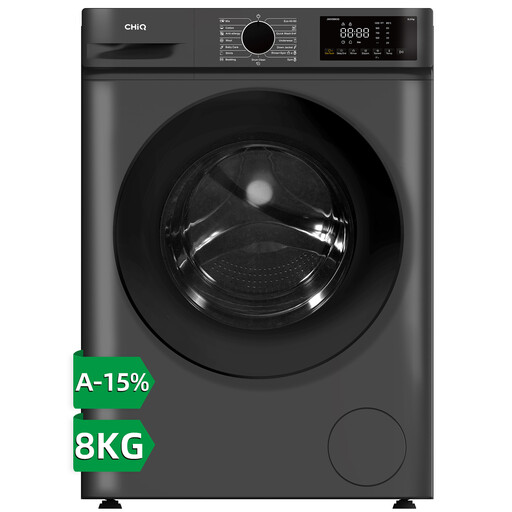 No image available
For anyone looking to compare an 8 kg front-loader by drum and cabinet dimensions.
The product information lists a 530 mm drum and a cabinet depth of 52 cm. It also lists 16 programmes and a steam function.
The product name lists energy rating A-15%.
No. The stated capacity applies to cotton washing; the Consumentenbond recommends a lower load for delicates and synthetics. Follow the programme guidance and the care label on your duvet cover.
No, consider what you actually want to wash. Check the dry weight, volume and care label of the cover; advice for a filled double duvet won’t automatically apply to a cover on its own.
The label includes the energy rating, energy use per 100 cycles, water consumption per cycle, programme duration and noise level. The European Commission sets out standardised conditions for this information; the label doesn’t guarantee that your own weekly consumption will be the same.
You’re entitled to a product that works as it should, and you can contact the retailer if something goes wrong. According to the Dutch government, there is no fixed statutory guarantee period for all products in the Netherlands. Online purchases from a business generally come with a 14-day cooling-off period; terms and exceptions may apply.
Before ordering, check the terms for delivery, installation and any additional services, as these can vary by retailer. According to the Dutch government, when you buy a new appliance of a similar type, the shop must take back your old one.