
Wash dresses with care
You regularly wash machine-washable summer dresses and want to choose a programme that suits each dress’s care label. The Consumers’ Association recommends following care instructions when selecting a programme.


Start with the care labels on your machine-washable summer dresses. Choose a machine with programmes, temperature settings and spin settings to suit them, and check the load limit for each programme. Then match the drum capacity to your usual weekly wash, compare the dimensions with your available space and check the energy label. The Consumers’ Association says Eco 40–60 is designed for normally soiled cotton that can be washed at 40 °C or 60 °C according to its care label; it is not automatically suitable for every dress.
You regularly wash machine-washable summer dresses and want to choose a programme that suits each dress’s care label. The Consumers’ Association recommends following care instructions when selecting a programme.
After a school week, you have several types of laundry to wash. Your usual load and the time you have available will determine which drum size and programmes are practical. The Consumers’ Association recommends matching the capacity to your usual loads.
You want a machine that fits the space available and lets you compare energy use without opting for more drum capacity than you usually need. Milieu Centraal recommends choosing a drum capacity that suits your household.
Start with the care labels, match the drum size to your usual weekly wash, then compare energy use, cycle times and dimensions.
| What to consider | What should you check? | Who is this important for? |
|---|---|---|
| Washing dresses | Read each care label and check the programme, temperature, spin setting and maximum load for that programme. | If I have summer dresses with different care labels, I want to be able to choose a suitable programme for each one. Around 33% of consumers give suitable garment care top priority. |
| Drum size | Compare your usual sorted load with the stated capacity and check whether special programmes have lower load limits. | After a school week, I want to be able to wash my usual laundry in suitable loads, without routinely choosing more drum capacity than I need. Around 27% of consumers prioritise capacity for the weekly wash. |
| Energy and water use | Compare the figures on the energy label on the same basis, and check that the programme you choose is suitable for your laundry. | I want to be able to compare the stated energy and water use, and only use an energy-saving programme for laundry it is designed for. Around 20% of consumers give energy use top priority. |
| Cycle time and installation | Check the programme duration and permitted load, the external dimensions, the space needed for connections and the route to the installation site. | If time or space is limited, I want to know whether a short programme is suitable for the load and whether the machine will fit in its intended space. Around 20% of consumers prioritise time or installation. |
The Consumers’ Association says Eco 40–60 is designed for normally soiled cotton that can be washed at 40 °C or 60 °C according to its care label. It is not a universal delicate-wash programme.
Follow the dress’s care label and choose a programme that suits it.
Your usual sorted load is a better guide to the drum capacity you need. Special programmes may also have a lower load limit than the machine’s maximum capacity.
Compare a typical weekly load with the machine’s capacity, and separately check the limit for the programme you plan to use for your dresses.
Programme duration alone does not tell you whether the fabric, load and settings are suitable for a particular dress.
Check the care label and programme instructions first; only then compare cycle times.
A motor warranty does not automatically mean that the whole machine has the same cover. Delivery and installation may also be separate services.
Ask what delivery and installation include, and read the terms of any extended warranty alongside your statutory rights. The Dutch government outlines consumers’ statutory rights, which are separate from additional manufacturer or motor warranties.
The Miele W1 WEE388 WCS is an 8 kg model to compare if you’re looking for a specifically named delicates programme and extra programme options.
The AEG LR8686UC4 is an 8 kg model to compare if you want to consider a short programme as well as a regular weekly wash.
The LG F4X1008NWH is an 8 kg model with app features to consider when comparing capacity and controls.
The Bosch Serie 6 WGG244FONL is a 9 kg model to compare if your usual weekly loads make use of that capacity.
The Samsung WW90CGC04AAEEN is a 9 kg model with connected features to compare with other machines for larger weekly loads.
These models offer a range of capacities and programme options to compare for your weekly wash. For each machine, check that the settings and load limit suit your dress’s care label.
 No image available
An 8 kg model to compare if that capacity suits your usual weekly wash. Check the load limit for the delicates programme separately.
The product name lists 1400 rpm, 16 wash programmes and an A-10% energy label.
 No image available
Check that the delicates settings suit the care labels on your dresses. Only use the stated short cycle for the type of load it is designed for.
The product name lists 1351 rpm, energy class A and a steam function. The product information describes a 14-minute Daily Xpress cycle for lightly soiled laundry.
 No image available
An 8 kg model to consider if that capacity suits your usual loads. For dresses, check the separate programme instructions too.
The product name lists 1400 rpm, EnergySpin, ProSmart Inverter Motor and energy class A.
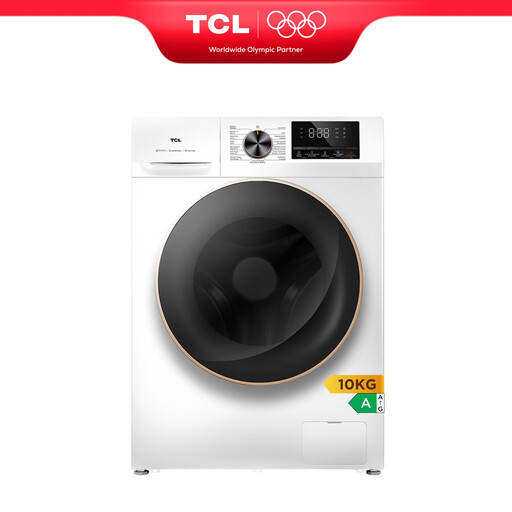 No image available
The 10 kg capacity is worth considering if your usual sorted weekly loads make use of that space. Check the limit for the programme you need.
The product name lists a 15-minute Quick Wash and energy class A. The product information describes the short cycle as suitable for lightly soiled everyday laundry.
 No image available
The stated depth could be useful if space is limited. Also measure the space needed for connections and check whether 6 kg is enough for your usual laundry.
The product name lists a 15-minute Quick Wash and energy class B.
No. The Consumers’ Association says Eco 40–60 is designed for normally soiled cotton that can be washed at 40 °C or 60 °C according to its care label. For a dress that needs a gentle or very gentle wash, follow the care label and choose a suitable programme.
Not necessarily. The Consumers’ Association recommends matching the capacity to your usual loads; special programmes may also have lower load limits. So compare your usual laundry with both the machine’s capacity and the load limit for the delicates programme.
Only if the care label and programme instructions allow it. A short cycle does not, by itself, prove that the fabric, settings and load are suitable. Check these points before choosing the cycle.
Measure the space where the machine will go and the route to it, check there is room for the connections, and ask what delivery and installation include. Follow the model’s manual when connecting the machine.
An energy label is compulsory for household washing machines covered by the applicable EU rules, as the European Commission and the Dutch government explain. The label helps you compare machines, but you are not required to choose one with energy class A.