Which option is right for you?

Cyclists with a narrow laundry area

Your first priority is finding a machine that fits and has enough clearance for its lid or door to open fully. If width is limited, a top-loader is worth considering. The Consumers’ Association recommends measuring the space at several points.

Cyclists with delicate sportswear

You wash cycling kit regularly and want to match the programme and temperature to the care label. BBB Cycling recommends a delicates programme for its cycling clothing if the care label allows machine washing.

Small households with mixed laundry

You want to wash cycling kit as well as everyday laundry without choosing an unnecessarily large machine. Compare the stated cotton capacity with your usual loads; according to the Consumers’ Association, delicates and synthetics require a smaller load than cotton.

What should you look for when buying?

What to consider What to look for Who should prioritise this
Fitting and opening Measure the width, height and depth at several points. Allow for connections and enough room for the door or lid to open. If my laundry area is tight, I want to know that the machine will fit and open properly. Around 36% of consumers prioritise fitting and opening.
Gentle washing Check the delicates programme, temperature settings and load limit for each programme in the manual, and follow the care label. If I wash delicate cycling kit, I want to follow the care label rather than rely on an unsuitable standard programme. Around 29% of consumers prioritise gentle washing.
Small and everyday loads Compare the stated cotton capacity with the load limit for delicates or synthetics. If I wash both cycling kit and everyday laundry, I’m looking for a capacity that suits both types of load. Around 21% of consumers prioritise this balance.
Energy consumption Compare energy labels on a like-for-like basis and check which programme suits the care label. The eco 40-60 programme is designed for cotton that is suitable for it. If I want to take energy use into account, I’ll compare the label, but for cycling kit I’ll still follow the care label. Around 14% of consumers prioritise energy consumption.

Common mistakes

  • Confusing ‘narrow’ with ‘shallow’

    A top-loader may need little width, while a shallower front-loader can still be around 60 cm wide. The external dimensions alone also don’t tell you whether there’s enough room for connections and for the door or lid to open.

    Measure the available space at several points and check the full dimensions and opening requirements of the exact model.

    A machine that doesn’t fit could mean extra installation work or the need to buy another one.

  • Using the maximum capacity as the load limit for delicates

    The Consumers’ Association says that the stated capacity applies to cotton; delicates or synthetics may need a smaller load.

    Check the programme chart for the exact model before choosing a drum size for cycling kit.

  • Choosing an eco or quick programme without checking the care label

    The European Commission describes eco 40-60 as being for cotton that is suitable for it. BBB Cycling recommends a delicates programme for its own cycling clothing if the care label allows machine washing.

    Follow the care label first, then check the temperature, programme and load limit.

Brands to consider

AEG

The AEG LTR6162K is an example of a top-loader for a laundry area where width is limited.

  • AEG Netherlands lists dimensions of 903 × 397 × 599 mm (h × w × d), a capacity of 6 kg and energy class B.
  • Check that the programme and load limit for the exact model suit the care label on your cycling kit. The stated capacity is not the load limit for delicates.

Beko

The Beko BM3WFU3741S is an example of a front-loader for anyone mainly concerned about available depth.

  • Beko Netherlands lists dimensions of 84,5 × 60 × 49,6 cm (h × w × d), a capacity of 7 kg and a delicates programme.
  • It is still 60 cm wide. The stated capacity of 7 kg does not automatically apply to delicates; check the programme load limit and the care label.

Bosch

The Bosch WAN2809XNL is an example of a standard front-loader for a laundry area with enough width and depth.

  • Bosch Netherlands lists dimensions of 845 × 598 × 590 mm (h × w × d), a capacity of 8 kg and a delicates programme.
  • Check the required depth, including space for connections and the door. The Consumers’ Association makes it clear that the cotton capacity is not the same as the permitted load for delicates.

Products on Joybuy

These products are aimed at compact laundry spaces and small loads, alongside front-loaders with a stated capacity for anyone who also washes everyday laundry. Before use, always check the dimensions and make sure the programme, temperature and load limit suit the care label.
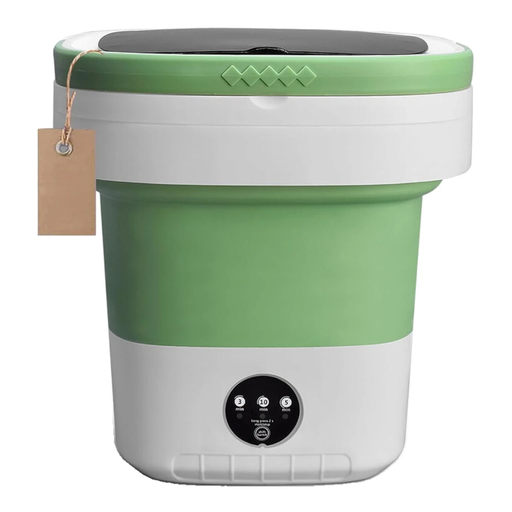
Foldable mini washing machine, 12 L, with spin-drying basket, green

Foldable mini washing machine, 12 L, with spin-drying basket, green

A foldable option for anyone short on space who wants to wash small items separately.

Stated capacity: 12 L. The product name mentions a spin-drying basket and the colour green.

Joybuy
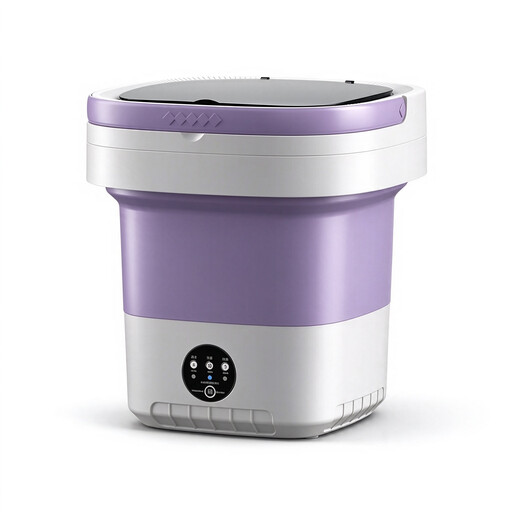
Foldable mini washing machine, 12 L, 3 wash modes, purple

Foldable mini washing machine, 12 L, 3 wash modes, purple

A compact, foldable option for small spaces and small items.

Stated capacity: 12 L; the product name mentions 3 wash modes and the colour purple. Check whether one of the modes suits the care label.

Joybuy
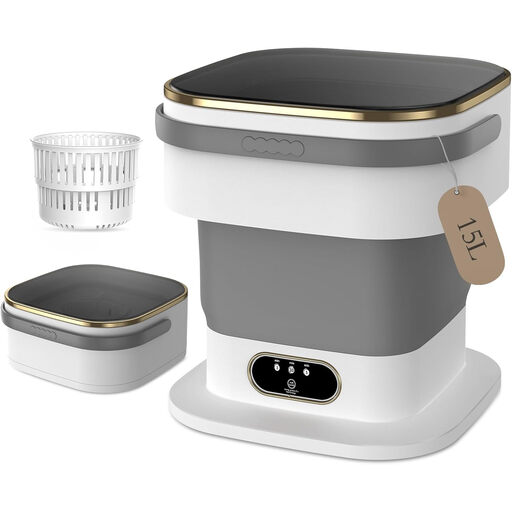
Foldable mini washing machine, 15 L, 3 wash modes, with spin-drying basket, grey and white

Foldable mini washing machine, 15 L, 3 wash modes, with spin-drying basket, grey and white

A foldable option for compact spaces and small loads.

Stated capacity: 15 L. The product name mentions 3 wash modes, a spin-drying basket and the colour grey and white.

Joybuy

TCL FF1006WB0, 6 kg, 45 cm deep, energy class B

TCL FF1006WB0, 6 kg, 45 cm deep, energy class B

A front-loader to consider if depth is limited and you’re looking for a capacity of 6 kg.

The product name states a depth of 45 cm, a capacity of 6 kg and energy class B.

Joybuy

Coocaa Galaxy A3 Series F702A3AВC0, 7 kg, energy class A

Coocaa Galaxy A3 Series F702A3AВC0, 7 kg, energy class A

A front-loader with a stated capacity for anyone who wants to wash everyday laundry as well as small loads of clothing.

The product name states a capacity of 7 kg and energy class A. Check the dimensions and the load limit for the programme you choose.

Joybuy

Frequently asked questions

Can I wash cycling kit on eco 40-60?

Not simply because it’s an energy-efficient programme. The European Commission describes eco 40-60 as being for normally soiled cotton that is suitable for the programme. Check the care label; BBB Cycling recommends a delicates programme and a laundry bag for its cycling clothing if machine washing is allowed.

What should I consider when installing a washing machine in a small laundry area?

Measure the width, height and depth at several points, allowing extra space for connections and for the door or top lid to open. Make sure the machine is level and follow the manual for the electrical connection. The Fire Service advises plugging high-power appliances directly into a socket rather than using an extension block or cable reel.

How should I care for cycling kit and my washing machine?

Always follow the care label for cycling kit. If machine washing is allowed, BBB Cycling recommends using a laundry bag and a delicates programme, washing at a maximum of 30 °C and avoiding fabric softener. Milieu Centraal also recommends running the machine at 60 °C periodically to clean it; use suitable laundry for this and don’t automatically include your cycling kit.

Do I have to buy an extended warranty, or does my right to a remedy end after two years?

No. According to ACM ConsuWijzer, your statutory rights apply alongside any commercial warranty. If a product breaks too soon during normal use, the seller is responsible for providing an appropriate statutory remedy; how long you could reasonably expect the specific product to last is one factor.

Which energy label applies in the Netherlands, and what happens to my old washing machine?

Household washing machines use the EU energy label, with a scale from A to G, so a machine does not have to be class A to be sold. According to the Dutch government, when you buy a new appliance of the same type, the retailer must take back your old one.
