First, measure the entire space available, including hoses and the room needed to open the door or lid. A top-loading machine may fit if width is the main constraint; if space is tight front-to-back, a shallower front-loader could be the answer. A standard front-loader makes most sense if you also have room for larger household loads. Then choose a programme and spin speed that suit the care labels on your cycling kit: a machine’s specifications alone don’t prove that a particular programme is suitable for your clothes.
Who is this choice relevant to?
Cyclists with a narrow space for laundry
If width or depth is the limiting factor, measure not just the appliance but also the space needed for connections and to open the door or lid fully. The Consumentenbond points out that hoses and clearance are also important when positioning the machine.
Cyclists with delicate cycling layers
If you wash items such as cycling shorts, a jersey or a technical jacket, you can choose a programme and adjustable spin speed to suit the care label. The label on each garment is what matters; a programme called ‘sports’ isn’t automatically suitable for every fabric.
Cyclists with small laundry loads
If you often wash your cycling kit separately, weigh up your usual small loads against the rest of your household laundry. You don’t necessarily need a larger drum if you usually wash only a few items at a time.
What should you look for when buying?
Start by checking the available space and which way the door or lid opens. Then compare the programme settings with your garment care labels, and check that the capacity suits both cycling kit and household laundry.
Narrow top-loader
Best suited when: width is the limiting dimension and there’s enough space above the machine to open the lid fully.
Bear in mind: the top can’t be used as a permanent storage surface, and there won’t be enough clearance for the lid if you install it under a worktop.
Shallower front-loader
Best suited when: depth is the limiting factor, but there’s enough room for the machine’s width and for the door to open forwards.
Bear in mind: the stated appliance depth isn’t the full installation depth; allow for hoses and the door’s movement too.
Standard front-loader
Best suited when: the available space can accommodate a standard-size machine and you also wash larger household loads.
Bear in mind: extra capacity or features aren’t automatically an advantage if you mainly wash small loads; check the settings of the programme you plan to use.
| What to consider |
What should you check? |
Who should pay particular attention? |
| Space and opening |
Measure the width, height and depth, as well as the access route, connections and clearance needed to open the door or lid fully. |
If the laundry space is tight, I want to be sure I can install and open the machine. This would be a priority for around 31% of consumers who are mainly concerned about whether it will fit. |
| Programme for your clothes |
Compare the temperature, spin speed, programme and maximum load for that programme with the care label and user manual. |
If you wash delicate or technical cycling layers, you’ll want to adjust the settings to suit the care instructions. Around 25% of consumers would reportedly consider this their main priority. |
| Capacity for small loads |
Estimate the size of your usual loads and check the maximum load and consumption information for your chosen programme. |
If you often wash your cycling kit separately, you’ll also want to weigh up the capacity against the rest of your household laundry. This would be a priority for around 19% of consumers who are mainly concerned about small loads. |
| Energy and water information |
Compare the energy label, kWh per 100 eco cycles and litres per eco cycle; these are different figures. |
If energy and water use are important to me, I want to compare figures on the same programme basis. Around 13% of consumers would reportedly consider consumption their top priority. |
| Noise and positioning |
Check the noise emissions during the spin cycle and make sure the machine can stand securely in line with the installation instructions. |
If the machine is close to a living or sleeping area, spin noise may affect my choice. This would be a priority for around 12% of consumers who put noise first. |
EU figures on the energy label are based on the eco 40-60 programme. They don’t directly predict the consumption of a different programme or a small load of cycling kit. Milieu Centraal recommends choosing a drum capacity that suits your household.
Common buying mistakes
-
Comparing only the appliance dimensions
Hoses and the space taken up by an open door or top lid also determine whether you can install and use the machine.
Measure the full installation and operating space before choosing a model.
-
Assuming every sports programme is suitable for cycling kit
Washing and drying instructions vary from one garment to another, especially for delicate or waterproof layers. A programme name doesn’t prove that its settings are suitable.
Check the garment care label first, then compare its instructions with the specific programme settings.
-
Treating the eco label as a consumption estimate for small sports loads
The label figures apply to the specified eco programme and don’t automatically describe a different programme or load size.
Compare labels on the same basis and separately check the information for the programmes you actually plan to use.
-
Choosing a washer-dryer just because it’s one appliance
Saving space doesn’t tell you whether your cycling kit can be tumble-dried. Milieu Centraal also states that a washer-dryer uses more energy than a separate washing machine and tumble dryer combined.
Check the drying labels and compare the washing and drying capacities and energy information for the specific model.
Brands to consider
AEG
The AEG LTR6162K is a top-loader that may be worth considering if width is limited.
- AEG lists a width of 397 mm, a capacity of 6 kg and sports and delicate programmes for the LTR6162K.
- AEG lists energy class B and 48 kWh per 100 eco cycles for this model; these figures don’t show how much energy a small load of cycling kit will use.
Haier
The Haier HW70-BP14357TU1 is a shallower front-loader for spaces where depth is the main constraint.
- Haier specifies dimensions of 595 × 468 × 850 mm and a capacity of 7 kg for this model.
- The product depth of 468 mm isn’t the full installation space required; manufacturer information about automatic adjustment or fabric care doesn’t prove how well it will wash a specific cycling layer.
Whirlpool
The TW 6521S SENSE WASH BE is a top-loader to consider if you need a narrow machine.
- Whirlpool lists a width of 40 cm and energy class A for this model.
- Whirlpool’s product information lists both 6,5 kg and 7 kg and states a noise emission of 76 dB. Check the product information for the version on offer to confirm the capacity.
Bosch
The Bosch WAN2809XNL is a standard front-loader for a laundry space with more room to spare.
- Bosch lists a capacity of 8 kg and dimensions of 845 × 598 × 590 mm; the programme list includes a delicate cycle and spin speed selection.
- Its stated width and depth are greater than those of the compact alternatives mentioned here. The programme list consulted doesn’t include a dedicated sports programme.
Washing machines at Joybuy
These Joybuy product picks are for anyone looking for a front-loader for cycling kit and other household laundry. One of the models also has a depth of 45 cm listed in its product title.
 No image available
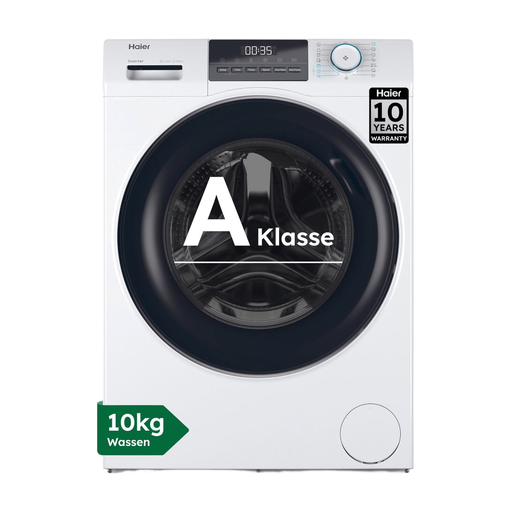
Haier HW100-BP14929A i-Pro 1, 10 kg
The product information mentions automatic adjustment to the load, which may be useful if the amount of washing varies.
The Joybuy product listing states a capacity of 10 kg and 1400 rpm. The product description also mentions digital weighing and a refresh function for delicate fabrics.
View at Joybuy
 No image available
TCL FF1006WB0, 6 kg
The product title lists a depth of 45 cm, which may be useful if front-to-back space is limited.
The Joybuy product title lists a capacity of 6 kg, a 15-minute quick wash programme and automatic weight adjustment. Check the full installation and programme information to make sure it suits your space and clothes.
View at Joybuy
 No image available
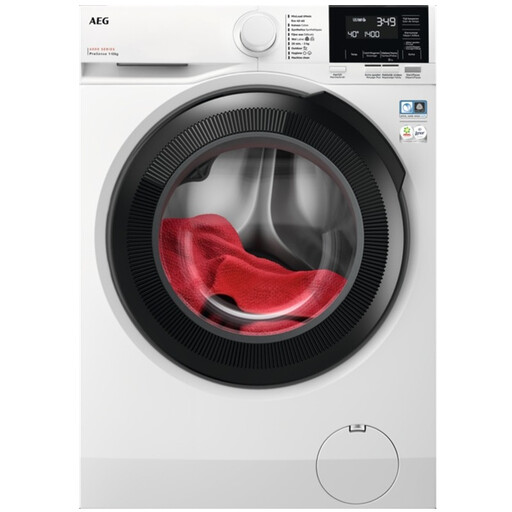
AEG LR63R144, 10 kg
The stated capacity may suit households that wash cycling kit alongside larger everyday loads.
According to the Joybuy product information, the dimensions are 847 × 597 × 660 mm, the capacity is 10 kg and the spin speed is 1400 rpm. The product description mentions ProSense load detection.
View at Joybuy
 No image available
AEG LR73R862, 8 kg
This model may be worth considering if you want to wash cycling kit with the rest of your household laundry; choose a programme that suits the care labels.
According to the Joybuy product information, the dimensions are 847 × 596 × 602 mm, the capacity is 8 kg and the spin speed is 1600 rpm. The description mentions PreciseWash load detection and Steam Refresh.
View at Joybuy
 No image available
AEG LR73S840, 8 kg
The product information mentions load detection; compare the available programme settings with the care instructions for your cycling kit.
According to the Joybuy product information, the dimensions are 84,7 × 59,6 × 57,2 cm, the capacity is 8 kg and the spin speed is 1400 rpm. The description mentions PreciseWash load detection.
View at Joybuy
Frequently asked questions
Is eco 40-60 suitable for every cycling layer?
No. The European Commission describes eco 40-60 as being for normally soiled cotton items labelled as suitable for that programme. Choose a programme for your cycling layer based on its care label and the settings in the machine’s manual; don’t assume it’s suitable based on the energy label.
What should I consider when connecting a machine in a small space?
Follow the installation manual for the specific model and leave room for the hoses and for the door or lid to open fully. Bosch recommends a stable surface, access to the water supply and drainage, and an earthed socket.
How should I maintain the machine if I often wash at low temperatures?
Milieu Centraal recommends running a 60 °C wash about once a month to help remove soap and dirt residue. This isn’t advice to wash cycling kit at 60 °C: follow the care label for each garment.
Do I still have rights in the Netherlands after two years if my washing machine breaks down too soon?
Yes. ACM ConsuWijzer explains that statutory warranty in the Netherlands doesn’t have a fixed two-year limit. If an appliance breaks down sooner than you could reasonably expect under normal use, the seller is responsible for providing an appropriate remedy free of charge, in line with the applicable conditions.


