
Cyclist with delicate layers
You mainly wash machine-washable cycling kit and want to choose programmes that suit each item’s care label. Castelli Cycling and Rapha recommend following the washing instructions for each garment.


Choose a washing machine that fits in your new home and has programmes to suit the care labels on your cycling kit; not every item needs a special outdoor programme. Then compare the drum capacity with your usual wash load, the spin noise level and the energy and water consumption using the same label basis. Measure the space and check the connections in advance. When moving and installing the machine, follow the instructions for the exact model (Bosch Netherlands, Milieu Centraal and the European Commission).
You mainly wash machine-washable cycling kit and want to choose programmes that suit each item’s care label. Castelli Cycling and Rapha recommend following the washing instructions for each garment.
You want to know in advance whether the machine, doorway and connections will fit in your new home, and you may need to move the machine safely later on. Bosch Netherlands provides installation and moving instructions for washing machines.
You also use the machine for everyday laundry, so you’ll want to consider a suitable drum capacity, energy and water consumption, and noise levels if it’s near a living or sleeping area. Milieu Centraal covers capacity and energy-efficient washing, while the European Commission explains washing machine energy labels.
Start with the care labels and the space in your new home. Then compare capacity, consumption and spin noise on a like-for-like basis.
| What to consider | What to look for when buying | Who should give this more weight? |
|---|---|---|
| Gentle care for cycling layers | Check the temperature, available programmes and spin settings for each model, then compare them with the care labels. | If I have cycling kit with different care instructions, I want to be able to choose the right setting for each item. Around 36% of consumers put clothing care first. |
| Fitting, connecting and moving the machine | Measure the space, doorway and access route. Also check the water supply, drainage, hose length and connections against the model’s instructions. | If I’m moving to another room soon, I want to know whether the machine can be moved into the new space and connected there. Around 29% of consumers make fitting the top priority. |
| Capacity and running costs | Choose a drum capacity that suits your usual laundry. Compare kWh per 100 cycles and water per cycle using the stated programme basis, as explained by Milieu Centraal and the European Commission. | If I also use the machine for everyday laundry, I don’t want to choose a capacity that doesn’t suit my usual loads. Around 21% of consumers put capacity and consumption first. |
| Noise near a living or sleeping area | Compare the noise level and class during spinning on the energy label, and make sure the machine is installed on a firm, level surface. Consumentenbond explains the spin noise rating on the label. | If the machine is near my room, I want to know in advance how spin noise might affect my choice. Around 14% of consumers prioritise noise over other purchasing considerations. |
Care labels vary from one garment to another. An outdoor programme from one brand is not a general washing instruction for cycling kit from other brands.
First check the care label on each item, then check the programmes and settings available on the exact washing machine model.
The access route, doorway and distance to the water supply, drainage and plug socket all affect whether you can position and connect the machine.
Measure the route and connection point in advance, and consult the model’s instructions for installation or transport. Bosch Netherlands recommends using an earthed socket.
A larger capacity won’t necessarily suit smaller loads. What’s more, label figures are based on specified programmes and don’t automatically describe how every other programme performs.
Choose a capacity to suit your usual loads, and compare consumption figures only when they’re based on the same programme.
The WAN2827GNL is a useful comparison point for a freestanding front-loading machine with an 8 kg capacity.
The F4X1008NWH is an 8kg front-loading machine worth comparing for everyday laundry in a limited space.
The BM5W0U61043T is worth comparing if you generally wash larger loads too.
Worth looking at model by model if you regularly wash functional outdoor layers.
The products below range from small, foldable washing machines for small loads to freestanding front-loaders for household laundry. For cycling kit, always check that the care label and the chosen model’s instructions allow machine washing and the programme you intend to use.
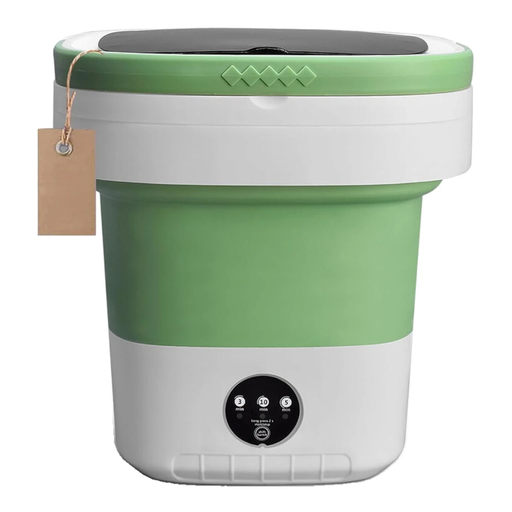 Image unavailable
The product information mentions small loads such as underwear and socks; check separately whether your cycling kit and the selected programme are suitable.
Stated capacity: 12 litres. The product name lists 50 dB and a separate spin-dryer basket; compare noise levels only if they’re based on the same measurement method.
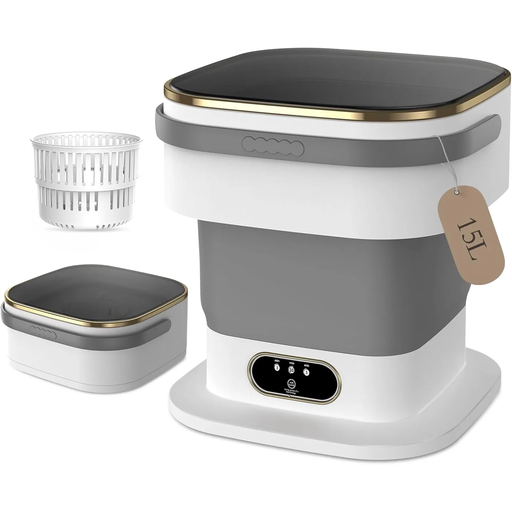 Image unavailable
This portable machine is described as suitable for small items of clothing. Before washing cycling layers, check the garment’s care label and the machine’s instructions.
Stated capacity: 15 litres; maximum load: 1.9 kg. The product name lists 50 dB and a separate spin-dryer basket.
 Image unavailable
A freestanding front-loader for anyone who washes everyday laundry as well as cycling layers. Use the delicate or wool programmes only if the care labels allow it.
Capacity: 8 kg; 16 programmes, including wool and delicate wash. Stated energy consumption is 42 kWh per 100 cycles and spin noise is 72 dB. Dimensions: 850 × 595 × 475 mm.
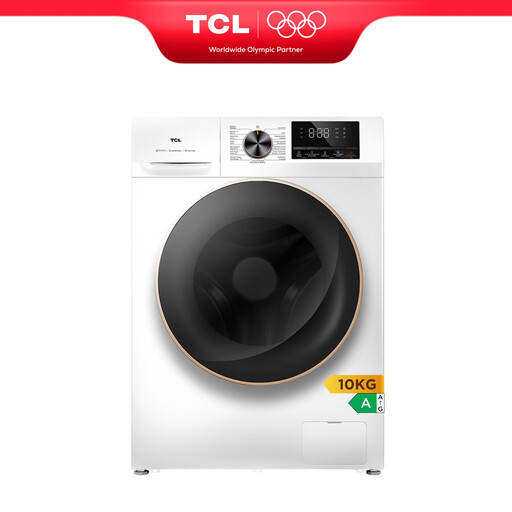 Image unavailable
The product information lists a range of wash programmes. For cycling kit, check whether the garment’s care label allows the programme you want to use.
Capacity: 10 kg; 15 programmes and a 15-minute quick programme for lightly soiled laundry. Energy label A; stated spin noise: 72 dB.
 Image unavailable
A front-loader with a 7 kg capacity for households that wash everyday laundry as well as cycling layers. Check that the available settings suit each garment’s care label.
Capacity: 7 kg; 15 programmes and selectable temperatures of cold, 20, 40, 60 and 90 °C. Energy label A; stated consumption: 40 kWh per 100 cycles and spin noise: 76 dB. Dimensions: 595 × 440 × 850 mm.
No. Choose a programme based on the care label of each garment. The eco 40-60 label doesn’t, by itself, mean that every item of cycling kit is suitable for the programme; Castelli Cycling recommends following the washing instructions for each garment.
Follow your model’s instructions to check that the machine is stable, the water supply and drainage are connected, and it’s plugged into an earthed socket. Also follow the instructions for the transit bolts: Bosch Netherlands explains that they secure the drum during transport.
No, there’s no fixed statutory guarantee period in the Netherlands. According to the Dutch Government, your right to a product that’s fit for purpose depends, among other things, on the type of product, its price and what you could reasonably expect; the retailer is your point of contact if there’s a problem.
When you buy a new, similar appliance, the shop must take the old one back free of charge. The Dutch Government describes this ‘old for new’ scheme for household appliances.