
Cyclists with delicate kit
You want to wash tops, cycling shorts or technical layers according to their care labels, rather than automatically choosing a cotton programme. AGU and Giant advise checking the garment care label.


Choose a washing machine with settings you can adjust to suit the care label on your cycling kit, and check the exact programme and model before you buy. Then consider your everyday family laundry, programme duration and energy use. The maximum drum capacity and a quick programme alone won’t tell you whether a small, delicate load will be washed appropriately.
You want to wash tops, cycling shorts or technical layers according to their care labels, rather than automatically choosing a cotton programme. AGU and Giant advise checking the garment care label.
You need to plan for both sports kit and everyday laundry, and weigh up capacity and programme duration against the time you have. The Consumers’ Association notes that programme duration depends on the programme and the size of the load.
You often wash cycling kit separately and want to assess the drum size for both small loads and everyday laundry, without relying solely on the maximum load capacity. The Consumers’ Association distinguishes between cotton and delicate synthetic loads.
Start with the garment care label and the settings on the programme you want to use. Then check whether the machine also suits your everyday laundry and the time you have before your guests arrive.
AGU and Giant stress that care instructions can vary from one piece of cycling kit to another. The Consumers’ Association states that the maximum load capacity applies to cotton, and that you should use a smaller load for delicate synthetic fabrics.
| What to consider | What should you check? | Who is this important for? |
|---|---|---|
| Gentle washing | Check the garment care label and whether you can set the temperature and spin speed for the appropriate programme. | If I wash cycling kit made from different fabrics or with different finishes, I want to be able to follow the permitted settings for each item. Around 40% of consumers consider garment care their main concern when buying. |
| Getting the washing done before guests arrive | Check the duration of the programme that suits the garment care label, and allow for any separate wash loads and drying time. | If I need to get both cycling kit and everyday laundry done before family come to visit, I want to plan around the right programmes. Around 30% of consumers prioritise getting the washing done on time. |
| Capacity for both types of laundry | Compare the size of your usual laundry load with the load capacity of the programme you want to use for delicate items. | If I’m combining everyday family laundry with a small, separate load of cycling kit, I don’t want to assume both loads need the same drum capacity. Around 20% of consumers give suitable capacity top priority. |
| Energy use by programme | Compare energy-use figures on the same programme basis; the values on the energy label apply to eco 40-60. | If I mainly want to know how much energy my chosen programmes use, I don’t want to assume the label figure also applies to a delicate or sports programme. Around 10% of consumers prioritise energy use. |
The stated maximum load capacity applies to cotton. The Consumers’ Association recommends using a smaller load for delicate synthetic fabrics.
Check the permitted load for each programme and weigh a typical sorted load of laundry.
The values on the EU energy label relate to eco 40-60. They are not the actual energy-use figures for a delicate or sports programme.
Only compare energy-use figures when the programme and load are the same; the Consumers’ Association explains how the label figures are calculated.
Programmes vary in their settings and how they work. A short programme isn’t automatically suitable for clothes with specific care instructions.
First choose a programme that follows the garment care label, then check whether a shorter programme meets those requirements.
The WW80CGC04AAEEN is an option to compare, with a stated capacity of 8 kg and a spin speed of 1400 rpm. The Consumers’ Association lists these specifications.
The iQ500 WG44G2ZWNL has a stated capacity of 9 kg. Siemens lists the capacity, while the Consumers’ Association mentions options for shortening the wash cycle.
Miele states that the WEG895 WPS has a capacity of 9 kg, automatic detergent dispensing and QuickPowerWash.
The Serie 6 WGG244FINL is a front-loading washing machine with a stated capacity of 9 kg. Bosch gives the dimensions for this model as 845 × 598 × 590 mm.
AEG states that the 7000 ProSteam LR73CB86 has a capacity of 8 kg and a function for refreshing clothes.
These washing machines are worth comparing if you wash cycling kit alongside everyday household laundry. The capacity in kg isn’t a recommended load size for every programme: the Consumers’ Association recommends using a smaller load for delicate synthetic fabrics than the maximum cotton load. Also check the garment care label and the settings for the exact programme.
 No image available
Worth comparing if you’re looking for a machine for everyday laundry as well as smaller loads of cycling kit. Check that the programme settings suit the garment care labels.
Stated capacity: 9 kg. Stated spin speed: 1400 rpm.
 No image available
Worth comparing if you wash everyday laundry alongside smaller loads. For cycling kit, check that your chosen programme and adjustable settings meet the garment care label’s instructions.
Stated capacity: 8 kg. Stated maximum spin speed: 1400 rpm.
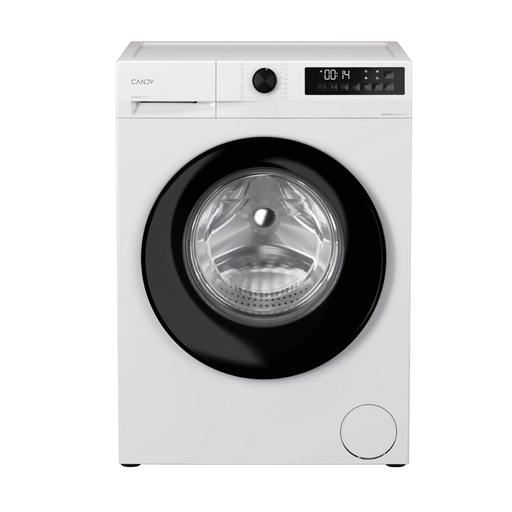 No image available
Worth comparing if you want to plan for both everyday laundry and smaller loads before guests arrive. Check how long the programme suitable for your cycling kit takes.
Stated capacity: 9 kg. Stated spin speed: 1351 rpm.
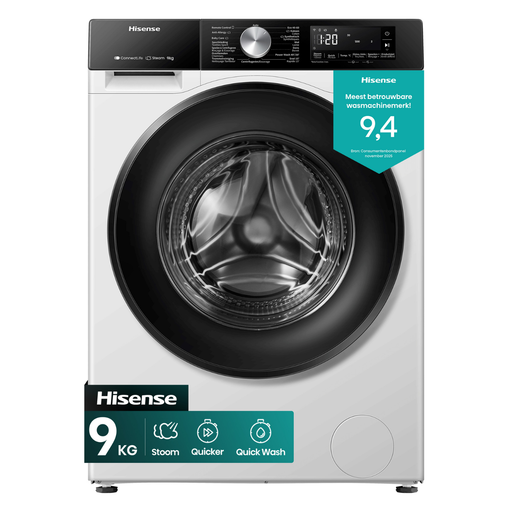 No image available
Worth comparing if you want to balance capacity for everyday laundry with separate loads of cycling kit. Check that the settings for your chosen programme match the garment care label.
Stated capacity: 9 kg. Stated spin speed: 1400 rpm.
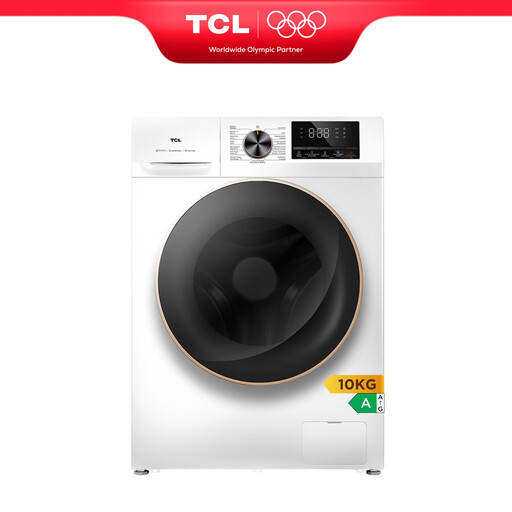 No image available
Worth comparing if you also have larger everyday laundry loads. Don’t let the capacity determine which programme you use for cycling kit.
Stated capacity: 10 kg. Stated spin speed: 1400 rpm. The product name mentions Quick Wash 15 mn.
Not just because of the programme name. Eco 40-60 is intended for normally soiled cotton that is suitable for this programme. First check the care label on each item and, if needed, use an approved delicate-wash setting.
Follow the garment care label. AGU recommends, among other things, fastening closures, turning garments inside out and air-drying them. Instructions for water-repellent clothing may differ from those for a cycling jersey.
Measure the available height, width and depth, and check that the machine can be moved along the route to its installation location. Follow the instructions for the exact model when maintaining it. Milieu Centraal recommends running a suitable wash at 60 °C about once a month. Don’t automatically use this maintenance wash for cycling kit if its care label doesn’t allow it.
The EU energy label’s consumption figures relate to eco 40-60, not to every sports or delicate-wash cycle. According to the Dutch government, the retailer is your point of contact if a product is faulty and should provide an appropriate solution. An additional manufacturer’s warranty doesn’t remove this responsibility.
When you buy a new, similar appliance, the Dutch government says the old-for-new scheme applies. Ask in advance how collection works in practice, especially if the new machine is being delivered.