
Anyone with a narrow laundry space
You’re short on width and can open the machine from above. Remember to measure the clearance above it for the lid too; the Consumers’ Association lists top-loaders as a narrower option.


Start by checking the covers’ care labels, then measure the available width, depth and opening clearance. A top-loader may suit a narrow space, while a shallower front-loader could work if there’s room in front for the door. The Consumers’ Association says top-loaders are generally narrower than front-loaders; with any model, also check the clearance needed for hoses and the lid or door. Choose the drum capacity to suit your usual laundry load, not just the covers.
You’re short on width and can open the machine from above. Remember to measure the clearance above it for the lid too; the Consumers’ Association lists top-loaders as a narrower option.
You have roughly enough width for a front-loader, but not much depth or room for the door. Compare the external dimensions with the space available, including room for hoses and the door to open.
You wash covers alongside your everyday laundry and want a capacity and programmes to suit. Milieu Centraal recommends choosing a drum capacity that meets your household’s needs; the cover’s care label also helps determine the right treatment.
A good fit for: a space where width is the main constraint and there’s room above the machine to open the lid.
Bear in mind: you can’t use the top as a continuous worktop or fit the machine beneath a worktop.
A good fit for: a space with enough width but limited depth, where the door can open in front of the machine.
Bear in mind: the stated cabinet depth alone won’t tell you whether there’s room for the hoses and the open door.
A good fit for: a space with enough width and depth, especially if you’ll also use the machine for everyday household laundry.
Bear in mind: you’ll need room in front for the door to open; a larger drum isn’t automatically better for smaller loads.
| Consideration | What to check before buying | Who should consider this? |
|---|---|---|
| Positioning and opening clearance | Measure the width, height and depth of the space, allowing for hoses and the door or lid to open. | If the machine has to fit into a tight alcove or there’s limited room to open it, getting the fit right is my first concern. Around 40% of consumers put fit first. |
| Care for the covers | Check the care label on each cover and compare its temperature and treatment requirements with the model’s programme guide. | If I can’t wash the covers according to their care labels, the right treatment matters more than other features. Around 30% of consumers put fabric care first. |
| Drum capacity | Compare the capacity with a typical sorted laundry load and check for any programme-specific limits. | If the machine will mainly handle my everyday laundry, I want the drum to suit those loads. Around 20% of consumers first consider their usual load size. |
| Consumption and services | Compare energy label figures on the same eco basis and check what installation and drainage services are available. | If running costs and practical help with installation matter, I want to be able to compare both in advance. Around 10% of consumers put consumption and services first. |
A top-loader may be narrower, while a front-loader may be shallower. Matching the cabinet dimensions isn’t enough if there’s no room for the hoses or the door to open.
Measure the width, depth and height of the space, then check the clearance required in the instructions for the exact model.
The figures on the energy label are based on the eco 40-60 programme. A cover may need a different treatment, and its energy consumption can’t be inferred from that label figure.
Always follow the care label first and compare label figures only on the basis stated.
A matching model number doesn’t prove that the colour and energy label of the version on offer match the manufacturer’s details.
Before buying, check the exact version and the energy label of the appliance being offered.
The TW 6521S SENSE WASH BE is a top-loader worth comparing if width is the limiting factor.
The LTR6162K is a top-loader you can compare with other narrow models.
The HW70-BP14357TU1 is a front-loader worth comparing if depth is the main constraint.
The BM3WFU3741S is a front-loader to compare with other models designed for limited depth.
This selection includes front-loaders for everyday laundry and foldable mini washing machines for separate small loads. Whether a particular cover is machine-washable and will fit in a model depends on its care label, the programme and the space in the drum.
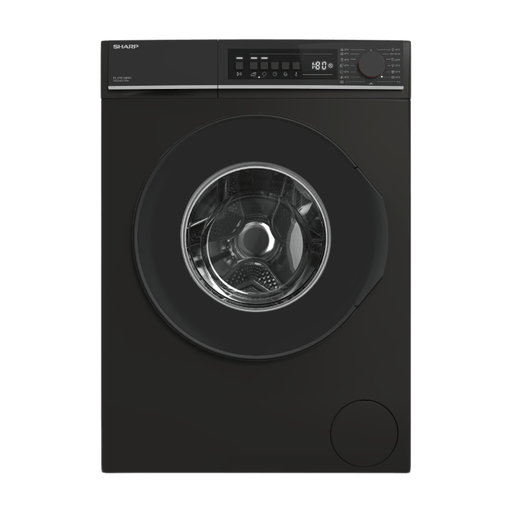 Image unavailable
A front-loader for a range of laundry loads; check that its dimensions and door clearance suit your space.
7 kg capacity; 15 programmes, including one for delicate silk. The product name lists energy class A and an inverter motor.
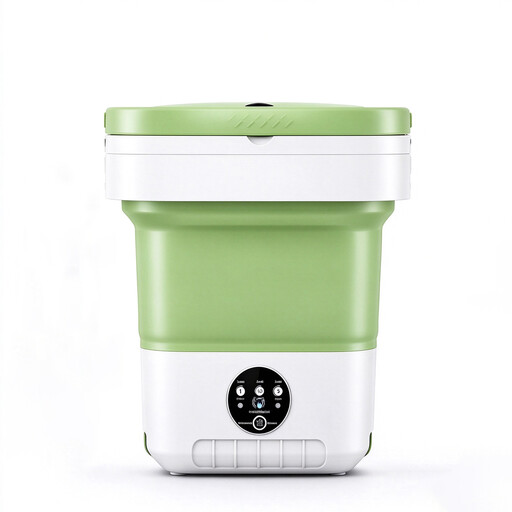 Image unavailable
A foldable machine for a separate small load; consider whether its limited capacity suits what you want to wash.
12-litre capacity; maximum load 1,5 kg. The description mentions a spin basket and says it can be used for items such as underwear and socks.
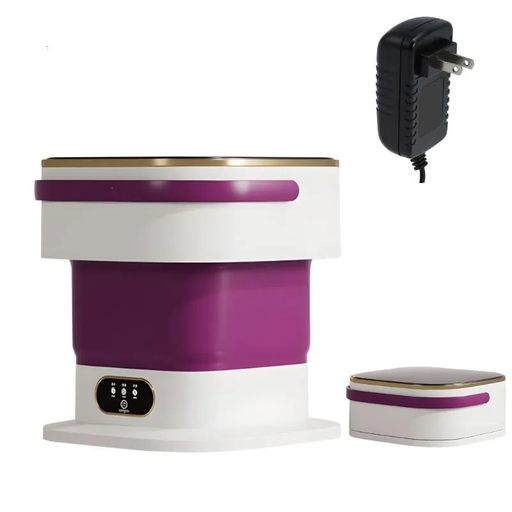 Image unavailable
A foldable machine for a separate small load; check that the maximum load suits the way you’ll use it.
15-litre capacity; maximum load 1,9 kg. The description mentions a spin basket and says it can be used for items such as underwear and socks.
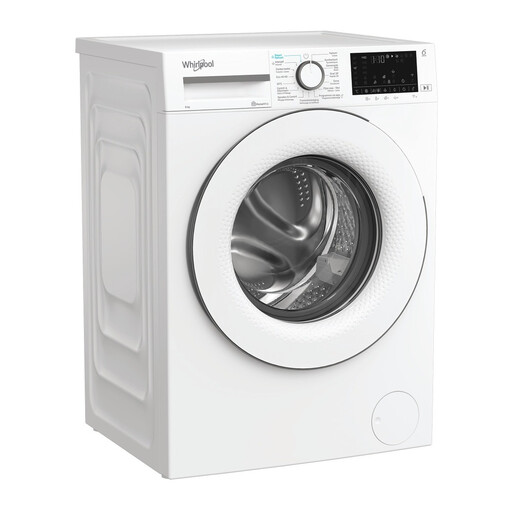 Image unavailable
A front-loader for a range of laundry loads; check the space available and the clearance needed for the door.
The product name lists a 7 kg capacity and 1200 rpm. The description mentions programmes for delicates and handwash/wool.
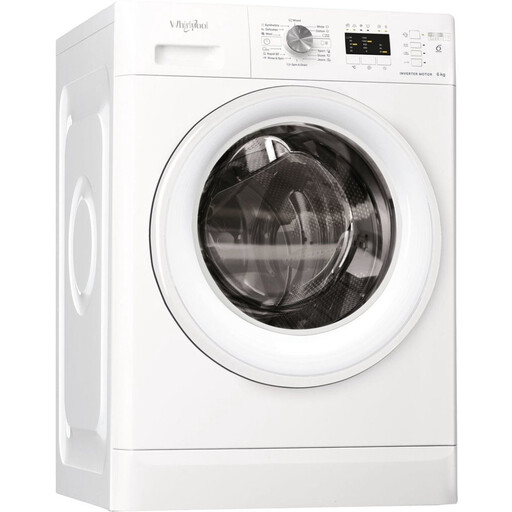 Image unavailable
A front-loader with a lower stated capacity; compare it with your usual laundry load and the space in front of the door.
The product name lists a 6 kg capacity and 1200 rpm. The description mentions 14 programmes, including wool and cotton, and external dimensions of 59,5 × 57,5 × 84,5 cm.
No. Check the care label on each cover: it tells you whether machine washing is allowed and which temperature or treatment to use. A programme on the machine doesn’t override those instructions.
Measure the alcove and allow for hoses and the door or lid to open. Make sure the machine is stable and level, and follow the model-specific connection instructions. Ask in advance what the installation service includes.
The EU energy label for washing machines shows, among other things, energy consumption per 100 cycles, water consumption per cycle, programme duration and noise. The standardised figures are based on eco 40-60 and don’t necessarily reflect the consumption of a delicate wash programme.
According to the Government of the Netherlands, the retailer is responsible for ensuring the product is fit for purpose and must offer an appropriate solution if it’s faulty, such as a free repair or replacement. The retailer can’t simply refer you to the manufacturer.
An energy label is required for the relevant household washing machines; this doesn’t mean you have to choose a particular energy class. According to the Government of the Netherlands, when you buy a new appliance of the same type, the shop must take back your old one. Check in advance how the retailer arranges collection at delivery.