
Owner of delicate cushion covers
You want to wash removable covers according to the instructions for the fabric, temperature and drying method. Check the care instructions for the cover and filling separately.


Choose a washing machine with a programme that matches the care label on the removable cover; a quick wash is no substitute for following the fabric care instructions. The Dutch Consumers’ Association recommends a smaller load for delicate and synthetic fabrics than the maximum capacity for cotton. So choose a drum size that suits your usual laundry, and compare eco energy use and spin noise if those factors matter to you.
You want to wash removable covers according to the instructions for the fabric, temperature and drying method. Check the care instructions for the cover and filling separately.
You want to wash a small load quickly after a wet ride, but only if the short programme is suitable for the fabric and load size. The Dutch Consumers’ Association points out that programmes vary in duration and settings.
You want to choose a drum size and machine dimensions that suit your usual laundry and the space available. The Dutch Consumers’ Association says capacity and machine dimensions are both worth considering when choosing.
Start with the care label on your cover, then check the maximum load for the relevant programme. Next, compare the machine’s capacity and dimensions with your usual laundry and the space available.
| What to consider | What should you look for? | Who is this important for? |
|---|---|---|
| Fabric care | Check the cover’s care label and the suitable temperature, programme and maximum load. | If my cover’s label says it needs a delicate wash, I want to be able to wash the fabric accordingly. Around 36% of consumers put suitability for the fabric first. |
| Time for a small wash | Check which fabrics and load sizes are suitable for the short programme. | After a wet ride, I want to use the cover again quickly without choosing an unsuitable programme. Around 29% of consumers prioritise the time it takes to do a suitable small wash. |
| Capacity and installation | Compare the load size for your chosen programme with your usual laundry, and measure the space available. | I want the drum to suit my usual laundry and the machine to fit in the space available. Around 21% of consumers prioritise capacity and installation. |
| Noise and energy use | Compare spin noise and kWh per 100 eco cycles; the eco figure does not automatically predict energy use on other programmes. | If the machine is close to where I live or work, I pay attention to spin noise and energy use when washing regularly. Around 14% of consumers prioritise these factors. |
The maximum capacity applies to cotton washes. The Dutch Consumers’ Association recommends a smaller load for delicate and synthetic fabrics, so a larger-capacity drum is not automatically better for small loads of cushion covers.
Compare your usual laundry with the machine’s cotton capacity, and check the load limit separately for the programme you want to use for the cover.
Programmes can vary in drum movement, temperature changes and spin speed. So a short cycle is not automatically right for a cover with care instructions calling for a delicate wash.
Check the fabric, temperature and maximum load for the cycle before selecting it.
The European Commission describes the energy label test for washing machines as being based on eco 40-60. This figure does not directly show the energy use of a specific delicate or short cycle.
Use label figures to compare models on the same eco test basis, but don’t treat them as a prediction of the energy use for every cushion-cover wash.
The Beko BM3WFU3741W is a front-loading washing machine with a nominal capacity of 7 kg and a listed programme for delicates, wool and hand washing. Beko also gives this model a spin noise level of 76 dBA and a depth of 49,6 cm.
According to AEG, the AEG LR6KOLN has a nominal capacity of 8 kg and includes programmes such as delicates, synthetics and ‘20Min 3Kg’. Its stated dimensions are 847 × 596 × 602 mm.
According to Bosch, the Bosch Serie 6 WGG246ZSNL has a nominal capacity of 9 kg and includes programmes for delicates and short washes. Its stated dimensions are 845 × 598 × 590 mm.
This selection includes washing machines with a range of capacities and listed short or delicate-wash programmes. Check each model to make sure the programme and load size are suitable for your cover’s care label.
 Image unavailable
The product description lists a 15-minute Quick Wash; check whether this programme is suitable for your cover’s fabric and load size.
8 kg capacity, 1400 rpm, 16 wash programmes, including Delicate and Wool.
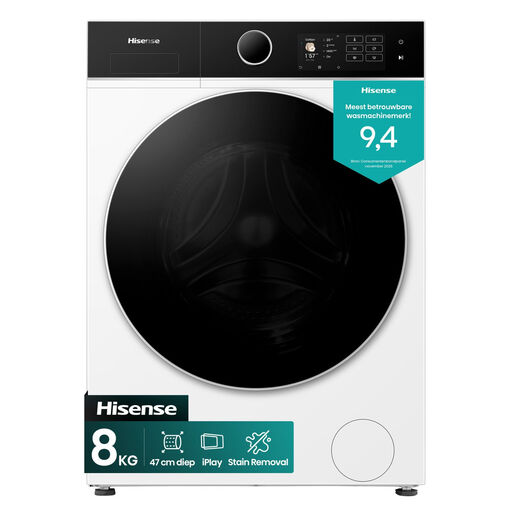 Image unavailable
If you’re looking for a machine with an 8 kg capacity, check the manual for a programme that matches your cover’s care instructions.
8 kg capacity, 1400 rpm and stated dimensions of 85 × 60 × 47 cm.
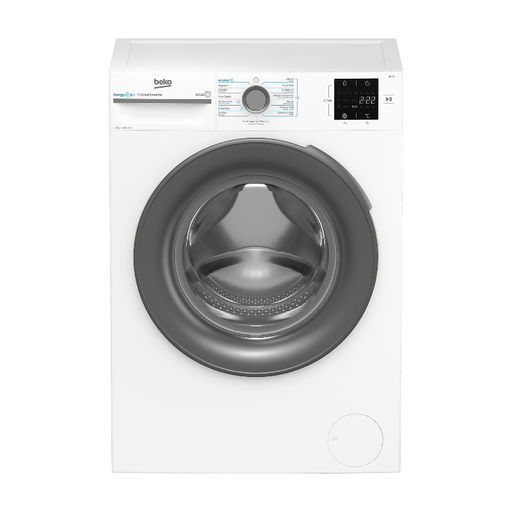 Image unavailable
The programme list includes Delicates, Wool and HandWash; check the manual for the right setting and load size for your cover.
7 kg capacity, 1400 rpm, 15 wash programmes, including Mini/Mini14. Energy class C.
 Image unavailable
The programme list includes Delicates, Wool and HandWash; check whether any of these programmes matches your cover’s care instructions.
8 kg capacity, 1400 rpm, Daily Xpress (14 min) and energy class A.
 Image unavailable
The description says the 15-minute Quick Wash is for lightly soiled everyday laundry; this does not confirm that the programme is suitable for every cushion cover.
6 kg capacity, stated depth of 45 cm, BLDC motor, Steam Wash and energy class B.
Don’t assume that you can. Check the washing and drying instructions for both the cover and the filling; they may differ.
Only if the fabric and load size are suitable for that programme according to the care label and manual. The Dutch Consumers’ Association points out that programmes vary in temperature changes, drum movement and spin speed.
Compare your usual laundry load with the machine’s cotton capacity, and check the maximum load separately for the programme you want to use for the cover. The Dutch Consumers’ Association recommends a smaller load for delicate and synthetic fabrics than for cotton.
Measure the space and compare it with the dimensions of the exact model. Remember to allow room to open the door and load your laundry.
The label does not directly show the energy use of a specific delicate cycle. The European Commission describes the energy label test for household washing machines as being based on eco 40-60.