
Families with delicate cushion covers
You want to wash removable covers without overlooking instructions for temperature, drying or delicate fabrics. IKEA Netherlands, for example, lists different care instructions for GURLI and SANELA covers.


Start with the care label: a machine’s programme won’t make a cover that says ‘hand wash only’ suitable for machine washing. Next, choose a drum size that suits your usual family washing. The Consumers’ Association recommends a larger machine only if you make use of its capacity. For suitable models, compare the energy and water figures on the label too, but bear in mind that they don’t directly show the consumption of every other programme.
You want to wash removable covers without overlooking instructions for temperature, drying or delicate fabrics. IKEA Netherlands, for example, lists different care instructions for GURLI and SANELA covers.
You’re looking for one machine for both covers and regular larger loads, and want to choose a drum size that suits the washing you usually do. The Consumers’ Association recommends choosing a larger machine only if you make use of its capacity.
As well as finding a machine that suits your washing needs, you want to take energy and water consumption into account. The European Commission explains that the label shows energy consumption per 100 cycles and water consumption per cycle.
| What to consider | What should you look for? | Which shoppers is this for? |
|---|---|---|
| Care label and programme | Compare the label on each cover with the programmes, temperature settings and permitted load for each programme in the model’s manual. | If I wash covers with different care instructions, I want to know what’s suitable for each one. Shoppers who prioritise fabric care make up around 36% of consumers in this situation. |
| Drum capacity | Weigh a typical family load and check the maximum load for the programmes you use. Delicates may have a different permitted load. | If I also need the machine for regular family washing, I want a drum size that suits it. Around 29% of shoppers focus on finding the right capacity for family washing. |
| Energy and water consumption | For suitable models, compare the EU label rating, kWh per 100 cycles and litres of water per cycle on the same label basis. The European Commission explains these figures for standardised label comparisons. | If I use the machine regularly, I want to consider consumption alongside how well it suits my washing. Shoppers who prioritise consumption make up around 21% of consumers in this situation. |
| Dimensions and noise | Measure the space and access route, and compare the stated spin noise level of models that otherwise meet your requirements. | If space is limited or the machine will be close to living areas, I want to check the dimensions and spin noise level in advance. Around 14% of shoppers consider placement or noise their main concern. |
Care instructions vary from cover to cover. IKEA Netherlands lists machine washing for the GURLI and SANELA versions checked, but hand washing for the KUDDARNA outdoor cushion checked.
Check the label on each cover individually before choosing a programme.
Using an unsuitable washing method can damage the cover and mean you need to replace it.
A large drum offers little benefit if your usual washing rarely fills it. The Consumers’ Association recommends choosing a larger washing machine only if you’ll fill it.
Weigh a typical family load and also check the permitted programme load for delicate covers.
The European Commission’s label figures are based on standardised eco cycles, so they don’t directly show the consumption of a selected delicates programme.
Compare label figures on the same basis, and consider the consumption of other programmes separately.
The BM3WFU38412CW is an 8 kg front-loading machine worth considering if you want to compare settings for delicates and extra rinsing.
The LR6KOLN from the 6000 ProSense range is an 8 kg front-loading machine to compare if you’re considering variable loads and an extra rinse option.
The Serie 6 WGG244ZONL is a 9 kg front-loading machine to consider if your regular family washing often calls for more capacity.
This selection includes front-loading machines for machine-washable covers, with suitable programmes, as well as everyday family washing. Always check the cover’s care label and the selected model’s programme load.
 No image available
The programme description mentions delicate fabrics and silk; the capacity may suit larger family loads.
9 kg; programme for delicate fabrics and silk; A energy rating; 44 kWh per 100 cycles; 50 litres per cycle.
The 9 kg capacity is most useful if you make use of it for regular family washing.
 No image available
This front-loading machine has programmes and settings worth comparing for covers whose labels allow machine washing, as well as for everyday family washing.
8 kg; 1400 rpm; A energy rating; 42 kWh per 100 cycles; 16 programmes. The description mentions a wool programme, adjustable temperature and spin speed, and an extra rinse option.
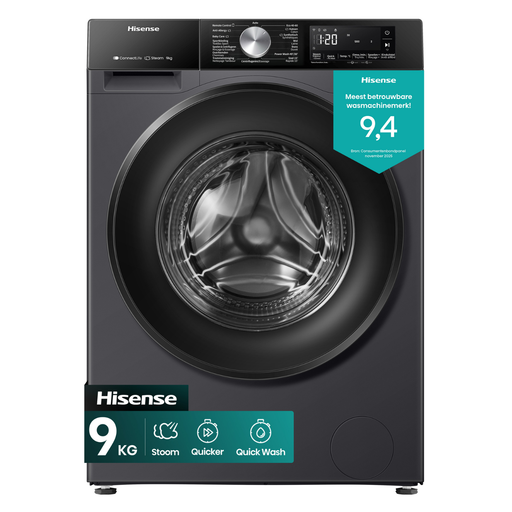 No image available
The stated capacity is designed for larger loads; the listed depth may be worth considering if space is limited.
9 kg; 1400 rpm; 47 cm deep; 33 kWh per 100 cycles; 39 litres per cycle. The description mentions a short programme for small loads and a steam function.
The 9 kg capacity is most useful if you make use of it for regular family washing.
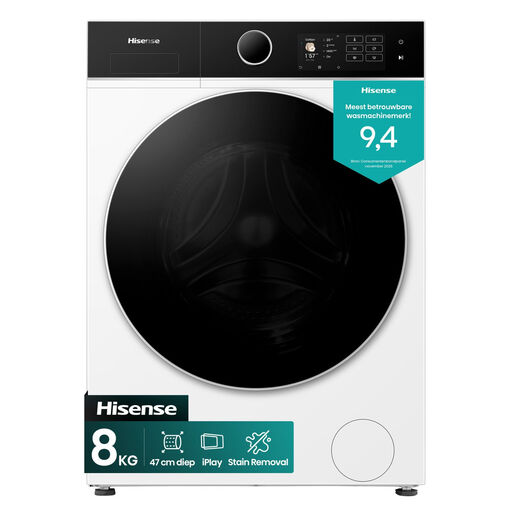 No image available
With an 8 kg capacity, this front-loader is worth comparing for everyday washing alongside covers whose labels say they are machine-washable.
8 kg; 1400 rpm; 0.331 kWh per eco 40–60 cycle; 38 litres of water per cycle. The description mentions 18 programmes and a steam function.
 No image available
The programme description mentions settings for delicate fabrics, wool and hand washing, which you can compare with your cover’s care label.
8 kg; A energy rating; 47 kWh per 100 cycles; 47 litres per cycle. The description mentions adjustable temperature and spin speed, and an extra rinse option.
No. Follow the care label on the cover in question. IKEA Netherlands says the GURLI version checked can be machine-washed at up to 40 °C, the SANELA version at up to 30 °C, and the KUDDARNA outdoor cushion should be hand-washed. A hand-wash programme on your machine doesn’t mean you can machine-wash a cover labelled ‘hand wash only’.
Not necessarily: according to IKEA Netherlands, the GURLI and SANELA covers checked are not suitable for tumble drying. Check the label on your own cover before choosing a drying method.
For suitable models, compare the EU energy label, kWh per 100 cycles and water per cycle on the same label basis. The European Commission explains the label figures for the eco 40–60 programme; these don’t directly show the consumption of another programme or your personal energy costs.
If a product is faulty, contact the seller. The Dutch government lists a free repair or a replacement product as possible remedies under consumer rights. According to the Dutch government, you can return an old household appliance to the shop or online retailer where you buy a new, similar appliance, or take it to your local council recycling centre. Check the terms for installation and removal separately in advance.