Choose a washing machine with a programme that suits the care label on your cushion covers and a capacity that matches your usual laundry load. As the Consumentenbond explains, the stated load capacity applies to cotton washing. Then measure the space where the machine will go and the route to get it there, check the connections and compare energy use on the same basis.
Who is this buying guide for?
Owner of delicate cushion covers
You want to wash removable covers according to their individual care labels, without applying the temperature or drying instructions for one fabric to all the others. Bosch Netherlands and IKEA’s care instructions show that recommendations can vary from cover to cover.
Washing several covers at once
You’re looking for enough drum space and a practical door opening for a typical load of covers, without automatically choosing a much larger machine. The Consumentenbond explains that the stated load capacity applies to cotton washing.
Buying for a small utility room
You need to check the space, access route, doorway and connections before comparing models. The Consumentenbond discusses machine dimensions, while Bosch Netherlands provides connection instructions.
What should you look for in a washing machine for cushion covers?
Start with the care label and your usual laundry load, then check that the machine will fit in your utility room and through the access route.
| What to consider |
What to look for |
Who should prioritise this? |
| Washing according to fabric type |
Check the care label on each cover and make sure the selected programme and temperature are suitable. |
If I wash covers made from different fabrics, I want to be able to follow the right instructions for each one. Around 33% of consumers prioritise washing that’s suitable for the fabric. |
| Capacity and door opening |
Compare your usual load with the drum capacity, door opening and the limit for your chosen programme. |
When washing several covers at once, I want to be able to load them easily, without choosing more capacity than I need for my usual laundry. Around 25% of consumers prioritise suitable capacity and a practical door opening. |
| Positioning and connections |
Measure the space for the machine, the access route and the clearance needed for the door. Also check the floor, water supply, drain and earthed socket in line with the installation instructions. |
If space is limited in my utility room, the machine needs to fit through the access route and be connected safely. Around 17% of consumers prioritise positioning and connections. |
| Energy and water use |
Compare energy use per 100 cycles and water consumption on the washing machine’s label. |
If I do laundry regularly, I want to compare usage figures on the same basis. Around 17% of consumers prioritise ongoing energy and water use. |
| Service and installation |
Check in advance what delivery and installation include, and keep your purchase and model details. |
If clear arrangements after purchase matter to me, I want to know who to contact with installation questions or if something goes wrong. Around 8% of consumers prioritise service and after-sales arrangements. |
Common buying mistakes
-
Assuming the maximum load capacity applies to every programme
The stated load capacity applies to cotton washing; delicate or synthetic fabrics may have different load recommendations.
Compare the covers’ care labels with the limit for the programme you plan to use.
-
Measuring only the width of the machine
Depth, the access route, clearance for the door and the connections also determine whether the machine will work in the space you’ve chosen.
Measure the entire route and the space where the machine will go, and check the installation requirements for your chosen model.
If the machine won’t fit through the access route or can’t be connected properly, you may need to make different delivery or installation arrangements.
-
Relying on a load sensor to make an oversized drum suitable
Load detection doesn’t always adjust consumption accurately if the machine is often run half empty.
Choose a capacity based on what you usually wash, not just the largest load of covers you can imagine.
Brands worth comparing
Bosch
The Dutch Series 6 range includes front-loading models with a stated capacity of 9 kg.
- For the WGG244ZANL, Bosch Netherlands lists dimensions of 845 × 598 × 588 mm and a maximum spin speed of 1400 rpm.
- The 9 kg capacity isn’t a programme-specific limit for delicates; check the load limit for your chosen programme.
AEG
The Dutch 6000 ProSense range includes the LF62CB86, with a stated capacity of 8 kg.
- According to AEG, ProSense adjusts the wash duration and energy and water use to the load on this model.
- This is the manufacturer’s description, not an independent measurement of savings when washing cushion covers. The cover’s care label and the selected programme still determine what’s suitable.
Samsung
The Dutch washing machine range includes EcoBubble models; compare the programmes and model code of the specific machine.
- Samsung describes washing at lower temperatures as one use of EcoBubble.
- The manufacturer’s description doesn’t replace a cover’s care label and isn’t a reason to wash above the stated temperature.
LG
The Dutch range includes models with features such as AI Direct Drive and, on selected models, automatic dosing.
- LG describes automatic detection and dosing on models equipped with these features.
- Check that the feature is available on the exact model and programme; it doesn’t replace a cover’s care instructions.
Washing machines on Joybuy
These washing machine picks from Joybuy are suitable for washing cushion covers. Compare their capacity and dimensions with your usual load and the space in your utility room.
 No image available
Samsung WW90DG6U25LE, 9 kg, 1400 rpm
An option to compare if you regularly wash larger loads and the stated dimensions fit in your utility room.
Capacity: 9 kg. Spin speed: 1400 rpm. Dimensions: 600 × 550 × 850 mm. The product information lists Delicate/Silk and Wool programmes; always check that they’re suitable for your cover’s care label.
Joybuy
 No image available
Midea MF110W80BA10/W-NL, 8 kg, 1400 rpm
An option to consider if an 8 kg capacity suits your usual laundry load.
Capacity: 8 kg. Spin speed: 1400 rpm. Dimensions: 850 × 595 × 475 mm. Listed programmes include Wool, Delicate and 20°C Low Temp Wash; check that the programme and temperature are suitable for each cover.
Joybuy
 No image available
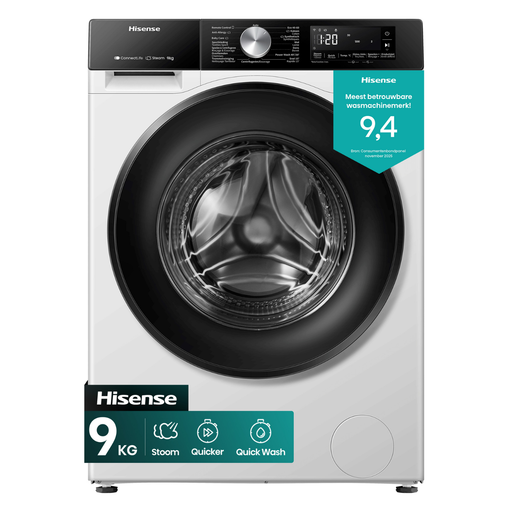
Hisense WF3S9045BW3/BLX, 9 kg, 1400 rpm
An option to compare if you regularly wash larger loads and its external dimensions suit the space available.
Capacity: 9 kg. Spin speed: 1400 rpm. Dimensions: 84,5 × 59,5 × 59 cm. The programme list includes Wool; check that it’s suitable for the cover’s care label.
Joybuy
 No image available
Beko BM3WFU38412CW, 8 kg, 1400 rpm
An option to consider if you usually wash medium-sized loads and its dimensions suit the space available.
Capacity: 8 kg. Spin speed: 1400 rpm. Dimensions: 84,5 × 60 × 54,6 cm. The programme list includes Delicates, Wool and HandWash; follow the individual care label for each cover.
Joybuy
 No image available
TCL FF1006WB0, 6 kg, 45 cm deep
An option to compare if you’re looking for a smaller capacity and machine depth is a key consideration in your utility room.
Capacity: 6 kg. Depth: 45 cm. The product information lists automatic adjustment to the weight of the load; this doesn’t determine which programme is suitable for a particular cover.
Joybuy
Frequently asked questions
Can every removable cushion cover go in the washing machine?
No. Follow the care label on each cover. For example, IKEA says the FRÖSÖN outdoor cushion cover can be machine-washed at up to 40 °C with the zip closed; IKEA advises against tumble-drying the GURLI cover.
What should I measure before putting a washing machine in my utility room?
Measure the access route and the full space where the machine will go, and check the model’s installation instructions. Bosch Netherlands recommends, among other things, a stable floor, accessible water and drain connections, and an earthed socket.
How do I compare washing machine energy use?
Compare the figures on the washing machine’s label, including energy use per 100 washes and water consumption. The standardised energy measurement is based on the eco 40-60 programme and doesn’t predict the consumption of every programme you use for your cushion covers.
Does the retailer have to take away my old washing machine?
When you buy a new, similar appliance, the Dutch Government’s old-for-new scheme requires the retailer to take back the old appliance. If your new machine is being delivered to your home, agree in advance how the handover will work.


