Who is this buying guide for?

Housemates with different types of cover

If you wash covers with different care instructions, follow the label for each one. For example, IKEA Netherlands states that certain covers can be machine-washed at up to 40 °C; this isn’t a general rule for all covers.

A busy shared household

Match the drum capacity to the loads housemates usually wash together and the time they have available. The Consumers’ Association advises choosing a large machine only if you can usually fill the drum properly.

People living close to the laundry area

If the machine is next to living rooms or bedrooms, noise levels and a stable installation matter. If you’re concerned about leaks, it’s also worth checking the water protection on the specific model.

What should you look for?

What to consider What should you check? Who should pay particular attention?
Care for covers Check the permitted temperature and programme for each cover; don’t rely on a steam or quick programme alone. If I wash covers with different care labels, I want to be able to select the permitted treatment for each one. Around 31% of consumers put suitable care for cushion covers first.
Capacity and wash time Compare the drum capacity with your usual shared loads and check the programme duration that’s right for the laundry. If you plan washes with housemates, you’ll want to know whether the drum suits your usual loads. Around 25% of consumers give shared laundry capacity the highest priority.
Noise, positioning and leaks Check the noise figures, measure the space available and look at the specific water protection features on the model. If the machine is close to living areas or above other rooms, noise and potential leaks are important considerations. Around 25% of consumers put disruption, positioning and the risk of leaks first.
Energy use and overall purchase considerations Compare the energy label, kWh per 100 cycles and water per cycle using the same label basis. If you want to take ongoing energy use and the overall purchase decision into account, compare the figures on the EU energy label. Around 19% of consumers give energy use and costs the highest priority.

Common buying mistakes

  • Assuming a steam or quick programme is suitable for every cover

    The permitted temperature and drying method vary from cover to cover. A refresh function also isn’t the same as washing according to the care label.

    Check the cover’s care label first, then make sure the temperature and settings of your chosen programme are suitable.

  • Choosing the largest drum without considering your usual loads

    A larger capacity isn’t automatically an advantage if housemates usually wash small loads separately.

    Consider a typical shared load and match the drum capacity to it before comparing models.

  • Relying on a ‘water lock’ alone

    Hose protection and a base sensor respond to different problems. The protection features available vary by model.

    Check the protection features listed for the exact model and follow the installation instructions to ensure it’s securely positioned and connected.

Brands to consider

Beko

According to Beko Netherlands, the BM3WFT3841W is a freestanding front-loading washing machine with an 8 kg capacity and a spin speed of 1400 rpm.

  • Beko describes EnergySpin as a feature of the model.
  • A brand claim doesn’t prove that a programme is suitable for a particular cover; check the care label and programme settings.

AEG

AEG Netherlands describes the LR73844 as an 8 kg machine with a 69-minute MixLoad programme and Steam Refresh.

  • The product information lists a mixed-load programme and a refresh function.
  • Refreshing isn’t the same as washing a cover; check that the permitted care matches the programme.

Bosch

According to Bosch Netherlands, the Bosch WGG244FONL is a front-loading washing machine with a 9 kg capacity and a maximum spin speed of 1400 rpm.

  • Its capacity is worth comparing if your household regularly washes larger loads together.
  • Extra capacity isn’t necessarily an advantage if the drum is rarely filled properly.

Miele

Miele Netherlands lists CapDosing and AddLoad as features of the WSA123 WCS 8kg Active.

  • These features are worth considering when comparing models.
  • On their own, these features don’t prove that the machine will wash cushion covers better; compare the model’s programmes and water protection.

Samsung

Samsung Netherlands describes the WW90DG6U85LBU3 as a 9 kg model with an A energy label.

  • The capacity and energy label are useful points to compare with your usual loads and energy use.
  • Smart features or a brand claim about energy savings don’t replace comparing models on the same label basis or checking the care instructions for your covers.

Washing machines at Joybuy

These product picks are freestanding front-loading washing machines to compare for shared laundry and washable cushion covers. Check separately for each cover that the programme and care are permitted.

Samsung WW90DG6U25LE washing machine

Samsung WW90DG6U25LE

An option to compare if you’re looking for a 9 kg capacity and programmes for different fabrics.

9 kg; 1400 rpm; Delicate/Silk and Wool programmes; A energy label; 44 kWh per 100 cycles; spin noise 72 dB.

The listed Super Speed cycle is for 5 kg; check that the programme requirements are suitable for your laundry.

Joybuy

Midea MF110W80BA10/W-NL washing machine

Midea MF110W80BA10/W-NL

An option to compare if you’re looking for an 8 kg machine with programmes for different fabrics.

8 kg; 1400 rpm; 16 programmes, including Delicate and Wool; AquaStop leak protection; spin noise 72 dB.

You can set the delayed end time from 0 to 24 hours; check the programme settings for the cover you want to wash.

Joybuy
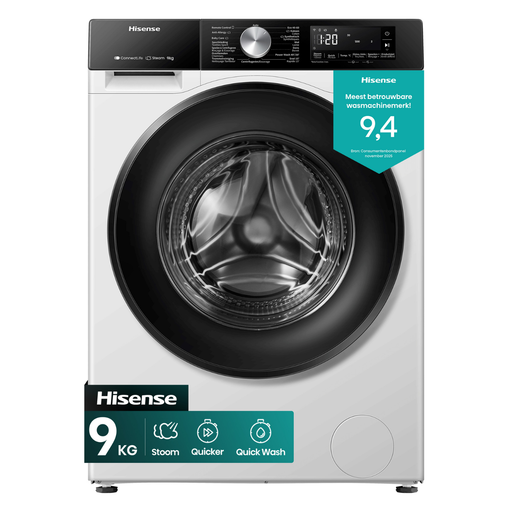
Hisense WF3S9043BW3 washing machine

Hisense WF3S9043BW3

An option to compare if you want to consider shared loads and short programmes.

9 kg; 1400 rpm; 33 kWh per 100 cycles; 39 litres of water per cycle; spin noise 72 dB.

The listed short programmes are Quick 15’ and Power Wash 49’; they aren’t automatically suitable for every cover.

Joybuy
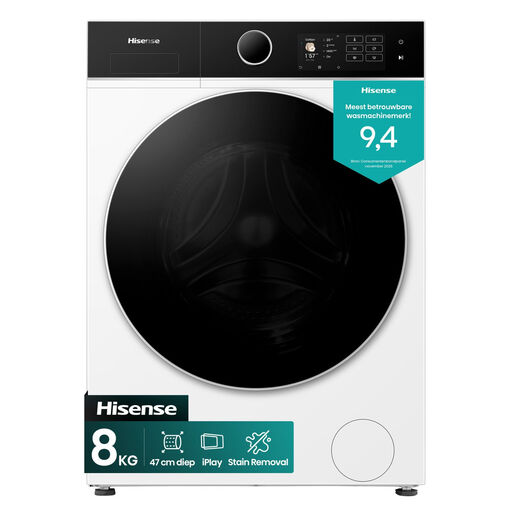
Hisense WF5I8043BWF washing machine

Hisense WF5I8043BWF

An option to compare if space is limited and 8 kg suits your usual loads.

8 kg; 1400 rpm; cabinet depth 47 cm; 18 programmes; 33 kWh per 100 cycles; 38 litres of water per cycle.

The product information lists a steam function; check whether this treatment is permitted for each cover.

Joybuy
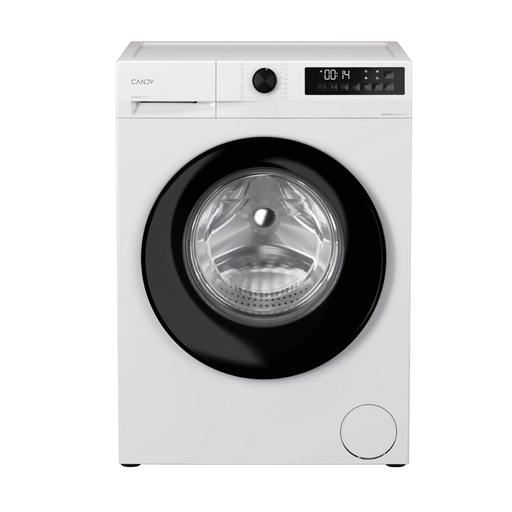
Candy GD 49B8-S washing machine

Candy GD 49B8-S

An option to compare if you want to consider a 9 kg capacity alongside energy use and spin noise figures.

9 kg; 1351 rpm; A energy label; 40 kWh per 100 cycles; spin noise 69 dB(A); 16 programmes.

The product information lists quick cycles from 14 minutes; check that your chosen cycle is suitable for the laundry.

Joybuy

Frequently asked questions

Can every removable cushion cover go in the washing machine?

No. Check the care label on each cover. For the specific KRYDDBUSKE cover, IKEA Netherlands says it can be machine-washed at up to 40 °C, inside out with the zip closed, and must not be tumble-dried. These instructions don’t automatically apply to other covers.

What should you check when installing a machine in a shared home?

Check the dimensions, access to the water supply and drain, and make sure the machine is stable and level, following the installation instructions for your chosen model. The Consumers’ Association notes that a stable surface can help reduce noise and disruption.

Which energy label and consumption figures can you compare?

Compare EU energy labels on the same basis, including energy consumption per 100 cycles and water consumption per cycle. The Dutch government states that an energy label is compulsory for household washing machines; this doesn’t mean you have to choose a machine with an A label.

How can you keep a shared washing machine fresh?

Agree who will check the door seal, filter and detergent drawer. The Consumers’ Association recommends leaving the door open after use so the drum can dry, and following the dosage instructions on the detergent packaging.

Do your statutory rights end when the manufacturer’s guarantee expires?

No. A commercial guarantee doesn’t replace your statutory rights. According to ACM ConsuWijzer, if a fault occurs that you wouldn’t expect with normal use, you may be entitled to an appropriate free remedy from the seller. How long a product should last depends on what you could reasonably expect from it; it isn’t automatically a fixed two-year period.
