
If you have delicate covers
You want to wash removable covers without choosing a temperature or programme that goes against the care label. IKEA and Bosch Netherlands explain how to care for covers and interpret washing symbols.


Start by checking the care label on each cover: removable doesn’t necessarily mean machine washable. IKEA warns that some covers with a piped edge may look a different colour from fixed upholstery; Bosch explains that two bars beneath the wash tub symbol indicate an extra-gentle wash. Then choose a drum to suit your usual laundry, measure the machine and the route into its new room, and compare energy and water use along with connection requirements.
You want to wash removable covers without choosing a temperature or programme that goes against the care label. IKEA and Bosch Netherlands explain how to care for covers and interpret washing symbols.
You’re looking for a washing machine for both your covers and everyday laundry in your new home. Drum capacity, external dimensions and transport all matter. Milieu Centraal, the Consumers’ Association and Bosch Netherlands offer guidance on capacity and moving.
Once you’ve washed your covers, you want a machine that also suits your usual laundry loads. Milieu Centraal recommends matching the capacity to the size of your household.
First check whether the care label says the cover can go in the washing machine. Then choose a machine that suits your usual laundry, its new location and the move itself.
| What to consider | What to look for when buying | Who is it most important for? |
|---|---|---|
| Care instructions and fabric protection | Read the care label on each cover and check the temperature, suitable programme and permitted load for that programme. | I want to be sure the fabric and colour can withstand the programme I choose. Around 36% of consumers give following the cover’s care label top priority. |
| Drum capacity for covers and everyday laundry | Compare the drum capacity with your usual load, and separately check the maximum load for the programme you need. | I want enough room in the drum for the covers, while still having a capacity that suits the laundry I usually do after moving. For around 29% of consumers, getting that balance right comes first. |
| Positioning and transport | Measure the space and access route; check the external dimensions, room for connections and transport instructions. | If the machine is coming with me, I want to know whether it will fit through the access route and can be transported and connected safely. Positioning and transport are the main considerations for around 21% of consumers. |
| Running costs after purchase | Compare kWh per 100 eco cycles and water consumption on the EU label; separately check which delivery and installation services are included. | I want to avoid choosing a machine for one unusual load that doesn’t suit my usual laundry. Energy and water use, and longer-term costs, matter most to around 14% of consumers. |
A cover may have its own washing and drying instructions. IKEA warns that a particular type of cover may look a different colour from fixed upholstery.
Check the care label on each cover and choose the programme, temperature and drying method accordingly.
Treating a cover incorrectly could damage it or cause colour differences.
A large machine won’t necessarily suit smaller everyday loads. Milieu Centraal notes that you could lose the per-kilo benefit if the machine isn’t loaded properly.
Use your usual laundry as a guide, and separately check that the covers fit within the permitted load for the programme.
The old-for-new scheme covers taking away an old appliance; disconnection and installation are separate services.
Before buying, ask which services are included in the delivery. The Dutch Government explains the conditions for free take-back when a private customer buys a new, similar appliance.
Disconnection or installation may incur separate charges.
The BM3WFU38412CW is a freestanding front-loading washing machine with an 8 kg capacity. Beko Netherlands lists programmes for delicates, hand washing and wool.
The LF628400 from the 6000 ProSense series is a front-loading washing machine with an 8 kg capacity.
The Serie 4 WAN2827GNL is one example of a front-loading washing machine with an 8 kg capacity. Bosch Netherlands publishes the external dimensions and moving instructions for this model.
These washing machines are for anyone who wants to wash machine-washable covers and then do their usual household laundry. Before buying, check that the programme and permitted load suit your cover’s care label.
 No image available
Worth comparing if you’re looking for a front-loader for covers and everyday laundry after your move. Check that the programme you want suits your cover’s care label.
Capacity: 8 kg. 16 washing programmes. Spin speed: 1400 rpm.
 No image available
A front-loader to compare for everyday laundry after your move. Check separately that a suitable programme and its permitted load are right for your covers.
Capacity: 8 kg. Spin speed: 1351 rpm. Energy class A. Steam function.
 No image available
Worth comparing if you expect to do smaller loads after your move or have limited space. Measure the available area and check the permitted load for the programme you need for your covers.
Capacity: 7 kg. Depth: 400 mm. One-Touch Speed Wash.
 No image available
Worth comparing if your cover’s care label allows a suitable programme and you also need a machine for everyday laundry. Beko Netherlands lists programmes for delicates, wool and hand washing.
Capacity: 8 kg. Spin speed: 1400 rpm. Dimensions: 84,5 × 60 × 54,6 cm. Energy class A.
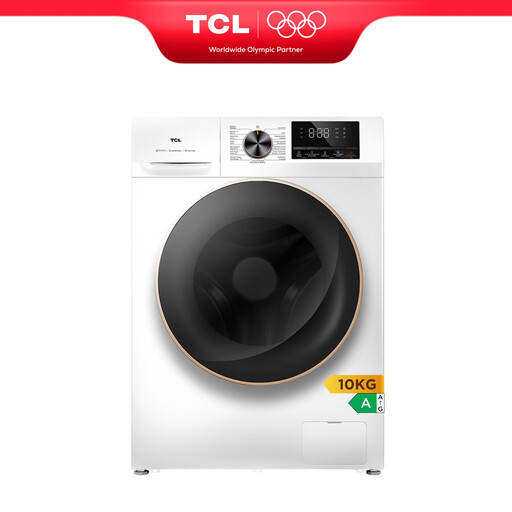 No image available
Worth comparing if you expect to do larger loads regularly after your move. Check that the machine suits your usual laundry and fits the available space.
Capacity: 10 kg. Smart DD motor. 15-minute Quick Wash programme.
No. The care label on the specific cover tells you whether machine washing is allowed and which programme to use. An IKEA manual warns that some covers with a piped edge may look a different colour from fixed upholstery; this doesn’t necessarily apply to every cover.
Follow the manual for your specific model. Bosch Netherlands recommends, among other things, draining any remaining water and securing the drum with the specified transit fixings before moving the machine. Remove the transit bolts before using it in its new home.
No. A manufacturer’s guarantee is separate from your statutory rights. According to the Dutch Government, there is no fixed statutory guarantee period in the Netherlands; what you can expect from a product depends, among other things, on the product and how it is used. If a product is faulty, contact the seller.
Yes. Household washing machines must have an energy label. The EU label uses classes A to G; its consumption figures are based on the standardised Eco 40-60 programme and don’t automatically show the consumption of a delicates programme.
When a private customer buys a new, similar appliance, the Dutch old-for-new scheme applies: the seller can’t charge for taking away the old appliance. Disconnection and installation are separate services, according to information from the Dutch Government.