
Living with a narrow laundry alcove
You’re mainly looking for a narrower machine and may have little room for a door that swings open. Bear in mind that a top loader needs clearance above it.


If width is limited but there’s enough clearance above the machine, a top loader may be a good fit. If you have enough width but limited depth, a shallow front loader makes more sense. Choose a capacity that suits your usual load and follow the care label: the Consumentenbond points out that Eco 40-60 is not guaranteed to wash at 60 °C. A mini washing machine is best suited to small loads, provided you’re happy with its more limited washing and spin-drying capacity.
You’re mainly looking for a narrower machine and may have little room for a door that swings open. Bear in mind that a top loader needs clearance above it.
You have around 60 cm of width, but a machine that sticks out or an open door could obstruct the walkway.
You wash only a little underwear at a time and are weighing up a portable appliance against the capacity and convenience of a fixed machine.
First measure the available width, depth and clearance for opening the door or lid. Then compare the wash programmes and capacity with your care labels and usual load.
| What to consider | What to look for | Who is this most important for? |
|---|---|---|
| Width and opening clearance | Measure the alcove and check whether the top lid or front door can open fully. | If my alcove is narrow, I also want to make sure I can open the machine properly. Around 36% of consumers prioritise width and opening clearance when choosing. |
| Depth and walkway | Compare the model’s depth with the space needed for hoses and the open door. | With limited space in front of the machine, I want to avoid hoses or the door blocking the walkway. Around 29% of consumers prioritise the depth required. |
| Wash programme | Check the care label and whether the machine has a suitable cotton programme and, if needed, a standard 60 °C setting. | If I need a specific temperature, I want to know what the programme actually does and what the care label allows. Around 21% of consumers prioritise a suitable wash programme. |
| Capacity | Compare your usual load with both the washing and spin-drying capacities. | For small, regular loads, I don’t want to choose a capacity that doesn’t suit how I use the machine. Around 14% of consumers prioritise small loads and running costs. |
A top loader may be narrower without being any less deep. A shallow front loader may still be wide and needs space for its door to open.
Measure the available width, depth and opening clearance separately, then compare them with the model’s full dimensions and installation measurements.
The Consumentenbond explains that the temperature of this programme can vary. So it isn’t a fixed 60 °C wash if you need a higher temperature.
Follow the care label and check which cotton or hygiene programme suits the temperature you need.
With a mini washing machine, the maximum load for washing may differ from the maximum load for spin-drying. So the stated capacity for one stage doesn’t automatically tell you how much you can put through the other.
Check both capacities and read the water connection instructions for the specific appliance.
If the washed load is larger than the spin-drying capacity, you may need to run an extra spin cycle.
A washer-dryer saves space compared with two separate appliances, but not necessarily compared with a washing machine on its own. The drying capacity may be lower than the washing capacity, and a combined cycle can take a long time, according to the Consumentenbond.
Compare the washing and drying capacities separately, and only choose this option if you also need a dryer.
The TW 6521S SENSE WASH BE top loader may be worth considering if width is your main constraint.
The B1W764W BE is a front loader to consider if you have enough width but limited depth.
The WF5I8043BWF is a front loader with a stated capacity of 8 kg.
The WAN2827GNL is a front loader to compare if your alcove can also accommodate a greater depth.
The products below are foldable, portable mini washing machines for small loads. Check the capacity and features of each version to make sure they suit your needs.
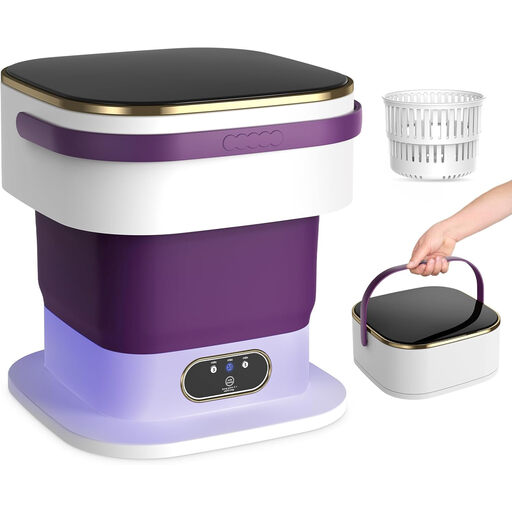 Image unavailable
This portable, foldable model is designed for small loads and situations where storage space is limited.
The product name mentions a spin-drying function; check the capacity and settings before choosing a load.
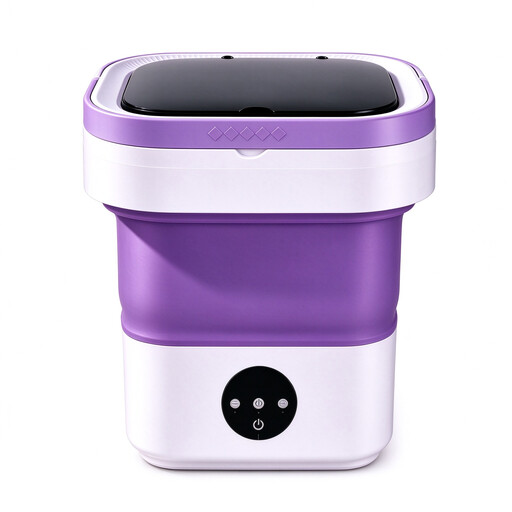 Image unavailable
The product listing mentions underwear and small loads; check that the available programmes are suitable for the care label.
Keep the air outlet clear: it gets hot during use. Don’t dry clothes with flammable substances on them, and keep the appliance away from flammable materials.
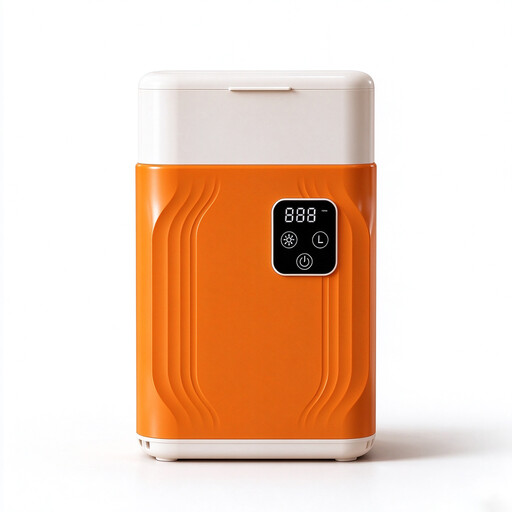 Image unavailable
The product listing mentions underwear and small loads; check that the available programmes are suitable for the care label.
Keep the air outlet clear: it gets hot during use. Don’t dry clothes with flammable substances on them, and keep the appliance away from flammable materials.
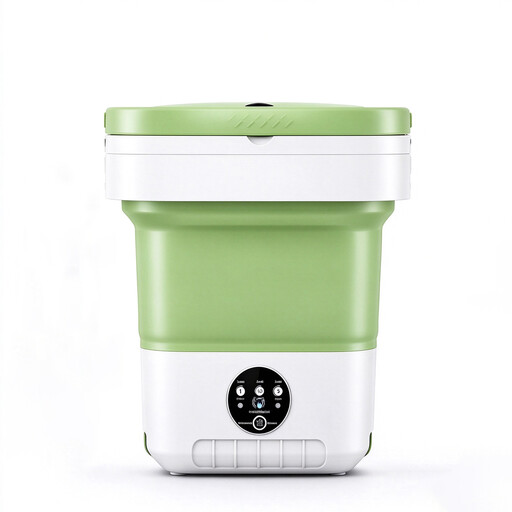 Image unavailable
The product name mentions underwear and socks; the foldable design is intended for small spaces.
Listed features: 12 litres and 50 dB. Check which capacity and settings are suitable for your load.
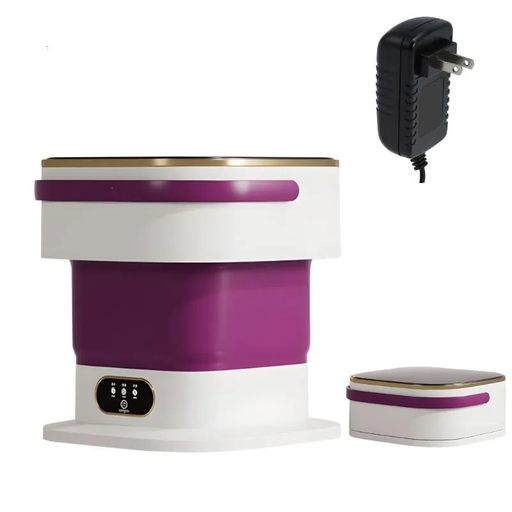 Image unavailable
The product name mentions underwear and socks; the foldable design is intended for small spaces.
The product name lists a capacity of 15 litres. Check which capacity and settings are suitable for your load.
No, not as a general rule. Always follow the care label first. Milieu Centraal recommends washing at 60 °C in certain situations, such as when someone in the household has an infectious illness; for normally soiled laundry, a more energy-efficient programme may be suitable. Eco 40-60 doesn’t mean the machine actually washes at 60 °C.
Also measure the space needed for hoses, ventilation and opening the front door or top lid fully. The Consumentenbond advises allowing room for connections, the door and ventilation. Also check the installation instructions for the specific model.
Before connecting it, check the water supply, drainage and permitted water temperature for the specific appliance. Also follow the instructions and warnings in the product information.
Follow the manufacturer’s maintenance instructions and check whether the manual recommends a maintenance programme. Never exceed the maximum temperature on the care label.
In the Netherlands, your statutory guarantee is separate from any manufacturer’s guarantee offered. According to ACM ConsuWijzer, if a product develops a fault sooner than could reasonably be expected under normal use, the seller must provide an appropriate remedy free of charge. When you buy a similar new appliance for private use, the seller must, according to the Government of the Netherlands, take back the old appliance free of charge, including for online purchases. Arrange the practical handover with the seller.