Who is this buying guide for?

People with a specific hygiene concern

You want to know whether a standard cotton wash is enough or whether you need a separate 60°C programme. Follow the care label and consider your particular circumstances; Thuisarts, for example, recommends washing clothes and bedding at 60°C in connection with threadworms.

People who wash small cotton loads

You mainly wash underwear, but also want to be able to wash other suitable clothes. The Consumentenbond and Milieu Centraal recommend choosing a drum capacity that suits the amount of laundry you usually wash.

Buyers with a tricky utility room

You need to consider the dimensions, stable positioning, connections and the potential impact of a leak. The Consumentenbond recommends a flat, sturdy surface and removing the transit bolts before use.

What should you look for when buying?

What to consider What to check before buying Who is this important for?
Programme and hygiene Check whether the exact model has a separately selectable 60°C cotton programme, and follow the care label. Eco 40-60 does not guarantee a 60°C wash; the Consumentenbond measured maximum temperatures of 20 to 50°C. If I have a specific reason to wash at 60°C, I want a suitable programme and a care label that allows this temperature. Around 33% of consumers put programmes and hygiene at the top of their list.
Load capacity Compare the drum capacity with the amount of cotton laundry you usually wash together, and check the load limits for the programmes you use. The Consumentenbond and Milieu Centraal recommend choosing a suitable drum capacity. If I usually wash small loads of underwear, I also want to allow for other suitable clothes and avoid choosing a drum that is generally too large for my usual laundry. Around 27% of consumers prioritise a suitable load capacity.
Positioning and leaks Measure the machine and the space available for hoses and the door; also check the floor and the water protection features of the exact model. The Consumentenbond describes features such as base sensors that detect leaks. If my utility room is cramped or a leak could affect other rooms, I want to know in advance whether the appliance will fit and what protection it has. Around 20% of consumers give positioning and the risk of leaks their highest priority.
Energy and water consumption Compare the energy rating, kWh per 100 cycles and water consumption on the label for the exact model, using Eco 40-60 as the programme basis. The European Commission describes the A–G scale used on EU energy labels. If I use the machine often, I want to take the label figures into account without assuming they also reflect the consumption of a separate 60°C wash. Around 20% of consumers focus mainly on ongoing energy and water consumption.

Common pitfalls

  • Assuming Eco 40-60 guarantees a 60°C wash

    The Consumentenbond measured a range of maximum temperatures for Eco 40-60, so the programme name does not guarantee that the wash reaches 60°C.

    Check the care label and see whether the exact model has a separately selectable 60°C cotton programme if you need that setting.

  • Choosing a large drum for mostly small loads

    A larger capacity is only suitable if you can fill the drum with your usual laundry. Underwear alone does not always give you a clear idea of how much cotton you wash together.

    Base your choice on the amount of cotton laundry you usually wash together, and consider the load limits for each programme.

  • Assuming all washing machines have the same water protection

    Water protection can vary between models. Bosch, for example, does not list AquaStop for the Serie 2 WGE03408NL.

    Check the features of the exact model and consider what a leak could affect in your utility room.

Brands to consider

Beko

The freestanding front-loading BM3WFT3841W is one example, with an 8 kg capacity and a cotton programme.

  • Stated depth: 54,6 cm; stated spin noise level: 76 dBA.
  • The EnergySpin energy-saving claim compares specific programmes with a specific older Beko model; it does not prove an advantage over all washing machines.

Bosch

The Serie 2 WGE03408NL is a freestanding front-loader with an 8 kg capacity and a spin speed of 1400 rpm.

  • Bosch lists dimensions of 848 × 598 × 588 mm.
  • Bosch does not list AquaStop for this model; check the water protection features of the exact appliance.

AEG

The AEG LR86CB86 from the 8000 PowerCare range is a front-loader with an 8 kg capacity and, according to AEG, a spin speed of 1600 rpm.

  • For this model, AEG lists 38 kWh per 100 Eco 40-60 cycles and dimensions of 847 × 597 × 599 mm.
  • Do not treat the manufacturer's PowerCare and PowerClean claims as independent evidence of better hygiene performance for underwear.

Miele

The WEA135 WPS 8kg Active is a W1 front-loader with an 8 kg capacity and, according to Miele, a spin speed of 1400 rpm.

  • Miele lists CapDosing and AddLoad as operating options.
  • Miele's claims about drum care and tested service life are not independent comparative results for washing underwear.

Joybuy products for small loads

These products are designed for small loads of laundry, including underwear. They are an alternative for smaller washes; check for yourself whether their capacity and wash settings suit the way you use them.
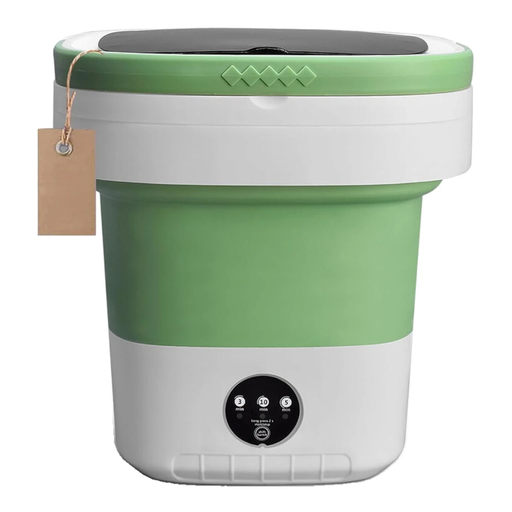
12-litre foldable mini washing machine with spin basket, green

Foldable mini washing machine, 12 litres, green

Designed for small loads such as underwear and socks; consider this option if you are looking for a compact machine for smaller washes.

The product title lists a 12-litre capacity, a spin basket and 50 dB.

View at Joybuy
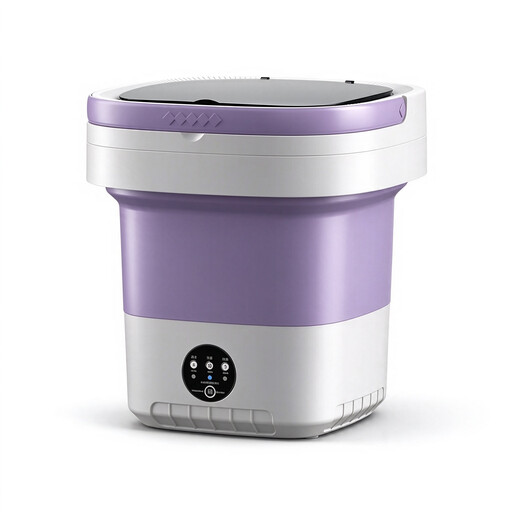
12-litre foldable mini washing machine with three wash settings, purple

Foldable mini washing machine, 12 litres, purple

Worth considering if you want to wash small garments in small loads and are looking for a foldable design.

The product title lists a 12-litre capacity and three wash settings.

View at Joybuy
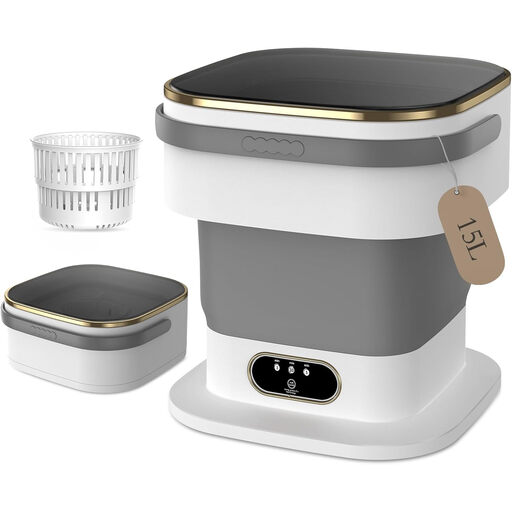
15-litre foldable mini washing machine with three wash settings and spin basket, grey-white

Foldable mini washing machine, 15 litres, grey-white

Designed for small loads; consider this option if you are looking for a foldable machine with several wash settings and a spin basket.

The product title lists a 15-litre capacity, three wash settings and a spin basket.

View at Joybuy
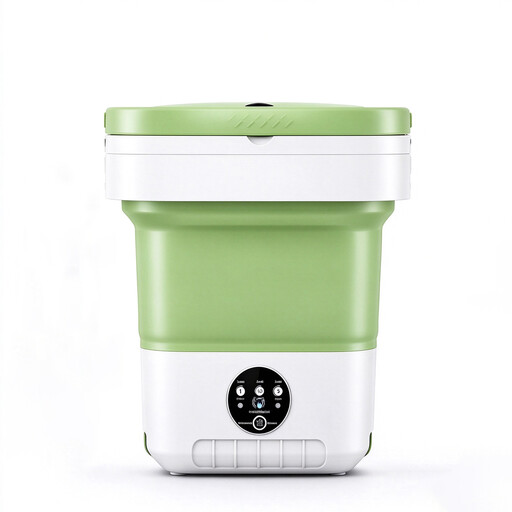
12-litre foldable mini washing machine with spin basket, green

Foldable mini washing machine, 12 litres, green

A compact option for small loads; check whether the stated maximum load is suitable for what you want to wash.

The product title lists a 12-litre capacity, a spin basket and 50 dB. The stated maximum load is 1,5 kg.

View at Joybuy
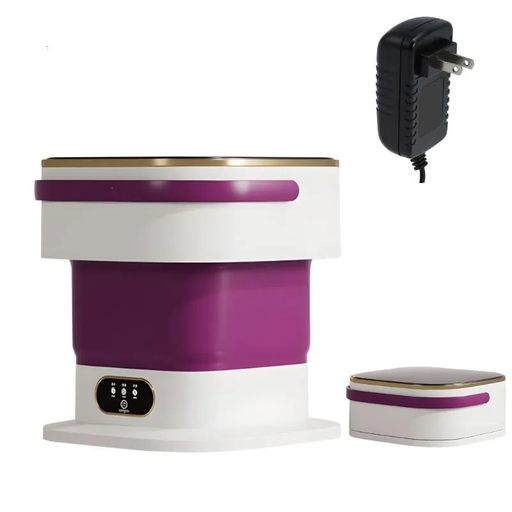
15-litre foldable mini washing machine with spin basket, purple

Foldable mini washing machine, 15 litres, purple

Designed for small loads of underwear and socks; consider this option if you are looking for a foldable design with a spin basket.

The product title lists a 15-litre capacity and a spin basket.

View at Joybuy

Frequently asked questions

Is Eco 40-60 the same as washing at 60°C?

No. Eco 40-60 is designed for normally soiled cotton that the care label says can be washed at 40°C or 60°C, but the actual temperature may be lower. The Consumentenbond measured maximum temperatures of 20 to 50°C for this programme. Check the care label and choose a separately selectable programme if you need a 60°C wash.

Does cotton underwear always need to be washed at 60°C?

No. The fact that it is cotton does not mean underwear always needs to be washed at 60°C. Follow the care label and consider your circumstances; for threadworms, Thuisarts recommends washing clothes and bedding at a minimum of 60°C. This advice applies to that specific situation.

What should I consider when placing a machine in the utility room?

Measure the appliance and the space available, check the connections, and make sure the floor is flat and sturdy. The Consumentenbond also recommends removing the transit bolts before use; follow the installation instructions for the exact model too.

What does the energy label tell me about consumption?

The label helps you compare the stated energy and water consumption of different models, based on Eco 40-60. Your actual consumption also depends on the programmes you choose and how you use the machine; the label figures do not automatically reflect those for a separate 60°C wash.

How do I check the water protection features?

Check which protection features the exact model has, such as hose protection or a base sensor. The Consumentenbond describes a base sensor as a feature that can detect leaks; don't rely on the brand name alone.
