Choose a drum capacity to suit the sorted towel load you usually wash, and check that the machine has a suitable cotton programme and spin options. Damp towels don’t automatically need to be washed at 60 °C: follow the care label and only choose a higher temperature when the situation calls for it.
Who is this choice relevant to?
Anyone washing towels after a weekend away
You want to wash your cotton towels when you get home in a drum that suits your usual load, without choosing more capacity than you need. The Consumentenbond describes drum capacity in terms of cotton laundry.
Anyone with extra hygiene needs
You want to know when a different temperature or washing method makes sense. It depends on the situation and the care label; damp towels alone don’t determine the choice. Milieu Centraal outlines circumstances in which 60 °C may be advisable.
Anyone who wants dry towels again quickly
You may need the towels again soon after washing, or dry them in a tumble dryer, so it’s worth considering the programme, spin cycle and drying stage together. The Consumentenbond describes cotton programmes for cotton laundry.
What should you look for?
The Consumentenbond explains drum capacity for cotton, while Milieu Centraal and the European Commission provide context for choosing a temperature and using the Eco 40-60 programme.
| What to consider |
What should you look for? |
Who should prioritise this? |
| A suitable drum capacity |
Weigh a typical sorted load and compare it with the machine’s capacity for cotton. Also check the dimensions and make sure there’s enough room to open the door. |
If you usually wash a standard load of towels after a weekend away, you won’t want to choose a machine based on one exceptionally large load. Around 36% of consumers prioritise a drum that suits their load. |
| Programme and temperature |
Check the cotton programme, the available temperature settings and the care label. Milieu Centraal describes situations in which 60 °C may be advisable. |
If you’re unsure whether damp towels need a special wash, choose a temperature that suits your actual hygiene needs. Around 29% of consumers prioritise this choice. |
| Consumption over repeated washes |
Compare energy and water consumption on the same Eco 40-60 basis, and choose a drum that suits your usual load. The European Commission describes this programme as being for normally soiled cotton that can be washed at 40 °C or 60 °C according to its care label. |
If you also use the machine for your regular laundry, consider its ongoing consumption as well as your weekend wash. Around 21% of consumers prioritise energy and water consumption. |
| Drying time after washing |
Check the spin settings for your chosen programme, its maximum load and what the care label allows for your drying method. |
If you need the towels again quickly or use a tumble dryer, make sure the washing programme works well with the drying stage. Around 14% of consumers prioritise drying time. |
What to watch out for when buying
-
Choosing an extra-large drum for one unusually big load
A large machine isn’t automatically the best choice if your usual cotton load often only partly fills it. The Consumentenbond warns that a large machine may not wash a partial cotton load effectively.
Compare the machine’s capacity for cotton with a typical sorted load, rather than the biggest weekend wash you can imagine.
-
Mistaking a steam-refresh function for a full towel wash
Steam functions vary between machines. A function that refreshes laundry isn’t the same as a cotton programme for used towels.
Check the cotton programme first, then see whether the extra function suits any other regular laundry needs.
-
Assuming the energy label figures apply to every programme
The energy and water consumption figures on the label are based on the Eco 40-60 programme. Other cotton or quick programmes may have different cycle times and consumption levels.
Compare labels on the same basis, then check the settings and load capacity of the programme you plan to use.
-
Only considering the machine itself when planning where to put it
The dimensions and a stable surface are important when installing a washing machine. The Consumentenbond notes that installation may sometimes be offered as a separate service.
Measure the space and check in advance which delivery and installation services are included with your purchase.
Brands to consider
Bosch
The Serie 6 WGG244ZANL is a front-loading machine with a stated capacity of 9 kg, making it a useful reference if you usually wash loads of around that size.
- Bosch specifies a maximum spin speed of 1400 rpm for this model.
AEG
The 6000 ProSense LR63142 is a front-loading machine with a stated capacity of 10 kg, designed for regular larger loads.
- AEG specifies a 10 kg capacity, 1400 rpm, load adjustment and a depth of 660 mm.
- The reduction in consumption that AEG attributes to ProSense is a manufacturer claim, not a guarantee for a half-full load of towels.
Miele
The WEG895 WPS PWash&TDos&Steam is a 9 kg model with automatic dosing and additional programme features.
- Miele lists 1400 rpm, TwinDos and QuickPowerWash for this model.
- Miele’s stated quick-wash results don’t confirm that a full load of damp towels will fit in that programme.
Washing machines at Joybuy
These washing machines have different drum capacities and programme options. Compare the stated capacity with your usual cotton load, and check which features suit your washing and drying routine.
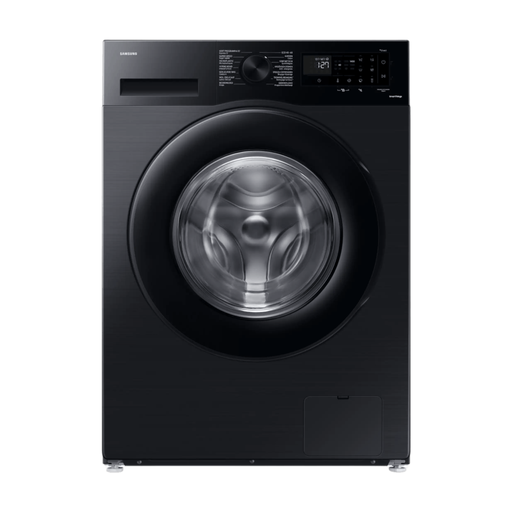 No image available
Samsung WW1UDG5B25ABEN, 11 kg, black
Compare the stated capacity with your usual sorted cotton load, and check that the additional programmes suit the way you do your washing.
11 kg; 1400 rpm; Cotton, Eco 40-60, SuperSpeed and Hygienic Steam; Energy rating A; Wi-Fi (SmartThings).
Joybuy
 No image available
Bosch WGB2440BFG Serie 8, 9 kg, white
The capacity gives you a clear point of comparison for your usual cotton load. Check whether the stated Mini Load function suits smaller loads.
9 kg; 1400 rpm; Energy rating A; NL/FR panel; Mini Load, SpeedPerfect and Iron Assist.
Joybuy
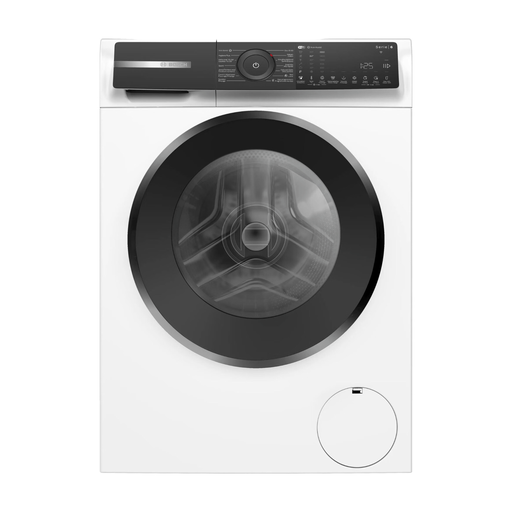 No image available
Bosch WGH25605FG Serie 6, 10 kg, white
Compare the capacity with the amount of cotton laundry you usually wash, and check which spin setting suits your drying method.
10 kg; 1600 rpm; Energy rating A; NL/FR panel; Mini Load, SpeedPerfect and a steam function.
Joybuy
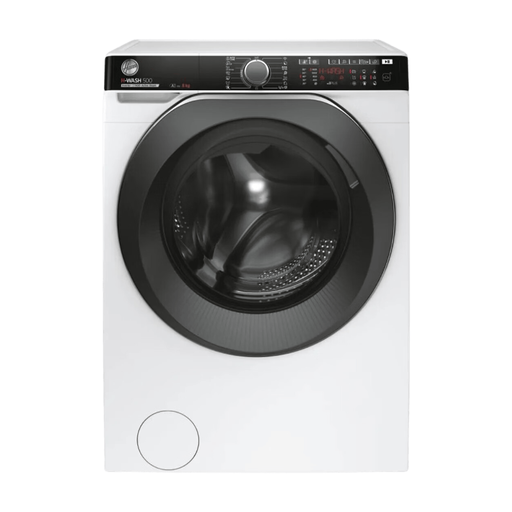 No image available
HWP 48AMBC7/1-S, 8 kg, white
Compare the stated 8 kg capacity with your usual cotton load, and check whether the listed programmes suit your laundry needs.
Freestanding front-loader; 1400 rpm; Energy rating A; Auto Care, KG Mode Plus and a hygiene cycle that, according to the product description, maintains 60 °C for more than 20 minutes.
Joybuy
 No image available
Comfee CFP01EW70W-JD, 7 kg, white
The stated capacity can help you decide whether this machine suits your usual cotton load. According to the product description, the short wash option is intended for small, lightly soiled loads.
7 kg; 800–1400 rpm; cotton programmes; 15-minute quick wash.
Joybuy
Frequently asked questions
Do damp cotton towels always need to be washed at 60 °C after a weekend away?
No. Dampness alone isn’t a reason to always wash at 60 °C. Milieu Centraal describes situations in which that temperature may be advisable. Follow the care label and choose a temperature to suit your specific hygiene needs.
Is Eco 40-60 the same as always washing at 60 °C?
No. The European Commission describes Eco 40-60 as a programme for normally soiled cotton that can be washed at 40 °C or 60 °C according to its care label. The programme name alone doesn’t promise a constant water temperature.
What should you consider when installing a washing machine?
Check the external dimensions, the space needed to open the door, and the delivery and installation terms. The Consumentenbond recommends a stable surface. Check which installation services are included with your purchase.
What are the rules in the Netherlands on energy labels and guarantees?
The Dutch government requires washing machines to carry an energy label. In addition, if a product breaks sooner during normal use than you could reasonably expect, the seller must put things right under the statutory guarantee. ACM ConsuWijzer explains that a manufacturer’s guarantee doesn’t replace this right.


