
Housemates who wash towels together
You regularly combine cotton towels and want to choose a drum capacity that suits a full, typical load.


Choose the drum capacity based on the dry towel load you actually wash together: a larger drum isn’t automatically more energy-efficient if housemates usually do their washing separately. Then compare the cotton programme, EU energy label, spin noise and where the towels will dry. Also check the dimensions, connections and installation requirements.
You regularly combine cotton towels and want to choose a drum capacity that suits a full, typical load.
You want to be able to dry towels promptly after washing, so you’re also comparing spin speeds and the drying space available. Drying indoors means you’ll need to consider moisture and ventilation.
Your room shares a wall with the washing machine, or you sleep close by, so you want to take spin noise and how securely the machine is positioned into account.
Milieu Centraal and the Consumers’ Association recommend matching the capacity to the load you actually wash. Compare consumption figures using the same EU label basis, and consider noise and drying space in the context of your home.
| Consideration | What to look for | Who should give this more weight? |
|---|---|---|
| Drum capacity | Weigh a typical dry towel load and compare it with the drum capacity. Also check the maximum load for the cotton programme you choose. | I want to know whether we usually wash together or separately; around 33% of consumers say their main priority when making this choice is a capacity that suits their washing routine. |
| Washing and drying | Check the care labels and programme guide. Decide where towels will dry afterwards and compare the spin settings for that programme. | If I have limited drying space, I want to plan a practical place and routine in advance; around 33% of consumers say washing and drying afterwards are their main priorities when making this choice. |
| Noise and positioning | Compare the noise level during spinning and measure the available space, including access. Follow the positioning instructions to ensure the machine stands on a firm, level surface. | If the machine is next to a bedroom or study, I want to take noise and positioning into account; around 17% of consumers say peace and quiet and finding a suitable spot are their main considerations. |
| Consumption and service | Compare energy use per 100 Eco 40-60 cycles and water use per cycle on the same label basis. Check the delivery and installation terms with the retailer. | If we share the machine, I want to be able to assess its consumption and the arrangements for delivery and service; around 17% of consumers say consumption and practical costs are their main considerations when making this choice. |
More capacity is most useful if you regularly wash towels together. If you tend to do smaller, separate loads, a large drum may not suit the way you use the machine.
Weigh a typical dry towel load and agree how often you’ll wash it together before choosing a capacity.
The programme name refers to cotton that can normally be washed at 40 or 60 °C; it doesn’t guarantee that the programme washes at 60 °C.
Check the care label. If you need a 60 °C wash, choose a suitable cotton or hygiene programme as described in the manual.
A washing machine doesn’t dry towels. Drying them indoors adds moisture to your home, while spinning can be disruptive if the machine is next to a bedroom or study.
Agree on a drying routine and check the noise rating, dimensions and positioning options before you buy.
The BM3WFU38412CW is a freestanding front-loading washing machine with an 8 kg capacity and cotton and Eco 40-60 programmes.
The VWM8030B has an 8 kg capacity, making it a useful model for comparing programmes and spin noise.
The Serie 4 WAN28274NL is a front-loading washing machine with an 8 kg capacity. Bosch provides information about its dimensions and positioning.
The WW90CGC04AAEEN has a 9 kg capacity, making it worth comparing if housemates regularly wash larger loads together.
The LF6KIEL from the 6000 ProSense range has an 8 kg capacity and is worth considering if you want to compare controls and programmes.
Washing machines to compare for cotton towels and shared laundry loads.
 No image available
A model to compare if you regularly wash larger towel loads together.
The product information lists an A energy rating, 72 dB during spinning and cotton and Eco 40-60 programmes.
 No image available
The capacity is a useful comparison point for a shared towel wash; weigh your usual dry load.
The product information lists an A energy rating, 76 dB during spinning and a steam anti-allergy programme at 60 °C.
 No image available
An option to compare with your usual dry towel load when looking at an 8 kg machine.
The product information lists an A energy rating, 75 dB during spinning and a steam anti-allergy programme.
 No image available
The product information lists a 9 kg capacity and a Mini Load programme, so you can take both larger shared loads and smaller individual loads into account.
It also lists an A energy rating, AquaStop and 69 dB during spinning.
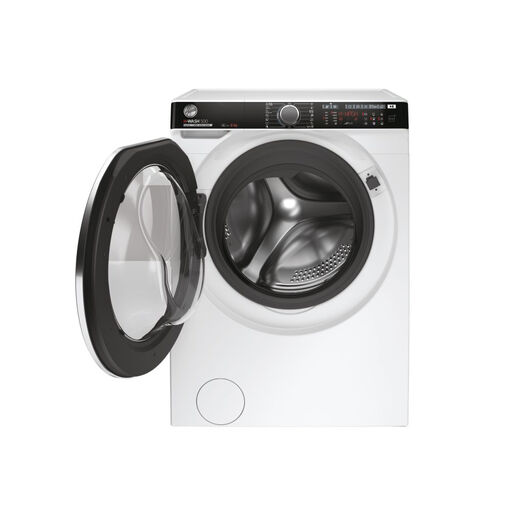 No image available
Compare the capacity with your usual dry towel load and check that the listed programmes are suitable for the care labels.
The product information lists an A energy rating, 76 dB during spinning, a cotton programme and a hygiene programme.
No. Eco 40-60 doesn’t guarantee a wash at 60 °C. The programme name refers to normally soiled cotton that can be washed at 40 or 60 °C according to the care label. The Consumers’ Association recommends using a suitable cotton programme at 60 °C or an appropriate hygiene programme for laundry that needs to be washed at 60 °C. Always check the care label too.
First, measure the space available and check the connections required. During installation, follow the model-specific instructions and place the machine on a firm, level and stable surface. Ask the retailer whether installation is included with delivery. If the machine will go in an unusual location, check the relevant installation instructions too.
Plan where the towels can dry after washing and ventilate the room when drying them indoors. GGD Leefomgeving recommends limiting moisture and ventilating to help prevent mould; a washing machine won’t solve a lack of drying space.
No, you don’t have to buy an extended warranty to have a legal guarantee. According to the Dutch government, you’re entitled to a product that works properly when you buy it, and the retailer must provide a solution if something goes wrong. Check the terms of any additional warranty to see whether it offers anything beyond your existing rights; there isn’t simply a fixed two-year legal guarantee for every washing machine.
The EU label for household washing machines uses a scale from A to G and includes information such as energy use per 100 cycles, water use per cycle and noise. Compare models using the same label basis; the figures don’t predict the exact consumption for every other programme or load.