Choose a drum that suits the number of towels you usually wash at once, and check that the cotton programme is suitable for that load. Then compare the spin noise and water protection features of the exact model. A low noise rating on the label won’t tell you how vibrations will affect your floor; stable positioning and correct installation matter too.
Who is this guide for?
Anyone living in a noisy upstairs flat
You want to consider noise and the risk of leaks affecting the home below, so you look at noise data, water protection and stable positioning. The Consumentenbond explains noise labels and types of water protection, while Bosch Nederland stresses the importance of correct installation.
Anyone who washes full loads of towels
You save up your cotton towels and want a drum and cotton programme that suit your usual load. Milieu Centraal and the Consumentenbond recommend matching the machine’s capacity and programmes to your own laundry needs.
Anyone in a flat who wants to wash efficiently
You want to weigh up energy and water use against how often you wash towels and the size of each load. Milieu Centraal points out that a larger machine only uses less energy per kilo if the drum is properly filled; the energy label provides standardised consumption data.
What to consider when choosing
Start with your usual towel load and the programme that suits it. Then compare the spin noise and water protection features. Finally, compare consumption data using the same label basis.
| What to consider |
What to look for when buying |
Who is this important to? |
| Spin noise and vibrations |
Compare dB(A) and the spin noise class using the same label basis. Also consider your floor and how stable the machine will be once in place. |
If I live above other people, I want to know how much noise the machine makes during the spin cycle and whether it will make the floor vibrate too. Around 29% of consumers put noise and vibrations first. |
| Leaks and water damage |
Check which water protection features the exact model has, and look at the water inlet and drain connections. |
I want to know which features can detect a leak or shut off the water supply, so I can take the home below into account. Around 29% of consumers give protecting against water damage top priority. |
| Capacity and cotton programme |
Compare the usual dry load with the drum capacity and the maximum load for the cotton programme. Also follow the care labels. |
If I save up my towels, I want a drum that suits my usual full load, without choosing a larger machine than I need. Around 24% of consumers prioritise suitable capacity and the cotton programme. |
| Consumption |
Compare kWh per 100 Eco 40-60 cycles and water per cycle using the same label basis. Think about which programmes you actually use. |
I want to weigh up energy and water use against how often I wash towels and how many go in the drum each time. Around 18% of consumers give ongoing consumption top priority. |
Pitfalls to avoid when buying
-
Assuming a low dB figure guarantees fewer vibrations
The noise label measures spin noise under standardised conditions. Vibrations in a particular upstairs flat also depend on the floor and how the machine is positioned.
Compare noise data on the same label basis, and check the position and installation against the instructions before use. The Consumentenbond explains what the noise label shows; Bosch Nederland stresses the need to remove the transit bolts during installation.
-
Assuming every water-lock system detects every leak
A water inlet safety feature and a sensor at the bottom of the machine won’t necessarily monitor the same things.
Check which protection features the exact model has and follow the connection instructions. The Consumentenbond describes the different types of water protection.
-
Assuming a larger drum or an A rating means lower consumption for every wash
You may not make the best use of a large machine with small loads. Energy label values are standardised and don’t directly show the consumption for every towel wash. Milieu Centraal explains why it’s important to choose a suitable drum and fill it properly; the European Commission explains the consumption data on the energy label.
First choose a capacity that suits your usual load, then compare the label values on the same basis.
Brands worth comparing
Bosch
The Serie 6 WGG244FINLB is a useful model for comparing water protection and stated spin noise.
- Bosch Nederland lists AquaStop and a spin noise level of 70 dB(A) for the WGG244FINLB.
- These product specifications don’t predict how much vibration you’ll experience in a particular upstairs flat.
Beko
The BM3WFU38412CW offers an 8 kg capacity and a cotton programme as a point of comparison.
- Beko lists energy class A and a spin noise level of 76 dB(A) for this model.
- Beko’s EnergySpin claim compares the model with a specific older Beko model; it isn’t a comparison with other brands.
LG
The GC3R509S0 is a 9 kg front-loading washing machine, making it a useful point of comparison for larger towel loads.
- The Consumentenbond lists a 9 kg capacity, 1400 rpm and energy class A for this model.
- Any steam benefits described for this model don’t demonstrate a hygiene benefit for towels.
AEG
The LR63BERLIN from the 6000 Series is a 9 kg model for comparison, with a described load adjustment feature.
- The Consumentenbond lists 1400 rpm and energy class A for this model.
- The described operation of ProSense and UniversalDose isn’t an independently proven benefit for damp towels or a vibrating floor.
Washing machines for different towel loads
This selection includes freestanding front-loading models with a stated capacity of 8 or 9 kg. Compare the capacity with your usual load, and check the cotton programme, spin noise and water protection for each model.
 No image available
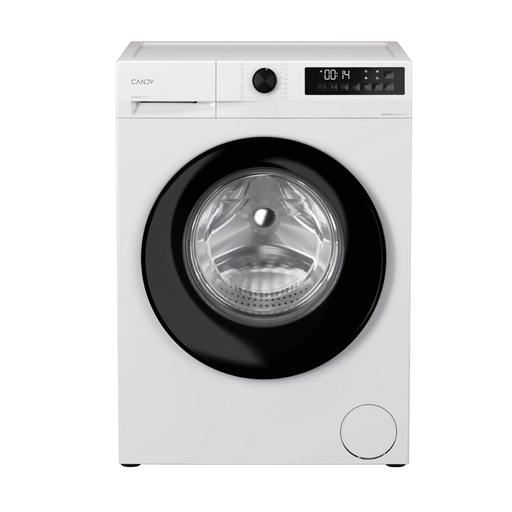
Candy GD 49B8-S, 9 kg
The stated capacity may suit you if you usually save up your towels for a larger load.
Capacity: 9 kg.
Spin speed: 1351 rpm.
Spin noise level: 69 dB(A).
Energy class A; 16 wash programmes.
View at Joybuy
 No image available
Candy GD 48B9-S, 8 kg
The stated capacity may suit a medium-sized towel load; check that it fits your washing routine.
Capacity: 8 kg.
Spin speed: 1351 rpm.
Spin noise level: 69 dB(A).
Energy class A; 16 wash programmes; steam function.
View at Joybuy
 No image available
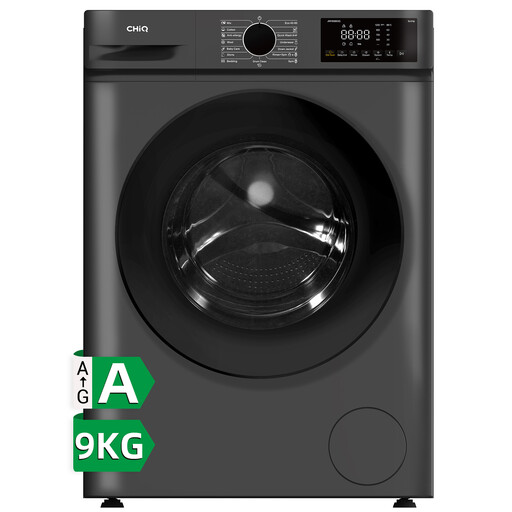
CHiQ JW95883G, 9 kg front-loading washing machine
The stated capacity may suit larger loads of towels washed together.
Capacity: 9 kg; dark grey finish.
Energy class A; maximum spin speed: 1400 rpm.
Drum size: 530 mm; 16 programmes.
Steam function and 1-Touch Smart Wash.
View at Joybuy
 No image available
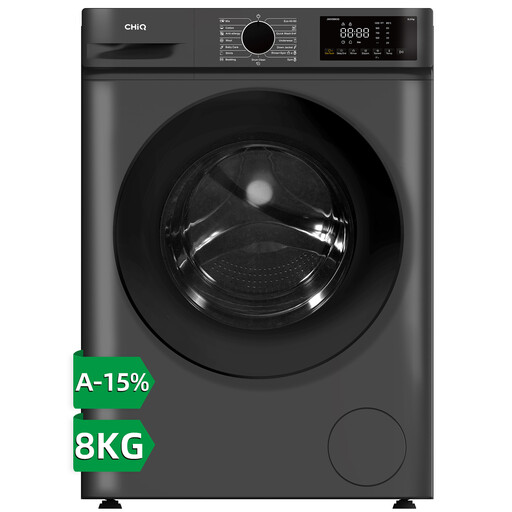
CHiQ JW85883G, 8 kg front-loading washing machine
The stated capacity may suit a medium-sized towel load; compare it with the amount you usually wash at once.
Capacity: 8 kg; dark grey finish.
Energy class A-15%; maximum spin speed: 1400 rpm.
Drum size: 530 mm; 16 programmes.
Steam function and 1-Touch Smart Wash.
View at Joybuy
 No image available
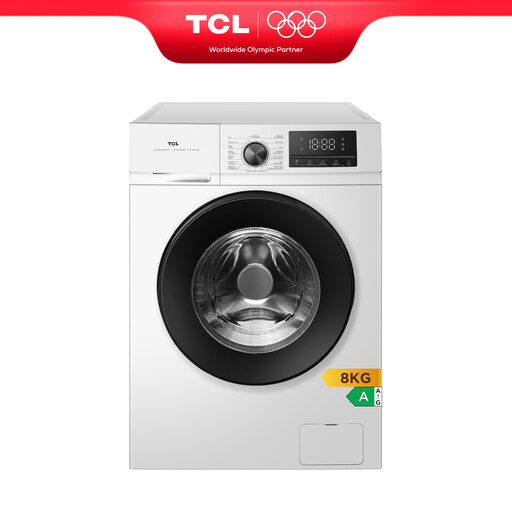
TCL FF2408WA2, 8 kg
The stated capacity may suit a medium-sized towel load; also check which programme is suitable for cotton.
Capacity: 8 kg; maximum spin speed: 1400 rpm.
Energy class A; BLDC motor.
15-minute Quick Wash programme; steam wash programme.
Child Lock and Honeycomb Drum.
View at Joybuy
Frequently asked questions
Do damp cotton towels always need to be washed at 60 °C?
No. Dampness alone doesn’t mean you always need to wash them at 60 °C. Follow the care labels and take the level of soiling into account. Milieu Centraal says Eco 40-60 is intended for normally soiled laundry whose care label allows washing at 40 or 60 °C. Also check your machine’s instructions.
What should you check when installing a washing machine on an upper floor?
Check that the machine can be carried through the stairs and doorways to its intended spot, that it stands securely and that it’s connected correctly to the water supply and drain. Before using it for the first time, remove the transit bolts as described in the model instructions and check the connections for leaks. The Consumentenbond explains how to move and position washing machines; Bosch Nederland provides installation instructions for its models.
Where can you turn in the Netherlands if your washing machine breaks down sooner than you might reasonably expect?
Contact the seller about your statutory guarantee. According to ACM ConsuWijzer, there’s no fixed two-year statutory guarantee period in the Netherlands; what you can reasonably expect from the product is also taken into account. Treat any additional guarantee as something on top of your statutory rights.


