
Tablecloths with food stains
If you want to tackle dried-on stains after a weekend away, check the care label and treat the stains before washing. Cramer's and Maaho emphasise that the right care depends on the stain and the fabric.


Choose a washing machine with a drum suited to your usual cotton load and enough room for your tablecloth to fit comfortably. Then compare the cotton programme, energy label and available installation space. Treat dried-in stains before washing and follow the care label: a larger drum or steam function alone is no guarantee that stains will come out.
If you want to tackle dried-on stains after a weekend away, check the care label and treat the stains before washing. Cramer's and Maaho emphasise that the right care depends on the stain and the fabric.
If you wash several tablecloths or combine them with other cotton laundry, choose a drum that suits your usual total load. Milieu Centraal recommends choosing a drum capacity that suits your household.
If space is tight, compare the external dimensions of the exact model. Also consider energy and noise levels, and choose extra features only if you plan to use them.
| What to consider | What should you check? | Who is this important for? |
|---|---|---|
| Dried-in stains | Check the cotton programmes and permitted temperature against the care label. For a quick programme, also check its conditions and permitted load size. | If you want to tackle dried-on food or drink stains after getting home, treat them before washing. Around 36% of consumers prioritise stain treatment and a suitable programme. |
| Room for tablecloths and laundry | Compare the cotton load capacity with your usual total load, and check whether large items will fit comfortably in the drum and through the door opening. | If you combine several tablecloths with other weekend laundry, you need enough room for the whole load. Around 29% of consumers prioritise a suitable drum capacity. |
| Energy and water consumption | Compare consumption in kWh per 100 cycles and water consumption per cycle using the same energy-label basis. The label values are based on eco 40-60 and do not automatically apply to other programmes. | If you also use the machine regularly for everyday laundry, running costs may influence your choice. Around 21% of consumers focus mainly on electricity and water consumption. |
| Installation and features | Check the external dimensions of the exact model and compare its extra features with what you will actually use. Arrange delivery, installation and any removal of your old machine separately. | If space is limited or you are weighing up different features, first check that the machine will fit. Around 14% of consumers prioritise installation and weighing up the features. |
The stated capacity applies to cotton laundry. A larger drum will not automatically be an advantage if you rarely fill it properly.
Base the capacity on your usual full cotton load and check that large items will fit comfortably in the drum.
A programme name or feature claim is no guarantee that dried-on wine or grease stains will come out. Fabric care advice recommends treating stains beforehand.
Treat stains before washing, follow the care label and check the conditions of the programme you choose.
The label values are based on eco 40-60 and do not necessarily apply to another cotton or quick programme.
Compare energy labels on the same basis and check the model information for programmes you use frequently.
The WGJ23400NL is an 8 kg front-loader worth comparing if you usually wash a medium-sized cotton load.
The F4X5009THB has a capacity of 9 kg and is worth comparing if you usually wash a larger load.
The LR87BADEN is a 10 kg model worth comparing if you usually wash large cotton loads.
The WW10FG6U94LBU3 is a 10 kg model worth comparing if you regularly wash large loads.
The WEG895 WPS is a 9 kg front-loader worth comparing if automatic dispensing and steam functions matter to you.
These models give you points of comparison for capacity, the cotton programmes listed and other wash programmes. Check the programme conditions for your chosen model and the care label on your tablecloth.
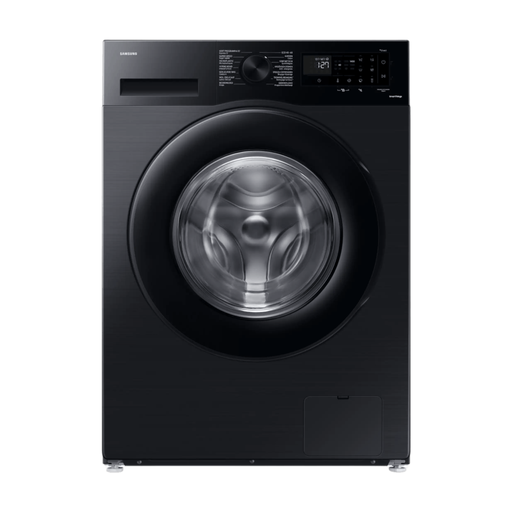 No image available
The stated capacity gives you a point of comparison if you combine several tablecloths with other cotton laundry.
Capacity: 11 kg. Spin speed: 1400 rpm. The product information lists a Cotton programme and Quick 15.
 No image available
The 9 kg capacity gives you a point of comparison if you wash tablecloths with your usual cotton load.
Capacity: 9 kg. Spin speed: 1400 rpm. The product information lists Cotton and Eco 40-60; the stated consumption is 44 kWh per 100 cycles.
 No image available
The stated capacity is a point of comparison for a typical cotton load that includes a tablecloth.
Capacity: 8 kg. Spin speed: 1400 rpm. The product information lists 16 wash programmes and a Cotton programme.
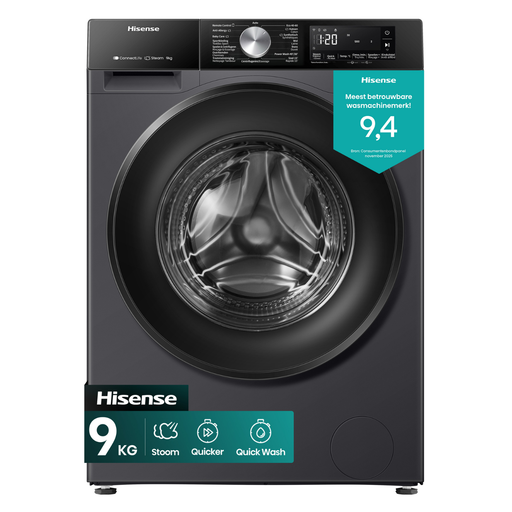 No image available
The 9 kg capacity gives you a point of comparison if you combine a tablecloth with other laundry.
Capacity: 9 kg. The product information lists Power Wash 49 and Quick 15 for small loads.
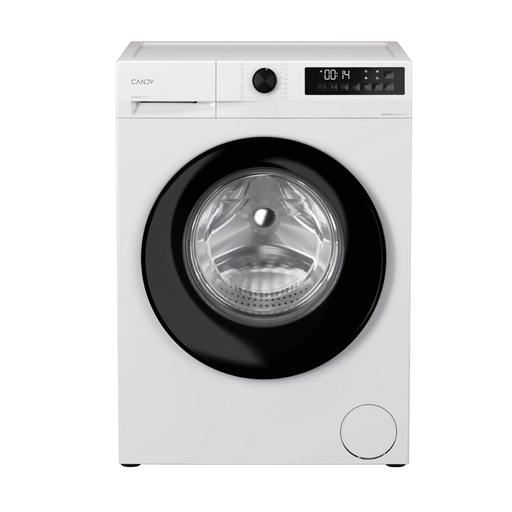 No image available
The capacity gives you a point of comparison if you combine a tablecloth with other cotton laundry.
Capacity: 9 kg. Spin speed: 1351 rpm. The product information lists 16 wash programmes.
No. Follow the tablecloth’s care label. Cotton, colour and finish can all affect the washing instructions. Treat stains beforehand and choose only a temperature permitted by the label.
The energy label is based on eco 40-60 and does not automatically tell you how much energy a quick programme uses. Check the model’s manual for the permitted load and conditions of other programmes.
Compare the external dimensions of the exact model with the space available and follow the installation manual. Transit bolts secure the drum during transport; follow the model-specific instructions before using the machine.
In the Netherlands, when a private customer buys a new, similar appliance, the old-for-new scheme applies, including to online purchases. The seller cannot charge you for taking back the old appliance; arrange the practical handover when your new machine is delivered.
In the Netherlands, online purchases from a business generally come with a 14-day cooling-off period. The Dutch government lists exceptions for certain distance purchases; check the seller’s information for your specific order.