
Renter with a narrow space for laundry
You want to know whether the machine, connections and open door or lid will really fit in the available space. Leave room for hoses and ventilation too, as the Consumers’ Association advises.


First measure the available space, including room for hoses and an open door or lid. Then check whether your usual cotton load and largest tablecloth will fit in the drum. The Consumers’ Association says a top-loader may help if width is the main constraint, while a shallower front-loader is an option if there is enough width but limited depth. For every model, also check the connections, water protection and spin noise.
You want to know whether the machine, connections and open door or lid will really fit in the available space. Leave room for hoses and ventilation too, as the Consumers’ Association advises.
You want a tablecloth to fit in the drum alongside your usual sorted load. So don’t just look at the capacity in kilograms: the Consumers’ Association notes that the stated capacity applies to cotton washing.
You pay extra attention to water protection and spin noise, for example if the machine is close to a living area or a leak could affect other homes. The Consumers’ Association describes different types of water protection and points out that spinning is often the noisiest part of a wash.
Best suited to when: width is limited and there is enough space above the machine to open the lid. The Whirlpool mentioned is 40 cm wide and has a capacity of 6,5 kg; the AEG is 397 mm wide and has a capacity of 6 kg, according to the manufacturers.
Bear in mind: a top-loader cannot be installed under a worktop and needs clear space above the lid. The capacity in kilograms also doesn’t tell you whether a large tablecloth will fit easily through the opening.
Best suited to when: you have around 60 cm of width available but limited depth. Beko lists the BM3WFU3741S as 60 cm wide, 49,6 cm deep and with a capacity of 7 kg.
Bear in mind: a shallower cabinet doesn’t mean a narrower machine. Measure the space needed for hoses and the open door too.
Best suited to when: there is enough room for the full installation space and a standard-width front-loader can be opened easily. According to Bosch, the Bosch WGE02404NL measures 848 × 598 × 588 mm and has a capacity of 7 kg.
Bear in mind: there must also be enough room for the greater depth, the hoses and the open door. Bosch does not list AquaStop for this model, so check whether its water protection meets your needs.
Best suited to when: you’re looking for a compact solution for small items of clothing. The listing for a similar model mentions underwear and socks as the intended laundry.
Bear in mind: a compact casing doesn’t prove that a tablecloth will fit or be spun sufficiently. Don’t assume this can replace a machine intended for washing tablecloths.
| What to consider | What should you check? | Who does this matter most to? |
|---|---|---|
| Dimensions and access | Measure the width, height and depth, as well as the space needed for hoses, access and opening the door or lid. | If my laundry space is tight, I want to know whether the machine will fit with its connections and the door or lid open. Around 31% of consumers prioritise installation space. |
| Room for cotton tablecloths | Weigh your usual sorted cotton load and check whether the largest tablecloth will fit through the opening and in the drum. | If I wash large tablecloths, I want them to fit in the drum without being crammed in. Around 25% of consumers prioritise being able to wash tablecloths that fit. |
| Connections and water protection | Check the water, drain and electricity connections, and see what water protection the specific model has. | If I’m renting, I want to know in advance whether the existing connections will fit and how to reduce the risk of water damage. Around 19% of consumers prioritise connections and water protection. |
| Spin noise and vibration | Compare the spin noise level on the EU labels and make sure the machine is on a firm, level surface. | If the machine is close to my living area, I especially want to consider noise and vibration during the spin cycle. Around 13% of consumers name this as their main concern. |
| Energy use and additional services | Compare energy use on the same eco 40–60 basis and check whether delivery or installation needs to be arranged separately. | If I want to factor in running costs, I need comparable energy-use figures and clarity about installation. Around 12% of consumers prioritise energy use and additional costs. |
A shallow front-loader can still be around 60 cm wide. A top-loader may be narrower, but it needs clear space above the lid.
Compare the model’s external dimensions and also measure the space needed for hoses, access and opening the door or lid.
The stated capacity applies to cotton washing, but it doesn’t tell you by itself whether a large tablecloth will fit easily through the opening.
Weigh a typical load and check whether the largest tablecloth fits in the drum without being crammed in.
For the Joybuy listing for the Beko BM3WFU3741S, the stated energy class and colour differ between the title and description.
Before using those details to compare products, ask for clear confirmation of the specific model variant and its energy label.
According to the Government of the Netherlands, statutory consumer rights exist alongside the manufacturer’s warranty and any paid-for extended warranty. In the Netherlands, there is no fixed statutory warranty period; contact the retailer if a product doesn’t meet reasonable expectations.
Check exactly what cover a paid-for extension provides before choosing it.
The Whirlpool TW 6521S SENSE WASH BE is a top-loader for anyone looking to save on width. Whirlpool lists dimensions of 40 × 60 × 90 cm and a capacity of 6,5 kg.
The AEG LTR6363A is another narrow top-loader. AEG lists a width of 397 mm and a capacity of 6 kg.
The Beko BM3WFU3741S is a front-loader for anyone mainly looking to save on depth. Beko lists a width of 60 cm, a depth of 49,6 cm and a capacity of 7 kg.
The Bosch WGE02404NL is a front-loader for a space that can accommodate its greater depth. Bosch lists dimensions of 848 × 598 × 588 mm and a capacity of 7 kg.
This selection includes front-loaders for spaces with limited depth and foldable mini washing machines for small items of clothing. The mini washing machines are not necessarily suitable for washing large cotton tablecloths.
 No image available
The listed depth of 45 cm may be useful if your installation space is shallow; also check the other dimensions and the space needed for the hoses and door.
The product name lists a capacity of 6 kg, a BLDC inverter motor, steam wash, a 15-minute quick wash programme, an add laundry function and energy class B.
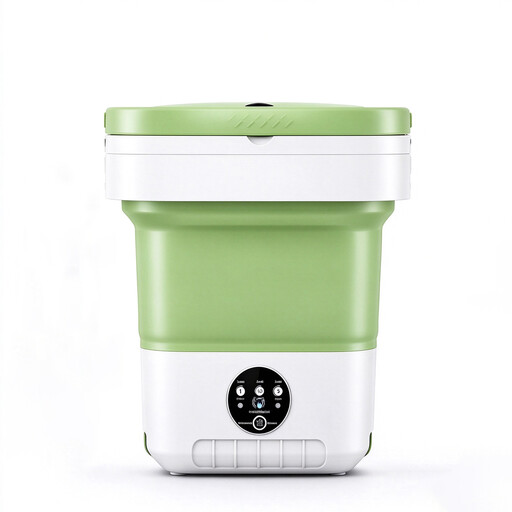 No image available
The foldable design may be useful if compact storage is important, but the product description mentions small items such as underwear and socks, not tablecloths.
The product name lists a capacity of 12 litres and a spin-drying basket.
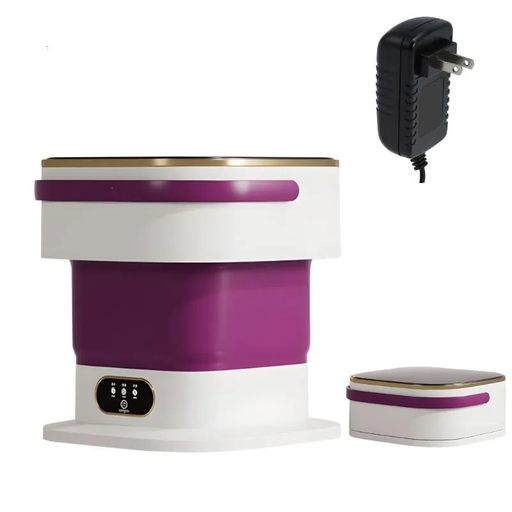 No image available
This version is designed for compact storage. The product description mentions small items such as underwear and socks, so don’t assume this model is suitable for tablecloths.
The product name lists a capacity of 15 litres and a spin-drying basket.
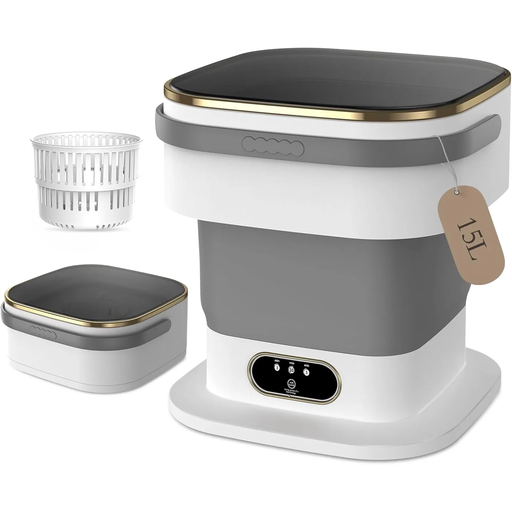 No image available
The foldable design is intended for compact storage. The product description mentions small items such as underwear and socks, not large tablecloths.
The product name lists a capacity of 15 litres and a spin-drying basket.
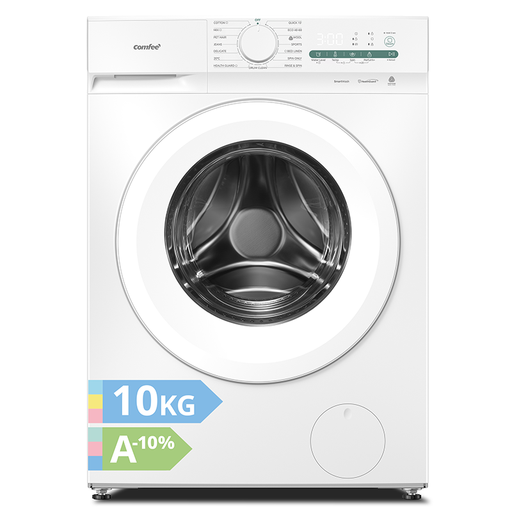 No image available
You can compare the stated capacity with your usual cotton load, but also check the external dimensions and whether the largest tablecloth will fit through the door opening.
The product name lists a capacity of 10 kg, a steam function and an add laundry function.
You can’t tell from the kilogram figure alone. The Consumers’ Association points out that the stated capacity applies to cotton washing: weigh your sorted load and check whether the largest tablecloth will fit through the opening and in the drum without being crammed in.
Always follow the tablecloth’s care label first. The European Commission says eco 40–60 is intended for normally soiled cotton that can be washed at 40 or 60 °C according to its label. So don’t assume every cotton tablecloth can be washed at 60 °C.
Check that the water, drain and electricity connections are suitable, and follow the instructions for your chosen model. When moving the machine, the Consumers’ Association advises turning off the tap, disconnecting the machine and securing the drum with transit bolts.
Compare energy-use figures on the same eco 40–60 basis and ask in advance whether installation needs to be arranged or paid for separately. According to the Government of the Netherlands, statutory consumer rights apply in the Netherlands without a fixed statutory warranty period; contact the retailer if a product doesn’t meet reasonable expectations. Any manufacturer’s warranty or paid-for extended warranty is separate.
That depends on the work involved. According to the Government of the Netherlands, permission isn’t needed for a minor change that can be undone without significant cost, but it is needed for renovation work. Ask your landlord in advance about adding a specific water, drain or electrical connection. Installing a freestanding machine using existing connections is not, in itself, classed as renovation.