What should you look for when buying?
Start with the care label and your usual dry load. Then compare consumption and check that the machine will fit through the access route and into the space where it will be installed.
| What to consider |
What should you check? |
Who is this important for? |
| Programme and level of soiling |
Check the care label and the programme requirements. The European Commission describes eco 40-60 as being for normally soiled cotton that the care label says can be washed at 40 or 60 °C. |
If I want to avoid unnecessarily hot-washing a wet but barely soiled tablecloth, I check the care label and how soiled it is first. Around 36% of consumers prioritise the choice of programme and wash based on how soiled items are. |
| Capacity and drum |
Compare the stated cotton load capacity with your usual dry load, and check the drum and door opening too. The Consumers’ Association emphasises that the stated load capacity applies to cotton. |
If I want to wash several tablecloths together, I want them to fit in the drum without choosing more capacity than I need. Around 29% of consumers prioritise having enough room for their load. |
| Consumption and spin cycle |
Compare kWh per 100 eco 40-60 cycles and water consumption per cycle using the same label basis; Energielabel.nl and Milieu Centraal list these figures as points of comparison. |
If I use the machine regularly, I want to be able to compare energy and water consumption on a like-for-like basis. Around 21% of consumers prioritise consumption during use. |
| Dimensions and access |
Measure both the space and the access route to it. The Consumers’ Association notes that top-loading machines are narrower than front-loaders, but the available loading space varies. |
If the space or route into my home is tight, I want to know whether the machine will actually fit through and into its installation space. Around 14% of consumers prioritise installation space and access. |
Washing machines at Joybuy
These Joybuy options are front-loaders. Compare their capacity and programmes with your usual load, and check the dimensions before choosing.
 No image available
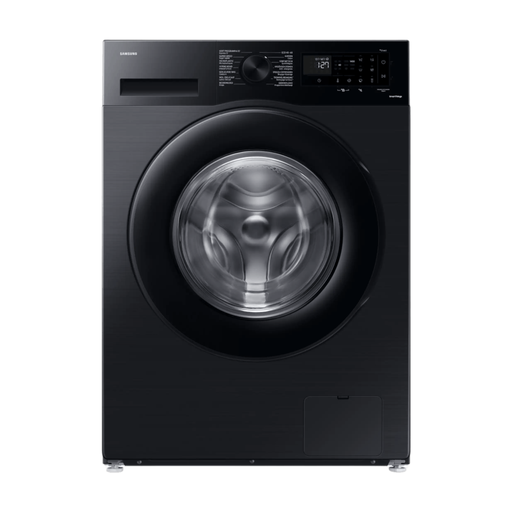
Samsung WW1UDG5B25ABEN, 11 kg, 1400 rpm
The stated capacity may be useful if you regularly wash several cotton tablecloths together; match the load to the programme you choose.
The product information lists cotton and eco 40-60 programmes, an 11 kg capacity, 1400 rpm, energy class A and Wi-Fi with SmartThings.
Joybuy
 No image available
Candy GD 48B9-S, 8 kg, 1351 rpm
Compare the stated capacity with your usual dry cotton load, and check how much laundry each programme allows.
The product information lists an 8 kg capacity, 1351 rpm, energy class A, a steam function and several wash programmes.
Joybuy
 No image available
Beko BM3WFU38412CW, 8 kg, 1400 rpm
The listed cotton and eco 40-60 programmes make this model worth comparing with the care labels and level of soiling of your tablecloths.
The product information lists an 8 kg capacity and 1400 rpm; the dimensions are 84,5 × 60 × 54,6 cm.
Joybuy
 No image available
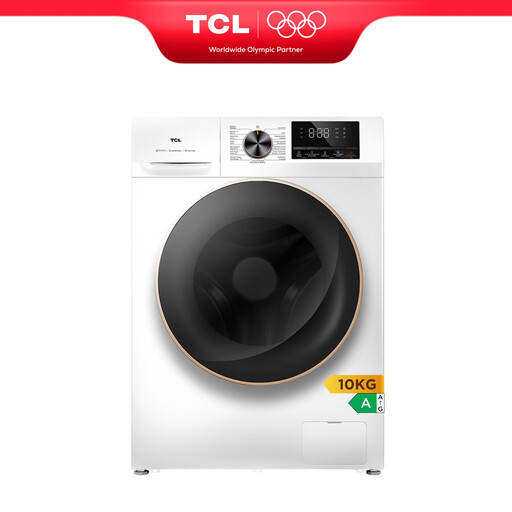
TCL FP1210WA0, 10 kg, 1200 rpm
Compare the stated capacity with the load you actually wash, and check that the dimensions suit the available space too.
The product information lists a 10 kg capacity, 1200 rpm, energy class A, a steam wash function and a Quick 15’ programme.
Joybuy
 No image available
TCL FF1006WB0, 6 kg, 45 cm deep
The stated depth may help when comparing machines for a tight space; measure the access route too, and check whether 6 kg suits your usual load.
The product information lists a 6 kg capacity, a depth of 45 cm, energy class B, a steam wash function and a Quick 15’ programme.
Joybuy
Frequently asked questions
Can a cotton tablecloth that has only got wet go on eco 40-60?
It may be suitable if the tablecloth is normally soiled and the care label says it can be washed at 40 or 60 °C. The European Commission describes eco 40-60 as being for normally soiled cotton labelled as washable at those temperatures. If the care label or level of soiling is different, follow the care instructions and programme guide.
How do I compare washing machine energy labels?
Compare figures such as kWh per 100 cycles and water consumption per cycle on the stated eco 40-60 basis; Energielabel.nl and Milieu Centraal list these as points of comparison. Don’t use them on their own to predict the consumption or cost of another programme.
What should I check before a washing machine is connected?
Measure the installation space and the access route for delivery, and follow the model’s installation instructions. When moving a machine, the Consumers’ Association advises securing the drum with transit bolts; check separately which installation or drainage services are included with your order.
Am I entitled to a mandatory two-year statutory guarantee in the Netherlands?
No. There is no fixed statutory guarantee period in the Netherlands. If a product is faulty, contact the seller; a manufacturer’s guarantee or additional guarantee doesn’t replace your statutory rights. This applies to purchases made as a consumer.
Does the seller have to take away my old washing machine?
When you buy a new appliance of a similar type, the old-for-new scheme applies to private individuals: the seller must take the old appliance away free of charge, including for online purchases. The Dutch government describes alternatives if the delivery service can’t take it away straight away; arrangements for disconnection or installation are separate.


