First, measure the available width, depth, height and loading space, then choose a capacity to suit your usual laundry and tablecloth. A top-loader may work if width is limited. If a front-loader will fit, also compare the space needed for the door, the spin noise and the programme you use. Always follow the care label on each tablecloth, as recommended by the Consumentenbond and HEMA’s washing instructions.
Who is this buying guide for?
Someone with a narrow space for laundry
You want to know whether a top-loader or a less deep front-loader will fit, and whether there’s enough room to load and connect the machine. The Consumentenbond points out that ‘slim’ can mean either narrower or less deep.
Someone washing large cotton tablecloths
You want to wash a tablecloth according to its care label without cramming it into the drum. The stated capacity is for cotton laundry, but the size of the tablecloth and the machine opening matter too. HEMA lists different maximum washing temperatures for cotton tablecloths.
Someone with a shared wall or downstairs neighbours
You’re considering spin noise, a stable installation and the model’s leak protection, especially if a leak could affect another home. The Consumentenbond covers both noise levels and the importance of a stable position.
What should you look for when buying?
First, measure the space and the room available for loading. Then choose a capacity, washing programme and level of noise and leak protection to suit your circumstances.
| What to consider |
What should you check? |
Who is this important for? |
| Will the machine fit? |
Measure the width, depth and height of the space. Also check the room needed for the door or lid, hoses and the route to the installation space. |
I want to know in advance whether the machine will fit and open freely; around 25% of consumers prioritise making sure it fits the space. |
| Cotton laundry load |
Compare the cotton capacity with your usual load and check that the tablecloth fits in the drum without being crammed in. Follow the tablecloth’s care label. |
When washing a large tablecloth, I want to be able to load it comfortably and follow the temperature on its care label; around 25% of consumers prioritise cotton load capacity. |
| Noise and leak protection |
Compare spin noise using the same measurement basis, check the leak protection on the exact model and make sure the machine is stable and level. |
If you live close to neighbours, noise, vibration and the potential effects of a leak may be important considerations; around 20% of consumers prioritise these concerns. |
| Energy and water use |
Compare label figures for the same programme. The Consumentenbond and the European Commission provide figures for Eco 40-60; these do not directly show the consumption of a different cotton programme. |
I want to compare consumption based on the programme I actually use; around 15% of consumers prioritise ongoing running costs. |
| Delivery and installation |
Check in advance what delivery, connection and any removal of your old machine include at your home. |
Clear information about the service is important if you want to understand the total cost of buying and installing the machine; around 15% of consumers prioritise the overall cost and effort. |
Common buying mistakes
-
Assuming more kilos are always better
The stated capacity is for cotton laundry, but a larger capacity doesn’t guarantee that a loose tablecloth will fit easily in the drum. If you often wash small loads, a higher-capacity machine may also be less suited to your needs.
Weigh your usual laundry and check the drum opening. Make sure the tablecloth fits without being crammed in.
-
Relying on the word ‘slim’ alone
A front-loader may be less deep without being any narrower. A top-loader, on the other hand, needs clear space above the lid.
Compare the exact model’s full dimensions with your space and check that the door or lid can open freely.
-
Assuming the energy label shows consumption for every programme
Washing machine label figures relate to Eco 40-60. They don’t directly show the consumption of a different cotton programme, as the Consumentenbond and the European Commission explain.
Only compare label figures on the same basis. If you usually use a different programme, look for figures for that programme.
-
Assuming all leak protection is the same
Safety features can respond to different problems. If the machine is installed above another home, a leak could affect that property too.
Check what leak protection the exact model has and make sure the machine is stable and level.
Brands and models to consider
AEG
The AEG LTR6363A is a top-loader worth considering if width is limited and there’s room above the machine.
- AEG lists a 6 kg capacity, dimensions of 90,3 × 39,7 × 59,9 cm and a cotton programme for this model. Check the measurements and the space above the lid against your installation area.
- The Consumentenbond reported differences between tested top-loaders and standard front-loaders; this is not an individual test verdict on the LTR6363A.
Beko
The Beko BM3WFU3741W is an example of a front-loader for a space where the width is suitable but depth is limited.
- Beko lists a 7 kg capacity, dimensions of 84,5 × 60 × 49,6 cm, a cotton programme and spin noise of 76 dBA for this model.
- The stated noise level is a model specification. Consider the noise and available space in your own installation; this figure doesn’t show that the model has an advantage over others.
Bosch
The Bosch WGE02404NL is a front-loader to consider if a standard front-loader fits in your available space.
- Bosch lists a 7 kg capacity and dimensions of 84,8 × 59,8 × 58,8 cm for this model.
- According to Bosch, this model doesn’t have AquaStop. Check separately whether its leak protection is suitable for your installation area; this specification doesn’t apply to the entire Serie 2 range.
LG
The LG F4X1008NWH is an 8kg front-loader to consider if you regularly wash larger loads and have enough room for a front-loader.
- LG lists an 8 kg capacity and smart app control for this model.
- The manufacturer describes the motor as quiet, but this doesn’t compare the measured noise of complete machines. Weigh the larger capacity against your usual loads.
Washing machines at Joybuy
These Joybuy products are front-loaders for household laundry. Compare the listed capacity and features with your space, laundry load and usual washing programme.
 No image available
AEG LF61R840 6000 Series, 8 kg
An 8 kg front-loader to consider if it suits your usual cotton laundry load.
8 kg; 1.400 tpm; energy label A.
Joybuy
 No image available
Bosch WGB2440BFG Serie 8, 9 kg, NL/FR Panel
A 9 kg front-loader to compare if you regularly wash larger loads; check that the machine suits your space and usual laundry needs.
9 kg; 1.400 tpm; energy label A; NL/FR Panel.
Joybuy
 No image available
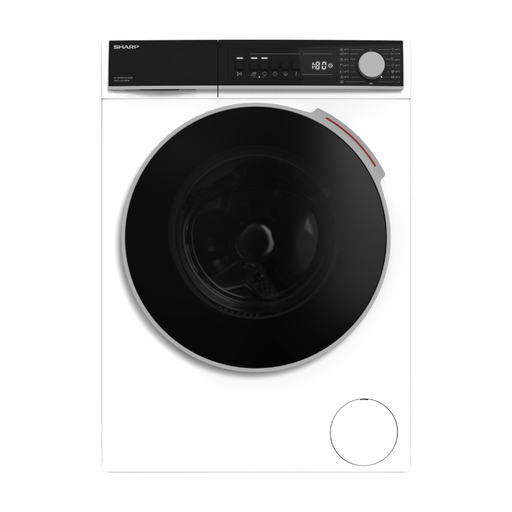
Sharp ESNFB914CWDACB, 9 kg
A 9 kg front-loader to consider if a larger load suits your needs; check the model’s dimensions before choosing where to put it.
9 kg; 1.400 tpm; Steam+; AquaStop.
Joybuy
 No image available
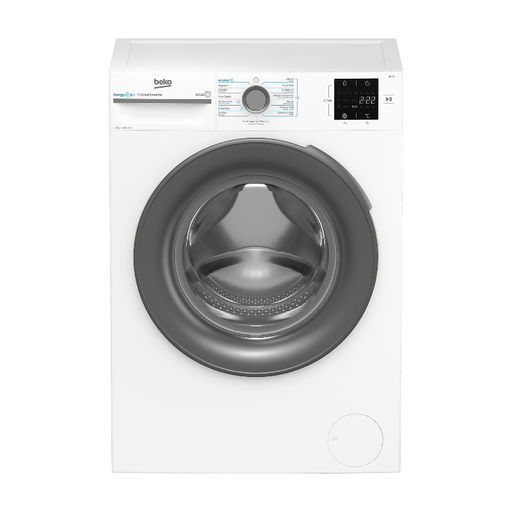
Beko BM3WFU3741S, 7 kg
A 7 kg front-loader to weigh up against your usual cotton laundry load and the space available.
7 kg; 1.400 tpm; energy label C; 15 washing programmes; silver.
Joybuy
 No image available
TCL FF1006WB0, 6 kg, 45 cm deep
Its stated depth makes this model worth considering if your available space is shallow; also measure the room needed for connections.
6 kg; 45 cm deep; BLDC inverter motor; Steam Wash; Quick Wash 15mn; Auto Weight; energy label B.
Joybuy
Frequently asked questions
Can every cotton tablecloth be washed at 60 °C?
No. HEMA lists different maximum temperatures for two cotton tablecloths: 40 °C and 60 °C. Follow the care label on your own tablecloth; the material alone doesn’t determine the washing instructions.
What should you check when installing a machine in a small flat?
Measure the space for the machine and the room needed to open the door or lid. Also check the water supply, drainage and that the machine can be positioned securely and level. Ask in advance what any delivery and installation service includes. Have any changes to the electrical installation assessed against the requirements for the specific location.
Does energy label A tell you how much a 40 °C cotton wash uses?
No. The Consumentenbond and the European Commission provide label figures for Eco 40-60; these don’t directly show the consumption of a different cotton programme. Only compare kWh per 100 cycles and litres per cycle on the same basis.
Do you still have rights in the Netherlands after the manufacturer’s warranty expires?
Yes. Your statutory rights are separate from the manufacturer’s warranty. According to the Dutch government, there is no fixed statutory warranty period in the Netherlands; what you can expect in the event of a specific fault depends on the circumstances.
What can you do with your old washing machine when you buy a new one?
When you buy a similar new appliance, Milieu Centraal says you can return the old machine free of charge through the old-for-new scheme, including with an online purchase delivered to your home. Check with the retailer in advance how collection will be arranged.


