
If you regularly wash cotton shirts
You regularly wash a collection of cotton T-shirts and want to match the load capacity to your usual wash. The Consumers’ Association points out that the stated load capacity applies to cotton.


Choose a washing machine with a cotton load capacity that suits the number of T-shirts you usually wash and that fits in your utility room, including the door, hoses and connections. According to the Consumers’ Association, Eco 40-60 is designed for normally soiled cotton that can be washed at 40 or 60 °C according to the care label. The programme takes longer, and the comparison cited reports a poorer wash result and more detergent residue than the cotton programme it was compared with. For the exact model, also check the energy label, programme duration and water protection features.
You regularly wash a collection of cotton T-shirts and want to match the load capacity to your usual wash. The Consumers’ Association points out that the stated load capacity applies to cotton.
The space for the machine, the doorway and the hoses all affect how practical it is to install and load. The Consumers’ Association also recommends allowing for connections and ventilation space.
You compare the energy and water used for regular washes with the time a programme takes. The European Commission says the EU energy label shows, among other things, energy use, water use, programme duration and noise emissions.
| What to consider | What to look for | Who is this important for? |
|---|---|---|
| Getting cotton shirts clean | Check the care label and what the Eco 40-60 programme is designed for. According to the Consumers’ Association, this programme is intended for normally soiled cotton that can be washed at 40 or 60 °C; the result also depends on the programme you choose. | If I want my usual T-shirt wash to come out clean without choosing an unsuitable programme, I’ll check the care labels and wash options first. Around 29% of consumers prioritise wash results. |
| Suitable load capacity | Match the stated cotton load capacity to your usual wash. The Consumers’ Association notes that load sensing does not fully compensate for an underfilled drum. | If you usually wash a small load of shirts or wait until you’ve gathered a full load, you’ll want a drum that suits the amount you wash. Around 24% of consumers prioritise a suitable load capacity. |
| Installation and water protection | Measure the space, allowing room for the door and hoses, and check the connections and water protection features of the exact model. The Consumers’ Association points out that water protection systems vary in what they protect against. | If your utility room is tight on space, you’ll want to know in advance whether the machine can be opened and connected properly. Around 18% of consumers prioritise a suitable, safe installation. |
| Energy and water use | Compare energy use per 100 cycles and water use per cycle on the EU energy label. The European Commission lists these figures as part of the label; your usage and tariffs also affect the final cost. | If I do a lot of regular washes, I want to be able to compare the consumption of the programmes I usually use. Around 17% of consumers prioritise energy and water use. |
| Programme duration | Compare the duration and permitted load of Eco 40-60 with other suitable cotton programmes. The Consumers’ Association describes Eco 40-60 as a longer programme. | If I need the shirts by a particular time, programme duration matters alongside the wash result. Around 12% of consumers prioritise a shorter wash time. |
The stated load capacity applies to cotton, and load sensing does not fully compensate for an underfilled drum.
Choose a load capacity based on the amount of washing you usually collect.
A machine may fit on the floor, but the door, hoses and connections can still make installation or everyday use difficult. Water protection systems also differ in how they work.
Measure the full installation space and check the connection and water protection details for the exact model.
The Consumers’ Association describes Eco 40-60 as a longer programme for normally soiled cotton that can be washed at 40 or 60 °C according to the care label. In the comparison cited, the wash result was poorer and more detergent residue was left behind than with the cotton programme it was compared with.
Check the care label and weigh up how soiled the shirts are, how much time you have and the programme instructions.
The Serie 4 WAN2809XNL front-loader is worth comparing if its stated 8 kg cotton load capacity suits your usual wash.
The F4X1008NWH is an 8kg front-loader with app features; check whether those features and its dimensions suit your needs.
The 6000 ProSense range includes the LF628400; compare the specifications of this exact model with your available space and load.
The iQ300 WM14N27DNL is an 8kg front-loader to compare with other models if that capacity suits your load.
Explore these washing machines as options for washing cotton T-shirts in a utility room. Check whether each model’s load capacity, programmes and dimensions suit your needs.
 No image available
If you usually wash larger cotton loads, compare the capacity with the amount of laundry you normally wash.
Stated capacity: 9 kg; maximum spin speed: 1400 rpm.
 No image available
This capacity may suit you if your usual cotton load is within the stated load limit.
Stated capacity: 8 kg; maximum spin speed: 1400 rpm.
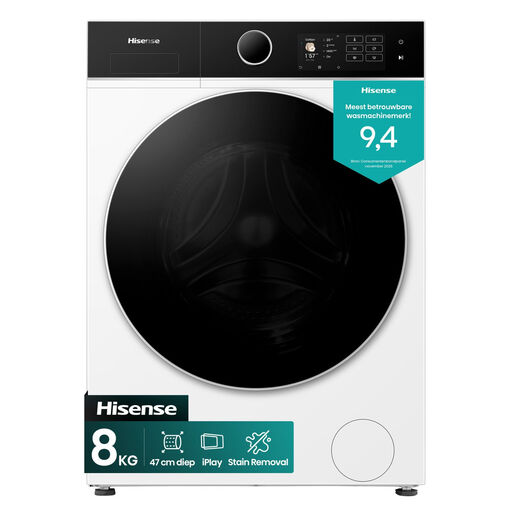 No image available
Compare the capacity with your usual wash and measure the available space before choosing a model.
Stated capacity: 8 kg; maximum spin speed: 1400 rpm.
 No image available
Check the programme instructions and permitted load to see whether a cycle suits your shirt wash.
Stated capacity: 8 kg; maximum spin speed: 1351 rpm.
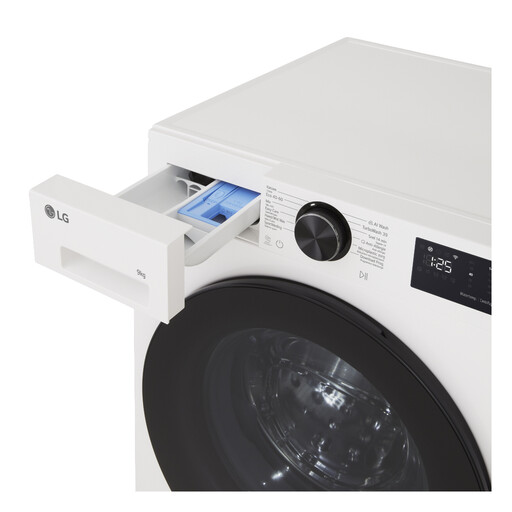 No image available
If you regularly wash larger loads, compare the capacity with the amount of cotton laundry you usually wash.
Stated capacity: 9 kg.
The listed ThinQ app features require a Wi-Fi connection.
No. According to the Consumers’ Association, this programme is intended for normally soiled cotton that can be washed at 40 or 60 °C according to the care label. Check the label on each shirt and choose a suitable programme if the instructions or level of soiling call for something different.
Measure the space, allowing room for the door and hoses, and check the water, drainage and electrical connections against the manual for your chosen model. Also check what type of water protection it has.
Leave the door and detergent drawer open to dry after use, and clean the drawer and door seal regularly. Also follow the care instructions for your chosen model.
When you buy in the Netherlands, you’re covered by the legal guarantee: according to the Dutch government, if a fault is covered, the seller must provide a solution. Check the terms of any manufacturer’s or extended warranty to see what additional cover it offers.
The EU energy label shows, among other things, the energy class, energy use per 100 cycles, water use per cycle, programme duration and noise emissions. The European Commission describes the washing machine scale as running from A to G; compare the details for the exact model.