
A family with a full weekly wash
You build up plenty of cotton T-shirts during the week and want a drum capacity suited to the sorted load you usually wash in one go.


Choose a drum capacity that suits your usual sorted weekly wash; a larger drum isn’t automatically a better choice. Then compare the cotton programme with Eco 40-60 for normally soiled cotton that the care label says can be washed at 40 or 60 °C. If you need the T-shirts back quickly, check how much laundry the selected model’s quick programme can handle.
You build up plenty of cotton T-shirts during the week and want a drum capacity suited to the sorted load you usually wash in one go.
You want to know which programme suits normally or heavily soiled T-shirts, rather than relying on Eco 40-60 alone.
You need your clothes back quickly and want to know how much laundry a model’s quick programme can handle.
Milieu Centraal recommends choosing a drum capacity that suits your household. Consumentenbond points out that the stated load capacity applies to cotton; also consider the programme you actually plan to use.
| Consideration | What to check | Who cares about this? |
|---|---|---|
| Load capacity for your weekly wash | Weigh a typical sorted cotton load and compare it with the machine’s load capacity. Measure the available space too, allowing room for the door and connections. | I want to wash my usual pile in a suitably sized drum without choosing an unnecessarily large one. Around 31% of consumers prioritise a load capacity that suits their weekly wash. |
| Clean T-shirts and the right programme | Check the care labels and, where test data is available, compare how well the cotton programmes clean and rinse. | If cleaning performance is my main concern, I check which programme suits the level of soiling and the care labels. Around 25% of consumers prioritise a suitable wash result. |
| Having T-shirts ready in time | Check the maximum load and programme duration for the quick cycle in the instructions for the exact model. | I need the shirts back quickly and want to know whether a quick cycle can handle my load too. Around 19% of consumers prioritise the time available for washing. |
| Electricity and water consumption | Compare kWh per 100 cycles and water per cycle on the same energy-label basis. The label is based on Eco 40-60. | If I wash regularly, I want to compare consumption figures on a like-for-like basis. Around 13% of consumers prioritise electricity and water consumption. |
| Space and noise | Measure the space, including room for the door and connections; compare the spin noise level and make sure the machine is installed on a stable surface. | I need to consider the dimensions or noise levels in the laundry area before choosing a model. Around 12% of consumers give most weight to space and noise. |
The stated load capacity applies to a cotton wash. Extra capacity isn’t automatically an advantage if it doesn’t suit your usual sorted laundry.
Try weighing a typical weekly wash before comparing models by kilogram capacity.
The name doesn’t mean the machine washes at exactly one of those temperatures during every cycle. Consumentenbond describes Eco 40-60 as suitable for normally soiled cotton whose care label permits washing at 40 or 60 °C.
Check the care label and choose a programme based on how soiled the clothes are and the treatment they need, not just the programme name or energy-label rating.
The permitted load and actual programme time can vary depending on the programme and amount of laundry.
Check the programme table for the exact model before counting on a whole pile of laundry being ready quickly.
The Serie 4 WAN2827BNL is a freestanding front-loading washing machine with an 8 kg capacity.
The BM3WFT3841W is an 8 kg front-loader with a cotton programme and a separate quick-programme option.
The WW90DG6U25LKU3 is a 9 kg model to consider if your sorted laundry load justifies that capacity.
The WEA135 WCS 8 kg Active is an 8 kg front-loader with cotton and Eco 40-60 programmes.
These Joybuy options are freestanding washing machines with an 8 or 9 kg capacity. Choose a capacity that suits your usual sorted load, and check how much laundry each model’s quick programmes can handle.
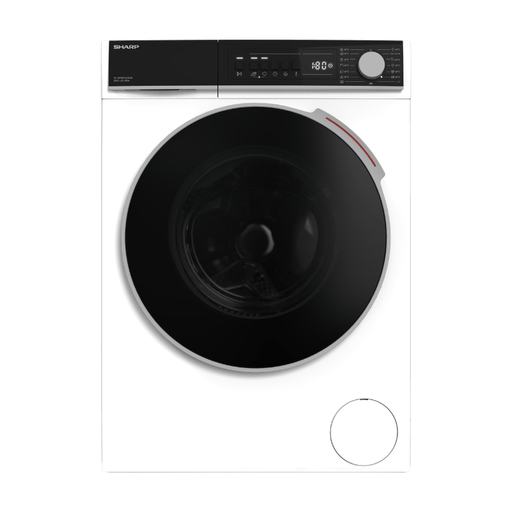 No image available
An option to compare if your usual sorted cotton load fits within 8 kg. Joybuy lists 1400 rpm, energy class A and a 12-minute quick programme; check the permitted load for that cycle.
 No image available
This model is worth comparing if 8 kg suits your usual load. Joybuy lists 1400 rpm and 16 wash programmes, including Cotton, Eco 40-60 and a 15-minute Quick Wash; check the load limit for that quick cycle.
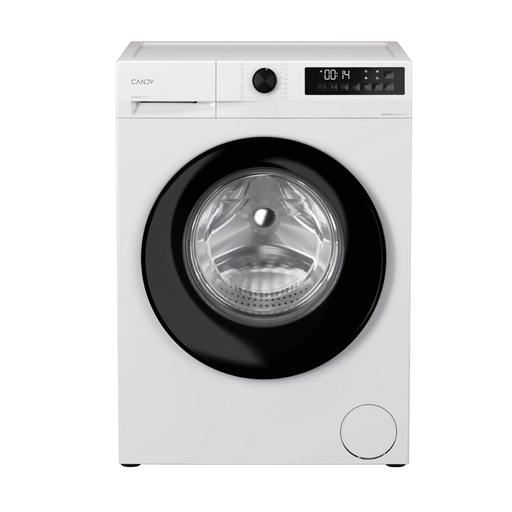 No image available
Its capacity is worth considering if your usual sorted load fits within 9 kg. Joybuy lists a spin speed of 1351 rpm, energy class A and 16 wash programmes; according to the product details, the quick cycles range from 14 to 59 minutes.
 No image available
This model is worth comparing if 8 kg suits your usual laundry load. Joybuy lists a spin speed of 1351 rpm, energy class A and quick programmes starting at 14 minutes; check the permitted load for each cycle.
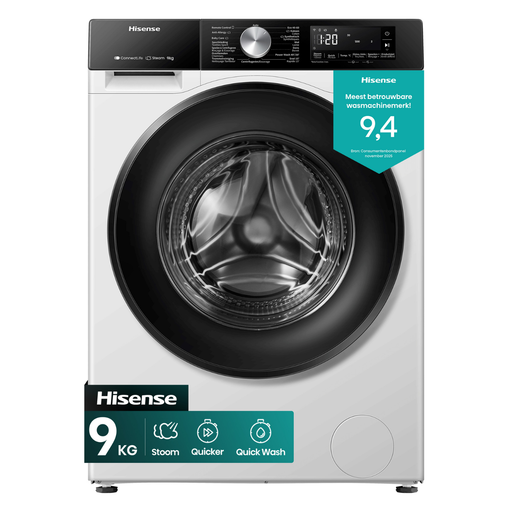 No image available
Compare this capacity with your sorted weekly wash before choosing 9 kg. Joybuy lists 1400 rpm, energy class A, Eco 40-60 and a Quick 15 programme; check whether the quick cycle is suitable for the amount of laundry you want to wash.
No. Use it for normally soiled cotton whose care label permits washing at 40 or 60 °C. The programme name doesn’t guarantee that the machine washes at exactly 40 or 60 °C; if clothes are more heavily soiled or have specific hygiene requirements, consider which programme is suitable.
Not without checking the instructions for the model you choose. A quick programme’s permitted load may be lower than the maximum cotton capacity.
Follow the instructions for the exact model. Bosch recommends a stable surface, accessible water supply and drainage, and an earthed socket for its washing machines; remove the transit bolts before first use.
Yes, washing machines must have an energy label. Compare the energy class and stated consumption, among other things, and bear in mind that the label is based on Eco 40-60.