Choose a drum capacity that suits your usual sorted cotton wash; a pile of socks alone is no reason to get an extra-large drum. According to the Dutch Consumers' Association, Eco 40-60 is designed for normally soiled cotton with a care label allowing washing at 40 or 60 °C. However, the programme may not be suitable for heavily soiled socks or when thorough rinsing is a priority. Also compare the dimensions, energy label and the space needed for hoses and an open door.
Who is this choice relevant to?
Family with a weekly cotton wash
This family wants to wash school socks and other suitable cotton items together, and is looking for the right drum capacity and a useful cotton programme. The Dutch Consumers' Association and Milieu Centraal provide information on capacity and matching your wash to the load.
Household short on time on laundry day
This household needs its socks back quickly and wants to know whether a shorter programme is suitable for the actual load and how soiled it is. The Dutch Consumers' Association explains the differences between washing programmes and how to use them.
Household with smaller loads
This household washes socks every week but rarely fills a large drum, so wants to weigh up capacity against space and running costs. Milieu Centraal and the Dutch Consumers' Association discuss choosing a drum capacity and the space needed for installation.
What should you look out for?
| What to consider |
What to look for when buying |
Who is this most important for? |
| Clean socks and the programme |
Check the care label, cotton programme and whether the cycle is suitable for how soiled the load is; compare the washing and rinsing results for the exact model. |
If you wash socks that are more than lightly soiled, you’ll want a programme suited to the care label and the load. Around 36% of consumers prioritise clean washing and choosing a suitable programme. |
| Drum capacity for your weekly wash |
Weigh a typical sorted cotton load and compare it with the machine’s cotton capacity. |
You want to wash your socks with the rest of your weekly laundry without choosing a drum you rarely fill. Around 29% of consumers give choosing the right drum capacity their top priority. |
| Wash time |
Check the duration and maximum load of the specific quick programme, and make sure it suits how soiled the load is. |
If you need the socks for the next school day, you’ll want to know whether the quick cycle is suitable for your load too. Around 21% of consumers prioritise a suitable wash time. |
| Energy and water consumption |
Compare the current A–G energy label, consumption for Eco 40-60 and water use per cycle; these figures do not necessarily apply to other programmes. |
You’ll want to consider consumption for the washes you run regularly, not just for your socks. Around 14% of consumers put energy and water consumption first. |
Pitfalls to avoid when choosing
-
Choosing an extra-large drum just for a pile of socks
The stated drum capacity applies to cotton. Load detection does not fully adjust consumption when the machine is only partly full.
Choose a capacity based on a typical full load of laundry; sort and weigh it before comparing models.
Brands and models to consider
Bosch
The Bosch WGG244ZONL is an example of a front-loading washing machine with a 9 kg capacity.
- Bosch lists a 9.0 kg capacity, a maximum spin speed of 1400 rpm and SpeedPerfect for this model.
- SpeedPerfect is a stated feature; that claim is not independent evidence of washing results for cotton socks.
Samsung
The Samsung WW90DG6U25LEU3 is a 9 kg front-loading washing machine with a cotton programme and a separate, faster wash option to consider.
- Samsung lists SuperSpeed, AI Ecobubble and dimensions of 600 × 850 × 550 mm for this full model code.
- Check the permitted load and independent washing results before using features or product claims to judge how the model performs on dirty socks.
Miele
The Miele WEA128 WCS 8kg Active is an example of an 8 kg front-loading washing machine.
- Miele lists a cotton programme, AddLoad, Express 20, 43 kWh per 100 Eco 40-60 cycles and 72 dB during the spin cycle.
- Express 20 is not automatically a substitute for a full or heavily soiled cotton wash; check the conditions for the specific programme.
LG
The LG F4WR3010S6W is an example of a washing machine with a 10 kg capacity.
- LG lists a 10 kg capacity and AI DD for this model.
- LG explains that the cited protection claim is based on a March 2019 test using different models and a 2 kg cotton load; it does not establish better washing results for your weekly wash.
Washing machines at Joybuy
These washing machines available from Joybuy are selected with cotton washes and weekly loads in mind. Compare the stated drum capacity with your usual sorted load, and check which programme on each model is suitable for your socks.
 No image available
Samsung WW90DG6U25LE, 9 kg
The stated 9 kg capacity may be useful if you wash your socks with a larger, sorted cotton load.
The stated SuperSpeed cycle takes 39 minutes for a 5 kg load; compare this with the amount of laundry you actually wash. The product title also lists 1400 rpm and AI Ecobubble.
View at Joybuy
 No image available
Midea MF110W80BA10/W-NL, 8 kg
A stated capacity of 8 kg may suit a sorted cotton wash; weigh your usual weekly load to assess the drum size.
The product title lists 1400 rpm and 16 wash programmes. Check which programme is suitable for your socks' care labels and how soiled they are.
View at Joybuy
 No image available
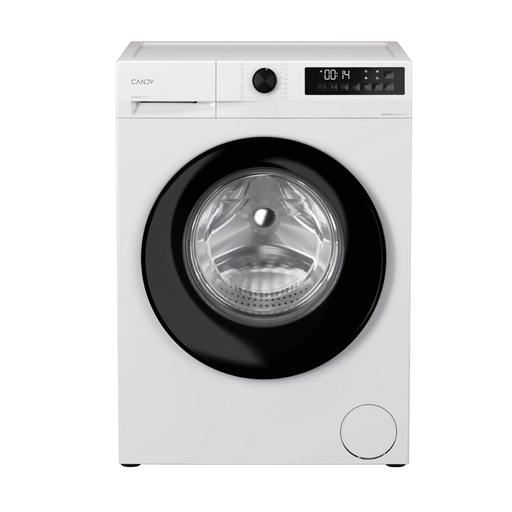
Candy GD 49B8-S, 9 kg
The stated 9 kg capacity is worth considering if your usual cotton wash is large enough to make use of it.
The product title lists 1351 rpm and 16 wash programmes. Check a programme's load limit and conditions before using it for a full or heavily soiled wash.
View at Joybuy
 No image available
Candy GD 48B9-S, 8 kg
An 8 kg capacity may suit a weekly cotton wash that is smaller than a large family load.
The product title lists 1351 rpm and a steam function. Compare the programme instructions with the care labels on your socks.
View at Joybuy
 No image available
Comfee CFP01EW70W-JD, 7 kg
The stated 7 kg capacity may be suitable for smaller cotton loads; also measure the space where the machine will go.
The product title lists a design depth of 400 mm. The Quick Wash programme is described as taking 15 minutes and intended for small, lightly soiled loads; check whether it suits your socks.
View at Joybuy
Frequently asked questions
Can I always wash cotton socks on Eco 40-60?
No, it depends on the care label and how soiled they are. The Dutch Consumers' Association describes Eco 40-60 as designed for normally soiled cotton that can be washed at 40 or 60 °C according to the care label; the programme name does not guarantee an actual wash temperature of 40 or 60 °C. Choose a suitable programme if the care instructions or level of soiling differ.
What should I check before installing the machine and running the first wash?
Measure the space, including room for the hoses and the open door. Bosch recommends a stable surface, accessible water supply and drainage, and an earthed socket. Remove the transit bolts before use, following the manual for the model you buy.
Is a washing machine only covered by a two-year warranty in the Netherlands?
No. According to ACM ConsuWijzer, statutory rights are separate from a manufacturer's or seller's warranty, which has a specified duration. If a product used normally breaks sooner than you could reasonably expect, the seller is responsible for providing an appropriate solution free of charge; the period is not fixed at two years for every washing machine.
Do I have a cooling-off period when buying online?
For a standard online purchase of a product, ACM ConsuWijzer says you generally have a statutory cooling-off period of up to 14 days after delivery. Check the applicable terms and any exceptions before placing your order.
Which energy label should I compare when buying a new machine?
Since 1 March 2021, household washing machines in the EU have used an A–G scale. The energy label shows, among other things, consumption for Eco 40-60, so don't treat an old A+++ label as the same scale used today.


