What should you look for when buying?
Start with the laundry you normally wash together, then measure the space in your new home, and only after that check the programmes and consumption figures. Milieu Centraal and the Consumers’ Association recommend choosing a capacity that suits your usual load size.
Your own machine for smaller loads
A good fit if: you’ll have your own connection after the move and usually do smaller mixed loads.
Bear in mind: a smaller capacity leaves less room for larger mixed loads; even a 7 kg machine isn’t automatically the right choice if you only have a few socks to wash.
A larger machine for mixed loads
A good fit if: you regularly have enough clothes or bedding to wash with your socks, and the machine will fit in its new location.
Bear in mind: extra capacity is no benefit if you rarely fill the drum sufficiently; check the depth and door clearance too.
An existing or shared laundry facility
A good fit if: you only need to wash socks once before moving, or you don’t yet know which connections will be available in your new home.
Bear in mind: availability and terms of use depend on where you live, and you may have less choice about when you do your washing.
| What to consider |
What should you look for? |
Who should pay particular attention? |
| Right-sized drum |
Compare the load capacity with a typical mixed cotton wash; don’t base your choice on the weight of the socks alone. |
I usually wash small amounts of cotton and want a drum that suits my usual laundry. Around 31% of consumers put finding a drum that’s the right size first. |
| Positioning and transport |
Measure the space for the machine and the doorways; check there’s room for the hoses and open door, and that the necessary connections are available. |
If space will be tight after I move, I want to know in advance whether the machine will fit and can be connected. Around 25% of consumers prioritise positioning, connection and transport. |
| Total cost |
Compare energy consumption per 100 Eco 40-60 cycles and water consumption per cycle on the EU label; separately check what installation includes. |
Alongside the purchase price, I want to factor in expected consumption and any installation work. Total purchase and running costs are the main concern for around 25% of consumers. |
| Cotton programme |
Check the care labels and compare the cotton and Eco 40-60 programmes on the exact model variant. |
For socks, I want to be able to follow the care label and choose a programme that suits how soiled they are. A suitable cotton wash is the main concern for around 19% of consumers. |
Eco 40-60 is designed for normally soiled cotton that the care label says can be washed at 40 or 60 °C. The Consumers’ Association points out that the programme name doesn’t mean the machine actually washes at 60 °C.
Products available at Joybuy
The products below range from small, portable machines for a limited amount of laundry to freestanding front-loaders for mixed loads. Compare the stated capacity and dimensions with your load, available space and connections.
 No image available
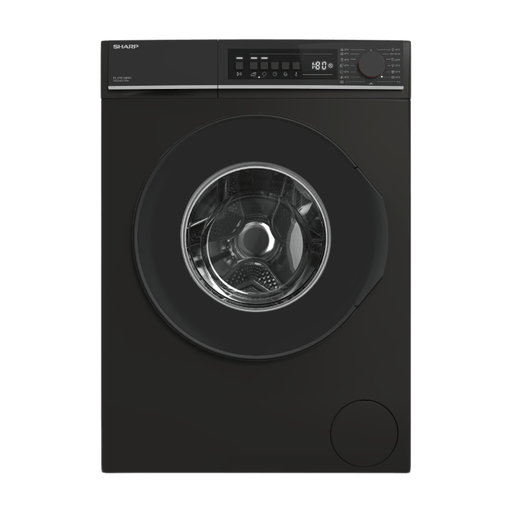
SHARP ESNFB714BBNACB, 7 kg, black
A freestanding front-loader for anyone looking for a 7 kg capacity and a cotton programme.
Capacity: 7 kg. Dimensions: 597 × 845 × 600 mm. Programmes include cotton and Eco 40-60.
View at Joybuy
 No image available
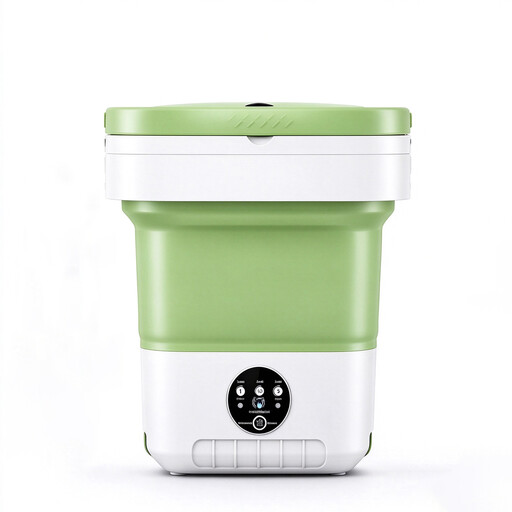
Foldable mini washing machine, 12 litres, green
A portable mini washing machine for anyone who wants to wash small garments, such as socks, separately.
Capacity: 12 litres. The stated maximum load is 1,5 kg; the model has a spin-drying basket.
View at Joybuy
 No image available
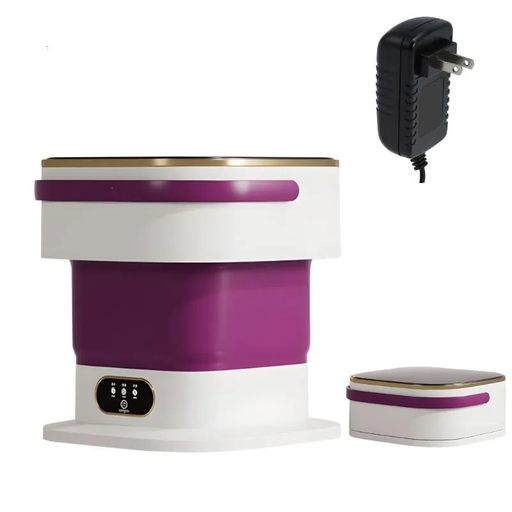
Foldable mini washing machine, 15 litres, purple
A portable mini washing machine for small garments, including socks.
Capacity: 15 litres. The stated maximum load is 1,9 kg; the model has a spin-drying basket.
View at Joybuy
 No image available
Midea MF110W80BA10/W-NL, 8 kg
A freestanding front-loader for anyone who wants to wash socks as part of a larger mixed load.
Capacity: 8 kg. Dimensions: 850 × 595 × 475 mm. The 16 programmes include cotton and Eco 40-60.
View at Joybuy
 No image available
Candy GD 48B9-S, 8 kg
A freestanding front-loader for anyone looking for cotton programmes and an 8 kg capacity.
Capacity: 8 kg. The stated depth is 601 mm. The 16 programmes include cotton and Eco 40-60.
View at Joybuy
Frequently asked questions
Can you always wash cotton socks on Eco 40-60?
No. Check the care label and how soiled the socks are: Eco 40-60 is designed for normally soiled cotton that the label says can be washed at 40 or 60 °C. The programme name doesn’t mean the machine actually washes at 60 °C.
What should you check before installing the machine in a new room?
Measure the space and doorways, and allow for the hoses and an open door. Before buying, also check that water, drainage and a suitable power supply are available; the machine’s external dimensions alone won’t tell you that.
How should you transport your washing machine when you move?
Follow the manual for disconnecting the machine and securing the drum with transit bolts. Drain any remaining water and transport the machine as instructed; remove the transit bolts before using it in its new location.
Does a new domestic washing machine need an energy label?
Yes. Domestic washing machines are covered by the applicable EU energy-labelling rules. The current label uses classes A to G and includes information such as energy consumption per 100 cycles and water consumption per cycle. If listings conflict, check the label for the exact model variant on offer.
Does the seller have to take away your old washing machine when you buy a new one?
In the Netherlands, when a private individual buys a similar appliance, the old-for-new take-back scheme applies, including to online purchases. The seller may not charge to take back that appliance; disconnection or installation is not automatically included.


