
Commuter with few clean shirts
You often wash a small load after a wet commute and want a suitable programme, without assuming the shortest cycle is also right for a full drum. Check the programme conditions for the exact model.


Choose a washing machine based on the care label, how much cotton laundry you usually wash and how soon you need the shirt again. A quick programme can be useful for a small load, but the energy rating applies to eco 40-60 and doesn’t tell you how much energy that quick programme uses. A large drum isn’t automatically right for a household that usually has little laundry.
You often wash a small load after a wet commute and want a suitable programme, without assuming the shortest cycle is also right for a full drum. Check the programme conditions for the exact model.
You wash shirts with other suitable cotton items and want a drum capacity that suits your usual load. Milieu Centraal advises against choosing an unnecessarily large washing machine.
You want to be able to hang up or dry shirts quickly after washing, so you compare spin performance, the permitted spin setting and the drying options available. Milieu Centraal points out that spinning uses less energy than tumble drying.
Suitable when: you can usually wash your shirts with a suitable load of cotton laundry.
Bear in mind: eco 40-60 can take longer and is intended for normally soiled cotton laundry that the care label says can be washed at 40 °C or 60 °C.
Suitable when: you often need a small number of shirts again quickly.
Bear in mind: check the permitted load, fabric type and temperature; the energy rating doesn’t tell you how much energy a quick cycle uses.
Suitable when: you have little time or space for drying and the shirt’s care label allows the spin setting you’ve chosen.
Bear in mind: the maximum spin speed won’t necessarily apply to every programme; also compare the spin-drying efficiency class and noise level on the energy label.
| What to consider | What should you check? | Who is this important for? |
|---|---|---|
| Cleaning and garment care | Check the cotton programme, temperature settings and care instructions. Consider steam claims separately from the standard wash programmes. | If I want to wash a cotton shirt, I follow the care label and want to know which programme is suitable. Around 36% of consumers prioritise effective cleaning and garment care. |
| Washing a small load in time | Check the permitted load and fabric type for the quick programme on the exact model; compare programme duration and washing results. | If I need a clean shirt again quickly after a journey, I want to know whether a quick cycle is suitable for my small load. Around 29% of consumers prioritise washing a small load in time. |
| Drying and energy use | Compare the spin-drying efficiency class, kWh per 100 eco washes and water consumption. Eco 40-60 label figures aren’t consumption figures for quick programmes. | If my drying space is limited, I look at how the spin cycle affects the drying process and how much energy my usual washing routine uses. Around 21% of consumers prioritise drying and running costs. |
| Installation and purchase | Measure the available space, including connections and door clearance. Compare noise figures and check the arrangements for delivery, installation and removal of your old appliance. | If I’m placing the machine close to my living or working space, I want to know whether it will fit and how loud it is when spinning. Around 14% of consumers make installation, noise and purchase considerations their top priority. |
The energy label is based on eco 40-60 and doesn’t tell you how much energy other programmes use.
Compare label figures on the same basis and check the model’s manual for the quick programmes you expect to use regularly.
Milieu Centraal advises choosing a drum capacity that suits your household. In a specific test, the Consumentenbond found poor washing results with large machines that were half full; this result doesn’t necessarily apply to every model.
Work out how much laundry you usually have and don’t choose based only on the maximum load capacity.
A steam or refresh function isn’t automatically a full wash. The stated effects of these functions depend on the model and programme.
Follow the care label and programme description when washing, and check separately how to dry the shirt afterwards.
The Bosch Serie 4 WAN2827DNL is a front-loader with an 8 kg capacity, a maximum spin speed of 1400 rpm, a cotton wash option and SpeedPerfect.
The BM3WFT3841W is an 8 kg front-loader available in the Netherlands, with cotton and shirt programmes, a maximum spin speed of 1400 rpm and a quick programme.
The Inventum VWM8030B has an 8 kg capacity, a maximum spin speed of 1400 rpm, a quiet function and drum cleaning.
The Miele WEG888 WCS PWash&TDos&Steam is a W1 front-loader with a 9 kg capacity, automatic dosing, SteamCare and QuickPowerWash.
These Joybuy products are for anyone who washes cotton shirts and sometimes wants to use a quick programme. Check the permitted load and fabric type for each model; a short programme doesn’t automatically make a cycle suitable for every shirt.
 No image available
Suitable if you want the option of a cotton or blouse programme and a quick cycle.
The product information lists Quick 15min and Super Speed for 5 kg, as well as cotton and Blouse/Shirt programmes.
Maximum spin speed of 1400 rpm; AI Ecobubble™ and Wi-Fi (SmartThings) are listed in the product name.
 No image available
Suitable if you’re looking for a machine with a 6 kg capacity and a quick programme; check whether the programme conditions suit your shirts.
The product name lists a 15-minute Quick Wash, a BLDC inverter motor and energy rating B.
The product name also lists a depth of 45 cm.
 No image available
Suitable if you want to compare a 7 kg front-loader with a quick cycle; according to the product information, Quick Wash is intended for lightly soiled clothes.
The product name lists Quick Wash 15', Steam Wash and 15 programmes.
The product information states a maximum spin speed of 1200 rpm.
 No image available
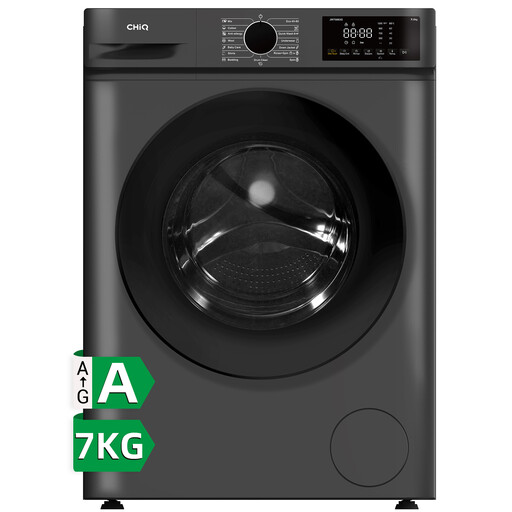
Suitable if you want to compare a front-loader with a quick cycle and a 7 kg capacity.
The product information lists a 15-minute Quick Wash, 16 programmes, Steam and 1-Touch Smart Wash.
Maximum spin speed of 1200 rpm.
 No image available
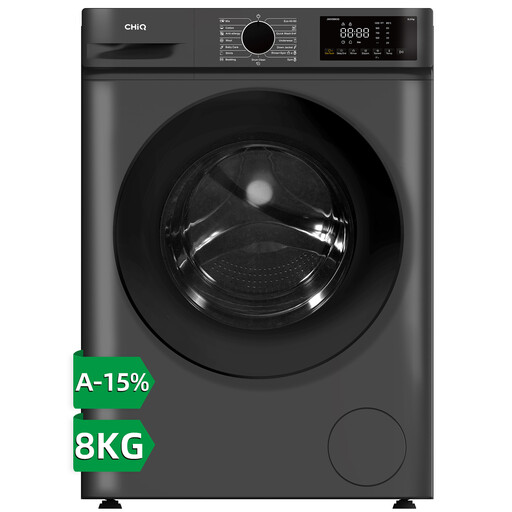
Suitable if you want to wash shirts with other suitable laundry; match the load to the amount you usually wash.
The product name lists a maximum spin speed of 1400 rpm, Steam, 16 programmes and 1-Touch Smart Wash.
Start with the care label. Eco 40-60 is intended for normally soiled cotton laundry that the label says can be washed at 40 °C or 60 °C. For other instructions, follow the relevant programme description and the model’s manual. The European Commission describes the cotton laundry on which eco 40-60 is based. A shirt getting wet doesn’t automatically mean it needs a hygiene or steam programme.
Check the model-specific manual, the location and the water supply and drainage connections. When connecting the machine, Bosch warns that the transit bolts must be removed before use and advises checking for leaks after connection.
Remove wet laundry from the drum as soon as the cycle ends, leave the door and detergent drawer open to dry, and clean the seal and filter according to the manual. The Consumentenbond also advises running a genuinely hot programme periodically to maintain the machine; eco 40-60 isn’t the same thing.
No, you don’t need extra cover to have statutory rights. According to the Dutch government, in the Netherlands you’re entitled to a product that works as it should, and there’s no fixed statutory guarantee period. If there’s a fault, contact the retailer; weigh up extra cover based on what it offers beyond your statutory rights.
Yes. When private customers buy a similar new appliance, the Dutch old-for-new scheme applies. According to the Dutch government, the retailer must take the old appliance free of charge. This also applies to online purchases and delivery: you can hand over the appliance at delivery or take it to the collection point.