
Shirt washer
You regularly wash cotton shirts and want a suitable programme, without mistaking crease reduction for a guaranteed no-iron result.


Start with the care labels on your shirts, your usual laundry load and the space in your utility room. Then consider extras such as a shirt programme or steam function. Consumentenbond and Milieu Centraal point out that energy-label figures apply to Eco 40-60, not necessarily to the programme you use for your shirts. So compare how well each machine suits your laundry, as well as creasing, consumption and spin noise.
You regularly wash cotton shirts and want a suitable programme, without mistaking crease reduction for a guaranteed no-iron result.
You often wash shirts with other cotton items and want the drum capacity to suit your usual load, while keeping an eye on cleaning performance and consumption.
The space available, the connections and how much noise carries from the utility room all play a part in your choice.
| What to consider | What should you check? | Who is this important for? |
|---|---|---|
| Washing cotton well | Check the cotton programmes and the care labels on your shirts. | If I want the programme to suit the cotton and how soiled my shirts are, getting them clean in a suitable way comes first; around 29% of consumers say this is their main concern. |
| Creasing and ironing | Check whether the exact model has a shirt programme or a suitable crease-reduction option, and what load limit applies. | If I want to reduce creasing and extra ironing, I look at the precise feature and the permitted load; around 23% of consumers give this their highest priority. |
| Capacity and consumption | Compare your usual load with the drum capacity. Check the label figures for kWh per 100 Eco 40-60 cycles and water consumption per cycle. | If my loads vary, I don’t want a drum that’s bigger than my needs and compare consumption on a like-for-like basis; around 18% of consumers put this first. |
| Space and noise | Measure the space, allowing room for the door and hoses; check the connections and compare noise figures on a like-for-like basis. | If space in the utility room is limited or the spin cycle can be heard, I want the dimensions and installation position to factor into my decision; around 18% of consumers say this is their deciding concern. |
| Purchase and aftercare | Check the seller’s current total price and installation terms, and distinguish the manufacturer’s warranty from your statutory rights. | If I also want to consider installation and what happens if something goes wrong, I check the terms in advance; around 12% of consumers say this is their main concern. |
The label figures are based on Eco 40-60. They don’t automatically tell you how much an individual cotton or shirt programme uses.
Compare label figures on the same Eco 40-60 basis, and look for separate test data if you usually use a different programme.
A larger capacity isn’t necessarily more economical if your usual load doesn’t use all that space; the machine may also take up more room.
Weigh a typical load and measure the space available before choosing the capacity.
A refresh programme, steam during a wash and a crease-reduction feature aren’t the same thing. Their purpose and permitted load vary by model.
Check exactly what the function does and its programme limit; treat washing and any ironing as separate tasks.
A faster spin can increase the chance of creasing. An unstable installation can also cause vibration and noise.
Compare noise figures on the same measurement basis and check that the machine can stand securely in the intended position.
The BM3WFT3841B1 is worth considering if you’re looking for a dedicated shirt programme.
The Serie 6 WGJ23400NL is an example of an 8kg front-loading model with Bosch’s Iron Assist option.
The WEG895 WPS PWash&TDos&Steam is worth considering if automatic dosing and a steam option matter to you.
The LR97HAMBURG is a useful comparison if you regularly wash larger loads and are considering a steam function.
The WW10FG6U94LBU3 is a 10kg model to look at if you want to compare larger loads and app features.
These models are worth comparing for cotton laundry, taking capacity, programmes and the space available in your utility room into account.
 No image available
An option to compare if you’re looking for a cotton programme and adjustable spin speed.
8 kg capacity; 1400 rpm; 16 wash programmes; steam function; dimensions 850 × 595 × 475 mm; spin noise level 72 dB.
 No image available
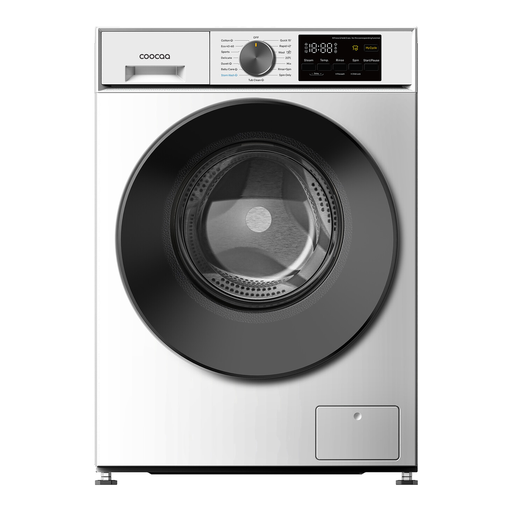
An option to compare if you want separate programmes for shirts and cotton.
8 kg capacity; shirt and cotton programmes; steam function; dimensions 60 × 85 × 57,5 cm; spin noise level 76 dB.
 No image available
Its stated depth makes this model worth comparing if you have limited space for installation.
6 kg capacity; 45 cm deep; steam wash; 15-minute quick wash programme; energy class B.
 No image available
An option to compare if you’re looking for a 7kg model with a steam wash function.
7 kg capacity; steam wash; 15-minute quick wash programme; 15 programmes; energy class A.
 No image available
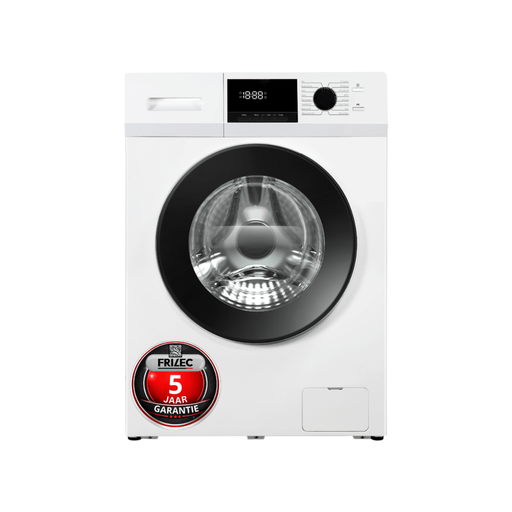
An option to compare if you’re looking for a larger drum with a steam wash function.
8 kg capacity; steam wash; 15-minute quick wash programme; 15 programmes; energy class A.
No. Check the care label first. Eco 40-60 is intended for normally soiled cotton that the care label says can be washed at 40 °C or 60 °C; the programme name doesn’t mean the machine washes at 60 °C.
No. A separate steam programme isn’t the same as washing with water and detergent. Its effect on creasing varies by function and model; check the user manual and take your laundry out of the drum promptly.
Measure the space, allowing room for the door and hoses, and check the floor, water supply, drain and availability of an earthed socket. Remove the transit bolts as instructed before using the machine.
No. A new domestic washing machine sold on the Dutch market must have an energy label, but class A isn’t a general purchase requirement. Compare the label figures on their Eco 40-60 basis.
In the Netherlands, under the old-for-new scheme, a retailer must take back a similar old appliance free of charge when a private customer buys a new one. This also applies to online purchases; arrange the practical handover with the seller.