Choose a washing machine based on the sorted cotton laundry your housemates actually wash together and the space where the machine will go. The largest drum isn’t automatically the wisest choice. Then check that the programmes suit your shirts’ care labels, and compare noise and consumption figures on a like-for-like basis.
Who is this choice relevant to?
Housemates who share their laundry
They want a drum that suits the cotton laundry they actually wash together. If everyone washes separately, a smaller capacity may be a better fit. Milieu Centraal and the Consumers’ Association describe capacity as something to match to your usual wash load.
People who wear cotton shirts
They want to choose programmes that suit the care labels and consider cleaning performance, rinsing and programme duration. The Consumers’ Association and Energielabel.nl point out that programmes and energy labels don’t necessarily tell you the same thing about every wash result or programme.
People living near the laundry area
They want to consider spin noise, stable installation and the space available. The Consumers’ Association and Bosch Netherlands recommend paying attention to the machine’s position and connection requirements.
What should you consider when choosing?
Front-loader with a suitable capacity
Best for: housemates who regularly run a sorted cotton wash that fits the drum and have enough space for the door to open.
Keep in mind: a larger drum is less useful if you often run small, separate loads. Match the load capacity to what you usually wash.
Larger-capacity front-loader
Best for: people who genuinely combine their laundry or regularly run larger loads. Samsung lists an 8 kg capacity for the WW80CGC04AAEEN.
Keep in mind: capacity alone doesn’t prove that smaller washes will be just as economical or clean. The saving claim on Samsung’s page applies to 9kg models, not this 8kg version.
Slimline top-loader
Best for: a space where the width makes a standard front-loader difficult to fit, and where there’s room above the machine to open the lid.
Keep in mind: AEG lists the LTR6ECO as 397 mm wide and 903 mm high. Remember to check the clearance needed above the machine too.
| What to consider |
What to look for |
Who is this important to? |
| Capacity |
Compare a typical sorted cotton wash with the cotton load capacity and the maximum load for each programme. |
When I wash with housemates, I want a drum that suits our usual shared load without choosing an unnecessarily large one. Around 33% of consumers prioritise a suitable capacity. |
| Shirt programme |
Read the care labels and check which cotton or shirt programmes the exact model offers. Compare cleaning performance and rinsing too. |
I want the programme to suit the fabric and care label, and don’t want to assume that an energy-saving setting washes every shirt in the same way. Around 27% of consumers prioritise shirt care. |
| Noise and installation |
Compare the spin noise in dB, measure the available space and clearance for the door or lid, and check the connection requirements in the manual. |
If the machine is close to my room, I want it to fit properly and stand steadily, so noise and installation are part of my decision. Around 20% of consumers focus mainly on quiet operation and ease of fitting. |
| Running costs and service |
Compare kWh per 100 Eco 40-60 cycles and water per cycle on a like-for-like basis. Ask about delivery and installation costs, and check the service terms. |
I want to consider both running costs and help if something goes wrong, as well as the purchase price. Around 20% of consumers prioritise costs and service. |
Common mistakes
-
Choosing the largest drum because lots of people share the machine
The load capacity applies to cotton; the number of housemates doesn’t tell you how much sorted laundry goes into the drum per wash. The Consumers’ Association recommends matching capacity to your usual wash load.
Weigh or assess a typical shared load before choosing a capacity.
-
Assuming Eco 40-60 is a fixed wash temperature for every shirt
Eco 40-60 is intended for normally soiled cotton with a care label that allows washing at 40 or 60 °C. The Consumers’ Association explains that, on average, the programme may clean less effectively and rinse less thoroughly than the standard cotton programme at 40 °C.
Follow the care label and choose a programme based on how soiled the laundry is, weighing energy use against cleaning performance and rinsing.
-
Assuming a steam function guarantees crease-free shirts
How steam is used varies from one machine to another; the function’s name alone doesn’t prove what results you’ll get with your shirts. The Consumers’ Association notes that steam functions are difficult to compare.
Check what the function does on the exact model, and look for an independent model review if reducing creases is a deciding factor.
-
Taking the model number as sufficient proof of its energy label
The Joybuy listing for the Beko BM3WFU3741S gives energy label C in the title, while the product description and Beko state energy label A. This inconsistency makes the label for this listing unclear.
Check the product information sheet and exact version before using the energy label to compare models.
Brands to consider
Beko
According to Beko’s Dutch product information, the Beko BM3WFU3741S is a 7kg front-loader with a shirt programme. It’s worth comparing if that capacity and the available programmes suit your laundry.
- Beko lists 1400 rpm, 76 dBA during the spin cycle and energy class A for this model.
- The Joybuy listing gives energy class C in the title, while Beko and the product description state A. Check the label for the exact version. EnergySpin is a claim made by Beko, not an independent comparison.
Bosch
According to Bosch Netherlands, the Serie 2 WGE02404NL is a 7kg front-loader to consider when comparing standard front-loaders.
- Bosch lists a maximum spin speed of 1400 rpm and dimensions of 848 × 598 × 588 mm.
- These figures alone don’t show that the machine washes shirts better or runs more quietly than another model.
AEG
The product information mentioned includes a 7kg front-loader, the LF627400, and a 7kg top-loader, the LTR6ECO. These are two different options to compare based on the space available.
- AEG lists a width of 596 mm for the LF627400 and 397 mm for the LTR6ECO; the top-loader is 903 mm high.
- With the top-loader, also check that there’s enough clearance above the lid. ProSense is AEG’s description of how the machine adapts to the load, not an independent performance measurement.
Samsung
According to Samsung’s Dutch product information, the WW80CGC04AAEEN is an 8kg front-loader to compare if people in your household genuinely combine larger sorted loads.
- Samsung lists dimensions of 600 × 850 × 550 mm and energy label A for this model.
- A saving claim for Samsung machines with a 9 kg capacity doesn’t automatically apply to this 8 kg version.
Washing machines at Joybuy
These Joybuy products are front-loaders with a listed capacity of 7 kg. Compare them for separate or shared cotton washes, and check that the dimensions, programmes and connections suit your laundry area.
 No image available
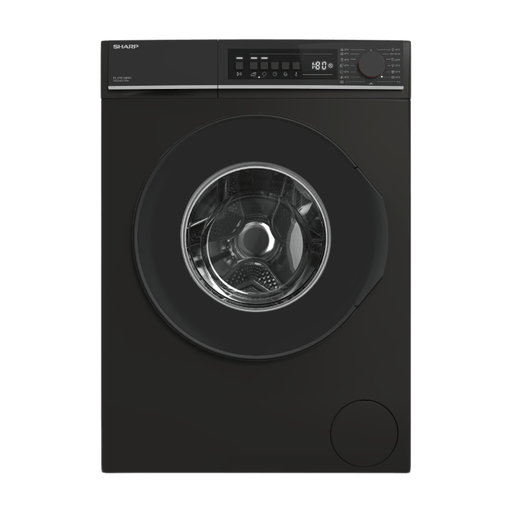
SHARP ESNFB714BBNACB, 7 kg
An option to compare if you’re looking for a front-loader for a separate or shared cotton wash.
Listed features: 7 kg, 1400 rpm, energy label A, inverter motor and 15 programmes, including cotton.
Joybuy
 No image available
Beko BM3WFU3741S, 7 kg
An option to compare if you wash cotton shirts and are looking for a model with a dedicated shirt programme.
Listed features: 7 kg, 1400 rpm, cotton and shirt programmes, 15 programmes and 76 dB(A) during the spin cycle. Check the energy label for the exact version: the product listing contains conflicting information.
Joybuy
 No image available
Comfee’ CFP01EW70W-JD, 7 kg
An option to compare for cotton washes up to the listed capacity, with a choice of several programmes.
Listed features: 7 kg, cotton programme, 16 programmes and a 15-minute programme.
Joybuy
 No image available
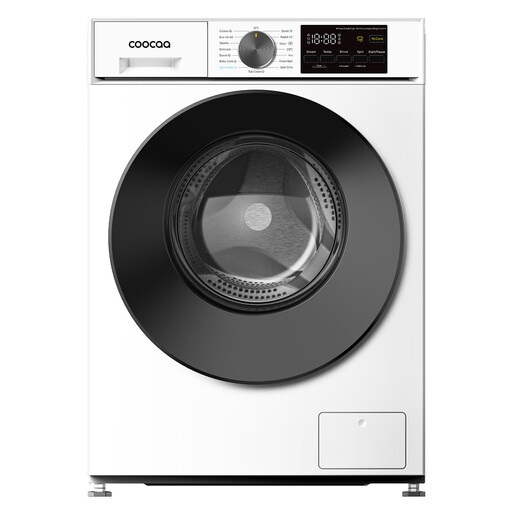
Coocaa Galaxy A3 Series F702A3AВC0, 7 kg
An option to compare if you’re looking for a front-loader with programmes for different types of laundry.
Listed features: 7 kg, 15 programmes, steam wash, quick wash and a Baby Care programme.
Joybuy
 No image available
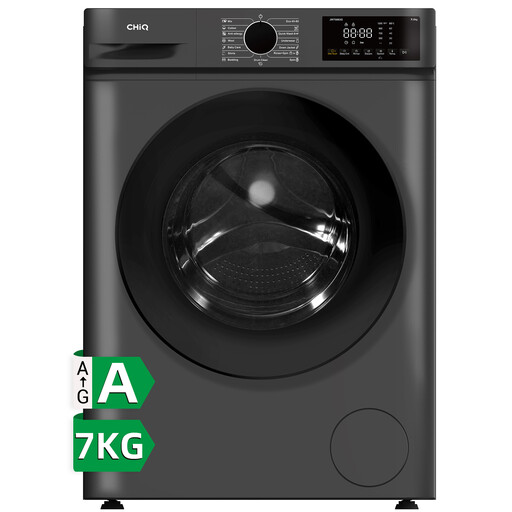
CHiQ JW75883G, 7 kg
An option to compare if you’re looking for a front-loader with a cotton programme and a range of other programmes.
Listed features: 7 kg, 1200 rpm, 16 programmes, cotton programme, steam and a depth of 47 cm.
Joybuy
Frequently asked questions
Can I always wash cotton shirts on Eco 40-60?
No. Check the care label first: Eco 40-60 is intended for normally soiled cotton with a label that allows washing at 40 or 60 °C. The Consumers’ Association explains that, on average, the programme may clean less effectively and rinse less thoroughly than the standard cotton programme at 40 °C. Compare those programmes if wash results are your priority.
What should I check before connecting the washing machine at home?
Measure the space where it will stand and the route into the house, and follow the manual’s instructions on the floor, water supply, drainage and electrical connection. Bosch Netherlands recommends an earthed socket for its installation and says the transit bolts must be removed before use. Have an unsuitable connection assessed rather than using an extension lead without checking first.
How can I keep a shared washing machine in good working order?
Match the load and programme to the laundry, and follow the maintenance instructions for the exact model. Milieu Centraal recommends running a wash at 60 °C about once a month to help prevent detergent and dirt residue.
What costs and rights should I consider if the machine breaks down?
Ask in advance about any delivery and installation costs, and check the service terms. According to the Dutch government, there’s no fixed statutory period for legal guarantees in the Netherlands; if a product is faulty, the retailer is your point of contact. Normal wear and tear or damage caused by your own actions doesn’t automatically entitle you to a free repair.
Does the energy label for a new washing machine have to be visible online?
Yes. According to the European Commission, the energy label must also be visible when washing machines covered by EU rules are sold online. The label helps you compare models, but you’re not required to choose a particular energy class.


