Choose a drum capacity that suits the sorted laundry you usually wash in one load. Milieu Centraal recommends 7 kg for a household of 3 to 4 people. Also compare 7 or 8 kg with your own loads, and choose 9 kg only if you regularly wash larger loads. Check the care labels, the programmes on the exact model, consumption figures on the same eco 40-60 basis, and the space available.
Who is this choice relevant to?
A family washing shirts every week
You’re looking for a drum that suits your usual sorted loads and a programme that matches the shirts’ care labels. The Consumers’ Association explains how the recommended load for cotton differs from that for delicates and synthetics. AEG Support and Bosch Netherlands also explain what to look for on care labels.
A family keeping an eye on consumption
You do laundry regularly and want to take the stated electricity and water consumption into account without choosing more capacity than you need. Milieu Centraal and the European Commission provide information about washing machine capacity and the basis for energy labels.
A family with limited laundry space
As well as drum capacity, you need to consider the depth, access route and connection options. Bosch Netherlands recommends following the installation instructions for the specific appliance, including removing the transit bolts.
What should you look for when choosing?
Start with the laundry you actually wash and the space you have. Then compare the programmes and consumption figures. Milieu Centraal recommends 7 kg for a household of 3 to 4 people and 9 kg for a household of 5.
A suitable 7 or 8 kg drum
Choose this if: it suits your usual sorted loads and the space available.
Bear in mind: extra capacity is not automatically more useful if the drum is often only partly full.
A larger drum, such as 9 kg
Choose this if: you regularly wash larger sorted loads and the machine fits in the space available.
Bear in mind: washing a few shirts on their own doesn’t automatically make the extra capacity worthwhile.
A model with crease-care or a steam option
Choose this if: shirt care is a priority and the manual confirms that the relevant feature is available for the programme you intend to use.
Bear in mind: steam is not automatically a wash cycle, and crease-care claims don’t necessarily apply to every shirt or programme.
| What to consider |
What to look for |
Who should pay particular attention? |
| Load capacity |
Weigh a typical sorted load and compare it with the capacity for cotton. The Consumers’ Association recommends a smaller load for delicates and synthetics. |
If I’m mainly looking for a drum that suits our usual family laundry, I don’t want to base my choice solely on the maximum load capacity. Around 36% of consumers prioritise a suitable load capacity. |
| Shirt care |
Follow the care label and check the manual for the exact model to see which cotton, delicates and any crease-care options are available. |
If I want to care for my shirts according to their labels, I check the permitted temperature and suitable programmes. Around 29% of consumers prioritise shirt care. |
| Electricity and water consumption |
Compare kWh per 100 cycles and water per cycle on the same eco 40-60 basis. The label figures don’t automatically apply to every other programme. |
If I do laundry often, I want to compare the stated consumption figures on a like-for-like basis. Around 21% of consumers focus mainly on running costs. |
| Space and installation |
Measure the space and access routes, and check the connection instructions, water supply and drainage requirements for the exact model. |
If the laundry space is tight or I need to arrange installation, I want to know in advance whether the appliance can be positioned and connected easily. Around 14% of consumers prioritise installation and aftercare. |
Common buying mistakes
-
Automatically choosing the largest drum
Extra capacity isn’t automatically better suited to a small or partial load. The Consumers’ Association notes that consumption doesn’t decrease in exact proportion when you wash a smaller load, and that an underfilled drum may not wash as effectively.
Weigh a typical sorted load before deciding whether a larger drum suits your laundry routine.
-
Assuming steam means clean or crease-free shirts
AEG distinguishes between a steam programme and a wash cycle. Features also vary by model, and a steam function doesn’t prove that a shirt will be crease-free after every programme.
Check the manual for the exact model to see which steam or crease-care option is available and what it’s designed for.
-
Comparing only energy labels or individual energy-saving claims
The European Commission describes eco 40-60 as the basis for washing machine energy labels. So a label figure doesn’t necessarily tell you how much another programme or model will use.
Compare label figures on the same basis, and also check which programme you can use for your shirts.
-
Buying an extended warranty without considering your existing rights
According to the Dutch government, there is no fixed statutory warranty period in the Netherlands. You’re entitled to expect a product that meets reasonable expectations. Any additional manufacturer’s warranty or paid cover should be considered separately.
Check what additional cover is offered and who to contact if something goes wrong. The retailer is responsible for dealing with your statutory rights.
Brands to consider
Bosch
The Serie 4 WAN2827GNL is an 8 kg front-loading model worth comparing if capacity and crease care matter to you.
- Bosch lists a maximum spin speed of 1400 rpm and dimensions of 845 × 598 × 590 mm for this model.
- The crease-reduction claim comes from Bosch. Check the model manual to see which garments and programmes it applies to. Bosch doesn’t list AquaStop for this model.
AEG
The 6000 ProSense LR6KOLN is an 8 kg model worth comparing if you’re looking for a programme that adapts to the load.
- AEG lists a 1400 rpm spin speed and programmes including cotton and eco 40-60. The manufacturer says ProSense adjusts the programme duration and consumption to the load.
- The model information doesn’t list a separate steam programme for this version. Don’t assume it has one based on general information about other AEG programmes.
LG
The GC3R309S3 is a 9 kg model for households that regularly wash larger loads.
- LG lists a cotton programme and steam for this model.
- For this exact version, LG lists ‘Crease Care: No’. So capacity and steam don’t mean it has a specific anti-crease option.
Miele
The WEA128 WCS 8kg Active is an 8 kg model to compare for its programmes and stated eco 40-60 consumption figures.
- Miele lists 43 kWh per 100 eco 40-60 cycles and 48 litres of water per cycle.
- Compare these figures only with data on the same basis. A general manufacturer claim about tested service life doesn’t guarantee the same result for every individual appliance.
Samsung
The WW80CGC04AAEEN is an 8 kg model with Ecobubble and app features that you may wish to include in your comparison.
- Samsung lists an 8 kg capacity and dimensions of 600 × 850 × 550 mm for this model.
- Cleaning and energy-saving claims depend on test and usage conditions. Information about a 9 kg version doesn’t automatically apply to this 8 kg model.
Washing machines for family laundry at Joybuy
These washing machines are suited to typical family laundry or larger loads. Check each model’s programmes against the care labels on your shirts.
 Image unavailable
Samsung WW90DG6U25LE, 9 kg
The capacity suits households that regularly wash larger sorted loads. The listed programmes include cotton and blouse or shirt.
9 kg; 1400 rpm; AI Ecobubble™; SuperSpeed; Wi-Fi (SmartThings); energy class A.
View at Joybuy
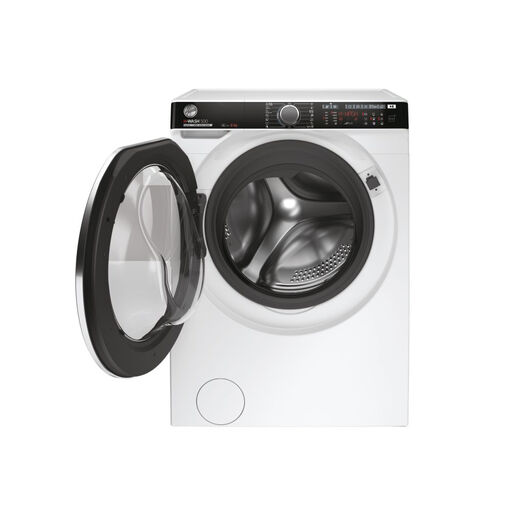 Image unavailable
HWP 48AMBC7/1-S, 8 kg
The stated capacity suits typical family loads. Check that this model’s programmes match the care labels on your shirts.
8 kg; 1400 rpm; class A.
View at Joybuy
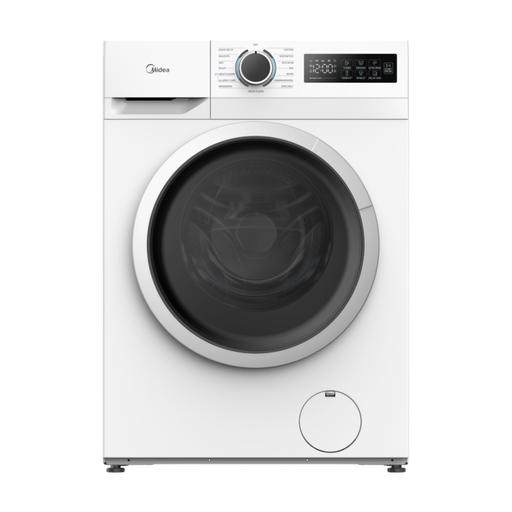 Image unavailable
Midea MF110W80BA10/W-NL, 8 kg
The stated capacity suits typical family loads. Check that the available programmes match the care labels on your shirts.
8 kg; 1400 rpm; A-10%; 15 wash programmes.
View at Joybuy
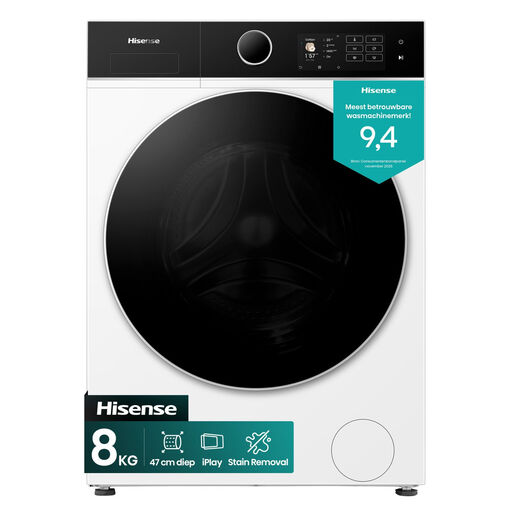 Image unavailable
Hisense WF5I8043BWF, 8 kg
The stated capacity suits typical family loads. The listed depth may be worth considering if space is limited.
8 kg; 1400 rpm; inverter motor.
View at Joybuy
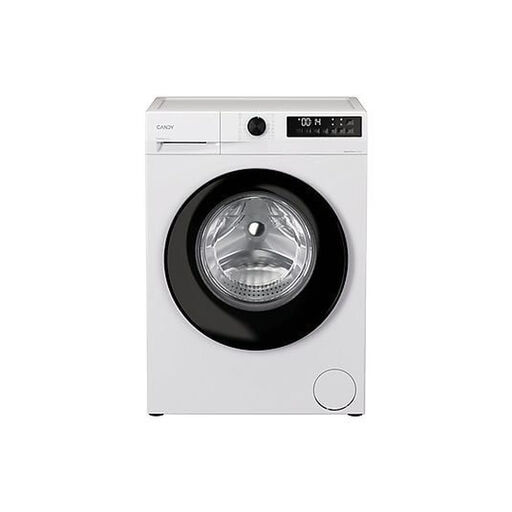 Image unavailable
Candy GD 49B8-S, 9 kg
The capacity suits households that regularly wash larger sorted loads. Check the programme details against the care labels on your shirts.
9 kg; 1351 rpm; energy class A; 16 wash programmes.
View at Joybuy
Frequently asked questions
Can I wash all cotton shirts on the cotton programme?
No. Check the care label first. It shows, among other things, the maximum permitted temperature and whether the garment needs gentler treatment. Then choose a suitable programme on the exact model.
Is eco 40-60 the same as a 40 °C cotton wash?
No. According to the European Commission, eco 40-60 is intended for normally soiled cotton that can be washed at 40 °C or 60 °C according to its care label. Energy label figures are based on this programme and don’t automatically apply to every cotton programme.
What should I look for when connecting a washing machine?
Follow the manual for the exact model. Bosch Netherlands recommends, among other things, a stable surface, suitable water supply and drainage, an earthed socket, and removing the transit bolts before use.
Am I always limited to a two-year statutory warranty in the Netherlands?
No. According to the Dutch government, there is no fixed statutory warranty period in the Netherlands. You’re entitled to a good-quality product, and what you can reasonably expect depends, among other things, on the product. If something goes wrong, contact the retailer. A manufacturer’s warranty may provide additional rights.
Does a new washing machine need an energy label?
Yes. The Dutch government states that household washing machines must have an energy label. The European label scale for this product group runs from A to G. Compare the stated figures on the same eco 40-60 basis.


