Who is this choice relevant to?

Housemates who do their washing separately

If everyone washes their own shirts and other clothes separately, check whether the drum capacity suits a typical sorted load. Milieu Centraal and the Consumers’ Association recommend choosing a drum that matches the amount of washing you do.

People who wear shirts

If you wash cotton shirts, follow the instructions on each garment’s care label. GINETEX explains that the temperature shown in the wash symbol is the maximum washing temperature. So choose a programme to suit the shirt, not just the fabric type.

People living next to the laundry room

If your bedroom or study space is close to the machine, compare the spin noise and make sure it can be placed on a stable, level surface. The Consumers’ Association points out that washing machines are particularly noisy during the spin cycle.

What should you look for?

Front-loader with a capacity of around 7–8 kg

A good fit when: housemates usually wash separately or combine only some of their cotton washing.

The trade-off: a large shared load may need to be split across more cycles. Check the dimensions and spin noise of the specific model.

Larger front-loader, for example 9 kg

A good fit when: the household regularly washes large, sorted cotton loads together and has enough space.

The trade-off: a larger drum isn’t automatically more economical for small loads. Load detection doesn’t fully offset the drawbacks of an underfilled drum.

Slimline top-loader

A good fit when: there isn’t enough width for a standard front-loader and the usual loads are within its capacity.

The trade-off: the Consumers’ Association describes top-loaders as narrower, but with less capacity. You’ll also need space above the machine to load it.

Rent instead of buying

A good fit when: housemates would rather avoid the upfront cost and shared ownership.

The trade-off: compare the cost over the full contract period and check the arrangements for installation, maintenance and moving out.

What to consider What should you check? Who should pay particular attention?
Suitable drum capacity Weigh a typical sorted cotton load and compare it with the drum capacity. Also consider how often housemates actually combine their washing. If I usually wash separately, I don’t want to choose a drum based solely on the number of people in the house. Around 28% of consumers considering this choice put suitable drum capacity first.
Shirt care Check the care labels and compare the cotton, delicates or shirt programmes, as well as the adjustable temperature and spin speed. If I want to keep my shirts looking smart, I’ll follow the care instructions for each garment. Around 22% of consumers give shirt care top priority.
Spin noise Compare the noise level in dB(A) during the spin cycle using the same label basis, and place the machine on a stable, level surface. If my bedroom or study is next to the laundry room, I want to take the noise during the spin cycle into account. Around 17% of consumers put keeping the home quiet first.
Energy use for regular washing Compare kWh per 100 wash cycles and water consumption on the energy label. Also check which programmes housemates actually use. If we wash regularly, I want to compare the stated consumption with how we use the machine. Around 17% of consumers prioritise running costs; the label figure for eco 40-60 doesn’t automatically apply to other programmes.
Installation and water protection Measure the available width, depth and loading space; check the connections, floor surface and the specific type of water protection. If the laundry room is cramped or a leak could affect other rooms, I want to know in advance whether the machine will fit and what protection it has. Around 16% of consumers prioritise space and the potential impact of leaks.

Common pitfalls

  • Choosing a large drum because there are lots of people in the house

    If housemates usually wash their clothes separately, the size of the household doesn’t automatically reflect the size of the load that goes into the drum each cycle. Load detection doesn’t fully offset the drawbacks of an underfilled drum.

    Weigh a typical sorted cotton load and choose the capacity based on how often people really combine their washing.

  • Assuming the energy label shows consumption for every programme

    The label basis is eco 40-60 and doesn’t automatically show the consumption of a short or specific shirt programme.

    Compare like-for-like label figures and also check the programme information for the cycles housemates expect to use.

  • Comparing only the machine itself

    Delivery and installation may be charged separately, so practical arrangements for getting the machine delivered can affect your choice.

    Before buying, check what’s included in delivery and connection, and who will remove or take away the old machine.

  • Assuming a water stop device provides complete leak protection

    Water protection systems vary. It’s particularly important to consider the potential impact of a leak if water could reach other rooms or a lower floor.

    Check the protection system on the exact model and consider it in relation to where the machine will be installed.

Brands and models to compare

Beko

The Beko BM3WFT3841B1 is an 8 kg front-loader with cotton and shirt programmes. These features make it a useful model for comparing programme options and dimensions.

  • Beko Netherlands lists an A energy rating, a depth of 54,6 cm and a spin noise level of 76 dBA for this model.
  • These are stated model specifications, not an independent assessment of washing performance or the brand’s entire range.

Bosch

The Bosch Serie 4 WAN2827GNL is an 8 kg front-loader. Compare its dimensions and consider whether you need water protection on a model-by-model basis.

  • Bosch Netherlands lists dimensions of 845 × 598 × 590 mm and a maximum spin speed of 1400 tpm for this model.
  • Bosch doesn’t list AquaStop for this model, so check the water protection you want separately. These features don’t apply to all Bosch machines.

Siemens

The Siemens iQ300 WM14N27TNL is another 8 kg front-loader to compare for dimensions and controls.

  • Siemens Netherlands lists dimensions of 845 × 598 × 590 mm and a maximum spin speed of 1400 tpm for this model.
  • Siemens doesn’t list aquaStop for this model. The product specifications don’t establish any general quality difference compared with other brands.

AEG

The AEG LR7696UD4 is a 9 kg front-loader with a steam refresh function. It may be worth considering if the household often washes larger loads or wants this feature.

  • AEG lists a maximum depth of 660 mm and consumption of 49 kWh per 100 eco wash cycles for this model.
  • Check that the dimensions will fit. The claimed refresh effect is a manufacturer’s claim, not an independently verified result.

LG

According to LG, the LG F4X5009THB is a 9 kg model with features including a quick programme and app functions. Compare these only if housemates are likely to use them.

  • LG lists AI DD, TurboWash360 and steam functions for this model.
  • Any benefits are claims made by LG. This model number is not the same as the F4X5509THB.

Washing machines on Joybuy

These Joybuy products are 8 or 9 kg front-loaders, for anyone choosing a suitable machine for cotton washing or regularly doing larger loads. Check the programmes, dimensions and product specifications for each model against the laundry room and the household’s clothes.

Samsung WW90DG6U25LE washing machine, 9 kg, 1400 rpm

Samsung WW90DG6U25LE washing machine, 9 kg

The product information lists cotton and Blouse/Shirt programmes, so you can compare the options for washing shirts.

The stated capacity is 9 kg; Delicate/Silk and Quick 15min programmes are also listed.

The product name lists 1400 rpm, AI Ecobubble™, SuperSpeed, Wi-Fi (SmartThings) and an A energy rating.

Joybuy

AEG LR73R862 washing machine, 8 kg

AEG LR73R862, 8 kg

The stated capacity of 8 kg gives you a useful comparison with typical individual loads.

The product information lists a MixLoad programme, Steam Refresh, PreciseWash and 1600 rpm.

ProSteam, an Inverter Motor+ and an A energy rating are also included in the product name.

Joybuy

Bosch WGB2440BFG Serie 8 washing machine, 9 kg

Bosch WGB2440BFG Serie 8, 9 kg

The product information lists a Mini Load programme as well as a 9 kg capacity, so you can weigh up the stated options for different load sizes.

The product name lists 1400 rpm, an A energy rating and an NL/FR control panel.

Iron Assist and AquaStop are mentioned in the product information.

Joybuy
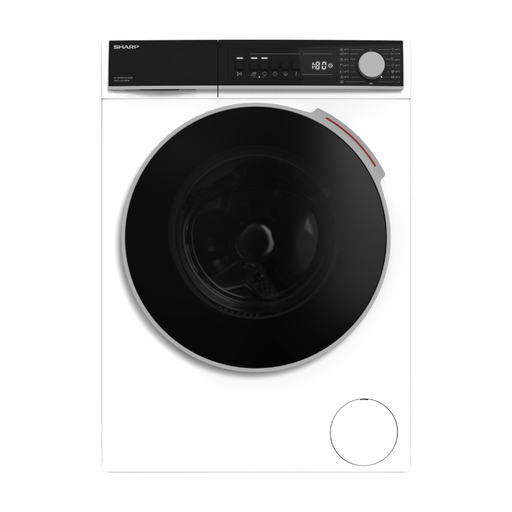
SHARP ESNFB914CWDACB washing machine, 9 kg

SHARP ESNFB914CWDACB, 9 kg

The product information lists a cotton programme and adjustable temperature and spin speed, which are useful for matching the wash to the care labels on shirts.

The stated capacity is 9 kg; the product name lists 1400 rpm and a steam function.

AquaStop and an Inverter Motor are also listed.

Joybuy
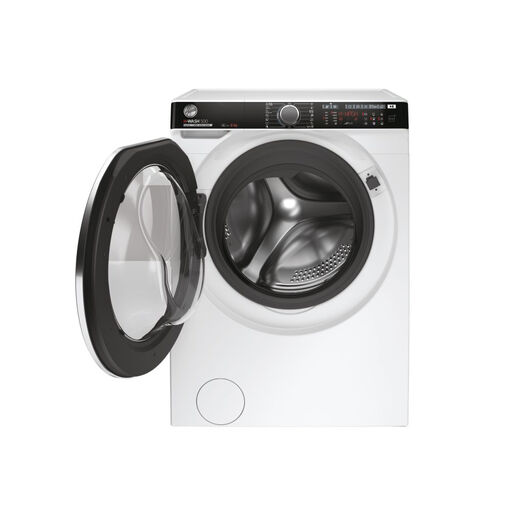
HWP 48AMBC7/1-S front-loader, 8 kg

HWP 48AMBC7/1-S, 8 kg

The stated capacity of 8 kg is a useful starting point for comparison with the sorted loads in your household.

The product name lists a front-loader, 1400 rpm and an A energy rating.

The product information lists Auto Care and Scan to Care. Check whether the related features suit what housemates need.

Joybuy

Frequently asked questions

Can every cotton shirt go on the cotton programme?

No. Follow the care label on each shirt. The temperature shown in the wash symbol is the maximum washing temperature. Also choose a programme that takes account of any instructions for gentler treatment.

What does an A energy rating tell you about a short shirt wash?

The energy label for washing machines is based on eco 40-60 and doesn’t automatically tell you how much energy a short or other programme uses. Check the programme information for the specific model to compare this.

What should we check when installing the machine?

Measure the available space, check the connections and place the machine on a stable, level surface. Before buying, check whether delivery and connection are included, and follow the model’s instructions for connecting it.

How does the warranty work in the Netherlands if several housemates use the washing machine?

When you buy as a consumer, the product must meet what you can reasonably expect; in the Netherlands, there is no fixed two-year period for the legal guarantee. The retailer is your point of contact if something is faulty. Agree within the household who will make the purchase and stay in touch with the retailer.

Does the retailer have to take away our old washing machine?

When you buy a new, similar machine for private use, the Dutch old-for-new scheme applies. According to the Dutch Government, the retailer must take back the old appliance free of charge. The process can vary, including for online purchases.
