What should you look for?
First measure the full space where the machine will go, then decide what drum capacity suits your usual cotton washing. As well as the machine’s external dimensions, Consumentenbond advises allowing for hoses, doors and ventilation space.
| What to consider |
What should you check? |
Who is this important for? |
| Will the machine fit? |
Measure the alcove at several points. Compare the machine’s external dimensions and connection space with the room needed for the door or lid to open. |
If width, depth or clearance above or in front of the machine is limited, you’ll want to be sure you can install and use it. Around 38% of consumers put available space first. |
| Which programme suits your shirts? |
Follow the care label and check the cotton and shirts programmes, as well as the adjustable spin speed, for the exact model. |
If you want to wash shirts carefully, look for settings that suit the fabric and care label. Shirt care is a priority for around 31% of consumers. |
| Does the drum suit your usual washing? |
Compare your usual sorted cotton load with the maximum capacity and the load size for the programme you’ve chosen. |
If you usually wash small loads, you’ll want to match the capacity to what you actually wash. Around 15% of consumers prioritise a suitable drum size. |
| What about running costs? |
Compare energy and water consumption on the same Eco 40-60 label basis. Also check the manual if you often use other programmes. |
If consumption is a major consideration, compare both the label figures and the programmes you use. Around 8% of consumers put energy and water consumption first. |
| Do you need the machine to dry as well? |
First decide whether you want to tumble-dry clothes. Then compare the washing and drying capacities, as well as the wash-and-dry label. |
If there’s no room for a separate tumble dryer but you still want to dry clothes in a machine, the capacity for a complete wash-and-dry cycle matters. Around 8% of consumers prioritise this extra drying function. |
Washing machines at Joybuy
The products below include front-loaders with different stated capacities and depths, as well as a foldable machine described as being for small garments. Check whether each model’s programmes and dimensions suit your shirts and the space you have available.
 No image available
AEG LF61R840 6000 Series, 8 kg
An option if you’re looking for a front-loader and its stated depth of 57.7 cm fits your space. Leave room for the door at the front.
The product information lists an 8 kg capacity, ProSense load adjustment and energy class A.
Joybuy
 No image available
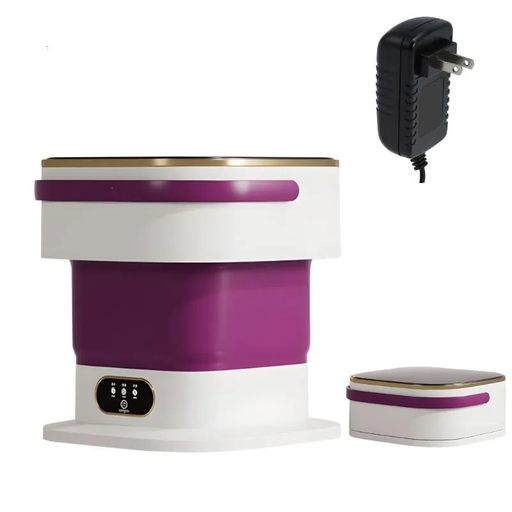
Foldable mini washing machine, 15 litres
The description focuses on small garments such as underwear and socks; check whether the capacity and programmes are suitable for your shirts.
The product information states a maximum load of 1.9 kg and a separate spin basket.
Joybuy
 No image available
Beko BM3WFU3741S, 7 kg, silver
An option for cotton shirts if you’re looking for a front-loader and its available programmes suit the care label.
The product information lists cotton and shirts programmes, a 7 kg capacity, a maximum spin speed of 1400 rpm and energy class C. Leave room for the door to open.
Joybuy
 No image available
Comfee' CFP01EW70W-JD, 7 kg
The stated depth of 400 mm may be useful if depth is limited; also measure the space needed for connections and the door to open.
The product information lists a 7 kg capacity and a cotton programme. As a front-loader, it needs space at the front.
Joybuy
 No image available
TCL FF1006WB0, 6 kg, 45 cm deep
An option to compare if space is limited in depth; check that there’s also enough room for the connections and door.
The product information lists a 6 kg capacity, a depth of 45 cm and energy class B. Check that the programmes suit the shirts you want to wash.
Joybuy
Frequently asked questions
Can I use the Eco 40-60 programme for cotton shirts?
Yes, if the shirt’s care label says it can be washed at 40 or 60 °C and it’s normally soiled. The European Commission describes Eco 40-60 as being for normally soiled cotton that can be washed at 40 or 60 °C according to the care label. Follow the label and the model manual if they specify different care instructions.
What should I bear in mind when installing and connecting the machine?
Allow space for hoses and for the door or top lid to open. Consumentenbond also advises checking that the floor is stable. Follow the manual for the exact model when connecting the water supply, drain and electrical supply. Before you buy, check how delivery and installation are arranged.
Does a high maximum spin speed mean shirts will crease less?
No, you can’t assume that from the maximum spin speed. Consumentenbond says that spinning faster can actually increase the chance of creasing; check the adjustable spin speed and follow the care label.
What statutory guarantee applies to a washing machine I buy in the Netherlands?
As a consumer, you’re entitled to a product that works as it should, and the retailer is your point of contact if there’s a problem. According to the Dutch government, there’s no fixed two-year statutory guarantee period for every product in the Netherlands. An additional manufacturer’s guarantee doesn’t replace your statutory rights.
Can my old washing machine be taken away when I buy a new one?
Yes. Under the Dutch old-for-new scheme, the retailer must take back an old, similar appliance. Arrange when and how the old appliance will be taken away or collected when you organise delivery.


