
People with lots of cotton shirts
If you mainly wash cotton shirts, compare the cotton programme, rinsing and load capacity rather than looking only at the energy rating. Consumentenbond highlights these points when choosing a washing machine.


Start with a cotton programme and drum capacity suited to the sort of sorted shirt loads your housemates usually wash. A larger drum isn’t automatically better for small, separate loads. Then compare programme duration, rinsing and spin noise, and check that the machine and water protection are right for your shared laundry space.
If you mainly wash cotton shirts, compare the cotton programme, rinsing and load capacity rather than looking only at the energy rating. Consumentenbond highlights these points when choosing a washing machine.
If you share a drum, you’ll want to know whether your usual load and the programme duration fit around the times everyone needs the machine.
If you sleep or work close to the washing machine, consider the spin noise and how stable the installation is. The effects of a potential leak could also reach other residents.
First compare the wash programme and the loads you actually run, then consider the practicalities of sharing the machine. According to Energielabel.nl, the energy label is based on Eco 40-60; in a test of this programme, Consumentenbond noted a point to consider regarding rinsing.
| What to consider | What should you check? | Who is this important for? |
|---|---|---|
| Washing and rinsing shirts | Check the care labels and compare the cotton programme and rinsing results. Eco 40-60 is designed for normally soiled cotton that can be washed at 40 or 60 °C according to the care label. | When I wash cotton shirts, I want to know which programme suits their care labels and how well the laundry is rinsed. Around 29% of consumers prioritise wash results. |
| Drum size and scheduling | Weigh a typical sorted cotton load and compare it with the stated capacity; check the programme duration too. | When housemates need the machine one after another, I want to put together a suitable load and know how long the drum will be in use. Around 24% of consumers give load capacity and scheduling top priority. |
| Noise | Compare the spin noise in dB(A) on the energy label and check that the floor is firm and level. Consumentenbond points out that spinning usually makes the most noise. | If the laundry room is next to a bedroom or workspace, I want to limit the noise for my housemates. Around 18% of consumers prioritise quiet operation. |
| Electricity and water use | Compare the energy label figures on the same Eco 40-60 basis, and consider which programme you’ll actually use. | When doing laundry regularly in a shared home, I want to compare ongoing electricity and water use without assuming that every programme uses the same amount. Around 18% of consumers give running costs top priority. |
| Installation and leaks | Check the dimensions and space for connections, the installation requirements and the type of water protection fitted. | If a leak could affect other rooms or residents, I want to know in advance what our home needs in terms of installation and protection. Around 11% of consumers prioritise installation and reducing the risk of leaks. |
Don’t base your choice on a single figure or feature. Always check that it suits your shirts, usual load and shared laundry space.
The stated capacity applies to cotton, and load detection won’t fully compensate for a large drum that’s only half full.
Weigh a typical sorted load and choose a capacity that suits it.
The energy label is based on Eco 40-60 and doesn’t automatically tell you how much energy or water another programme uses, or how well it rinses. Consumentenbond notes a point to consider regarding rinsing on Eco 40-60.
Also compare the programme you plan to use for cotton shirts, and check the care labels.
Programme duration alone doesn’t tell you whether the load size and level of soiling are suitable for that programme.
Check the maximum load and programme requirements in the manual; choose a suitable cotton programme when your shirts need it.
An unstable installation can cause noise, while different types of water protection don’t cover the same leak scenarios.
Check the available space, connections and type of protection in advance, and find out what the seller includes in installation.
The BM3WFT3841W is a Netherlands-market 8kg front-loader with cotton and shirt programmes.
The Serie 4 WAN2827DNL is a Netherlands-market 8kg front-loader for households that don’t need a larger drum.
The Netherlands-market iQ300 WM14N27TNL is an 8kg front-loader where programme duration and controls are useful points of comparison.
These Joybuy product picks help you compare capacity, programme options and practical points to consider when sharing a machine. Check which programme is suitable for your cotton shirts on each model.
 No image available
The stated 8 kg capacity can help you compare it with a shared laundry load; bear in mind the programme duration when the drum is full.
8 kg; 1400 rpm; 74 dB during spinning. The product description states 205 minutes for a full load.
 No image available
The listed extra rinse and quick wash options may be useful points to consider when housemates compare programmes.
8 kg; 1400 rpm; 72 dB during spinning; 16 programmes. The description lists a 15-minute Quick Wash for lightly soiled laundry and an extra rinse function.
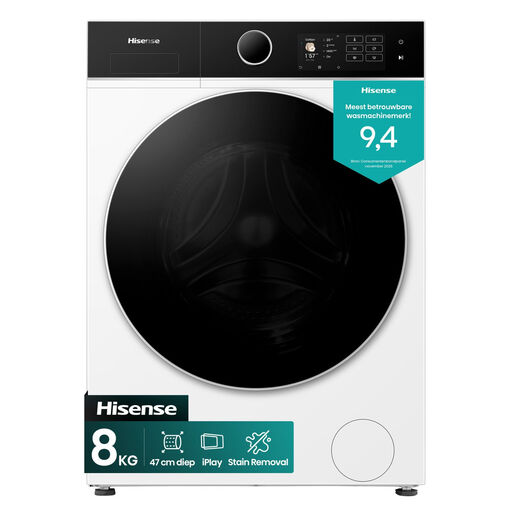 No image available
The stated depth may be important if space for a shared washing machine is limited.
8 kg; 1400 rpm; 47 cm deep; 72 dB during spinning. The product description lists app control and the Power Wash and Quicker Wash programme options.
 No image available
The description lists cotton and shirt programmes, as well as an extra rinse option to consider when comparing machines for cotton shirts.
8 kg; 1400 rpm; 76 dB(A) during spinning. According to the description, the Daily Xpress option takes 14 minutes and is intended for lightly soiled laundry.
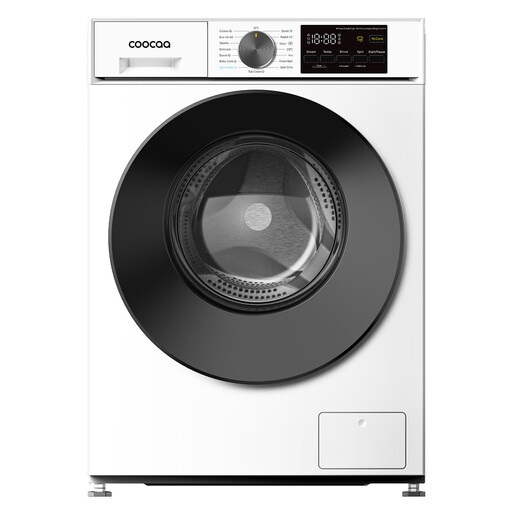 No image available
The stated 7 kg capacity may be worth considering if your shared laundry loads are smaller; check which programme is suitable for cotton shirts.
7 kg; 1200 rpm; 76 dB during spinning; 37 litres of water per cycle according to the product description. The description lists 15 programmes and a 15-minute Quick Wash for lightly soiled clothes, but doesn’t mention a separate cotton programme.
Only if the care label allows washing at 40 or 60 °C and the laundry is normally soiled. Eco 40-60 doesn’t mean the machine washes shirts at 60 °C. For heavily soiled items, or if rinsing is important, compare the standard cotton programme too. In a test of Eco 40-60, Consumentenbond noted a point to consider regarding rinsing.
Sort and weigh a typical shared cotton load, then compare its weight with the stated cotton capacity. Don’t choose based only on the number of people living in the house: separate small loads of shirts may not fill a larger drum properly.
Compare the spin noise in dB(A) on the energy label and make sure the floor is firm and level. Consumentenbond points out that the machine is particularly noisy during the spin cycle; the floor can also affect vibrations.
Check what type of water protection the model has and which leak scenarios it covers. According to Consumentenbond, different systems protect against different things. Also consider the connections and installation space in your home.
Check the connections and make sure the machine is installed on a stable, level surface, then agree who will maintain it. Milieu Centraal recommends running a 60 °C wash once a month; also follow the manual for your chosen model and the care labels on your shirts.