What should you look for?
First, weigh your usual cotton load. Then check the programme information, consumption figures and the space you have available. This helps you compare machines on the features that matter for your sheets and weekly schedule.
| What to consider |
What should you check? |
Who is this most important for? |
| Room for your load |
Weigh a typical, sorted cotton load and check that the sheets fit loosely in the drum. |
If I want to wash sheets with my usual weekly laundry, I need enough room without choosing a drum that’s usually too large. Around 36% of consumers prioritise load capacity above all else. |
| Scheduling wash cycles |
For the exact model, compare the duration and maximum load capacity of the cotton, eco and any quick programmes. |
I want to fit a suitable sheet wash into a busy week; a quick programme is only practical if its permitted load capacity is right too. Around 29% of consumers prioritise scheduling wash cycles. |
| Energy and water consumption |
Compare the kWh per 100 cycles and water consumption on the energy label; bear in mind that these figures relate to the eco programme. |
If I wash bedding often, I want to factor in consumption without choosing a programme that isn’t suitable for the care label or the temperature I want. Around 21% of consumers prioritise consumption. |
| Installation space and connections |
Measure the available space and access route. Also check the installation instructions for the floor, water supply, drainage and socket. |
If I need to sort out the installation first, I want to be sure the machine will fit and can be connected. Around 14% of consumers say installation space is their main consideration. |
Brands to consider
These models illustrate a range of capacities and features. The specifications apply to the versions mentioned and aren’t a general assessment of the entire brand.
Bosch
According to Bosch Netherlands, the Bosch WGG244ZANL is a Dutch-market front-loading washing machine with a stated capacity of 9 kg and a maximum spin speed of 1400 rpm.
- Bosch Netherlands lists dimensions of 845 × 598 × 588 mm and an add-item function for this model.
- Check that the external dimensions fit your available space and that the cotton programme is suitable for your load.
LG
According to LG Netherlands, the LG F4X1009NWK is a front-loading washing machine with a stated capacity of 9 kg and features that include ThinQ.
- For this version, LG lists Inverter Direct Drive, ThinQ, and a steam and Allergy Care programme.
- The feature names don’t prove that a steam programme can replace a regular cotton wash for sheets; compare the programme information with your needs.
Beko
Beko Netherlands lists a capacity of 8 kg and a maximum spin speed of 1400 rpm for the BM3WFU38412CW; the B3WM4961W is a 9 kg version.
- The two models listed offer different stated capacities to compare with your own load.
- An EnergySpin claim uses a specific comparison model and isn’t a general comparison with other brands.
AEG
AEG lists a capacity of 9 kg, energy class A and a maximum spin speed of 1400 rpm for the LR7694E4.
- The stated external dimensions are 847 × 596 × 602 mm.
- AEG’s steam refresh function for clothes doesn’t prove that it will wash sheets clean.
Washing machines at Joybuy
Below are washing machines available at Joybuy with a range of stated capacities. Compare these with your weighed cotton load, and check the manual to make sure the programme you choose is suitable for sheets.
 No image available
Samsung WW90DG6U25LE, 9 kg
The stated capacity of 9 kg may suit a larger cotton load; weigh your usual laundry and check that the sheets can move freely.
The product name lists 1400 rpm, energy class A and Wi-Fi (SmartThings).
View at Joybuy
 No image available
Bosch WGB2440BFG Serie 8, 9 kg
The stated capacity of 9 kg is a useful comparison point for a larger cotton load; also check the permitted load for the programme you plan to use.
The product name lists a maximum spin speed of 1400 rpm and energy class A.
View at Joybuy
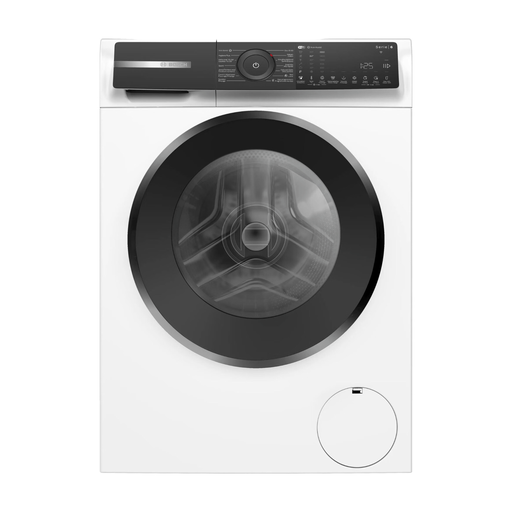 No image available
Bosch WGH25605FG Serie 6, 10 kg
The stated capacity of 10 kg is worth considering if it genuinely suits your load; compare it with your usual laundry to avoid an unnecessarily large drum.
The product name lists a maximum spin speed of 1600 rpm and energy class A.
View at Joybuy
 No image available
Midea MF110W80BA10/W-NL, 8 kg
The stated capacity of 8 kg may suit a smaller load; weigh your usual laundry and check the programme load capacity for bedding.
The product name lists 1400 rpm and 16 wash programmes.
View at Joybuy
 No image available
Candy GD 48B9-S, 8 kg
The stated capacity of 8 kg may suit a smaller cotton load; check the maximum load and duration of the programme you want to use for your sheets.
The product name lists 1351 rpm and energy class A.
View at Joybuy
Frequently asked questions
Can you wash cotton sheets on Eco 40-60 if you want a wash at 60 °C?
Not based on the programme name alone. According to the Dutch Consumers’ Association, the temperature actually reached can vary from one machine to another. If the care label allows 60 °C and you want to wash at that temperature, choose a suitable cotton programme.
How do you work out the load capacity you need?
Sort and weigh what you usually wash together. The stated load capacity applies to a cotton wash; also check that the sheets fit in the drum without being crammed in.
Can a quick programme wash a full load of sheets?
It depends on the maximum load for the programme on the exact model. The Dutch Consumers’ Association notes that special programmes often don’t allow a full drum, so check the manual before planning your load.
What should you check before running the first wash?
Follow the installation instructions: check the installation space, remove the transit bolts, level the machine, and check the requirements for the water supply, drainage and an earthed socket.
What does a washing machine’s energy label tell you?
The energy label provides information about the consumption of the specified programme. The Dutch government states that household appliances must carry a label, and that washing machine labels also provide information about water use; the label doesn’t automatically describe the consumption of every other programme.


