First, measure whether width, depth or space in front of the door is the main constraint. Then choose a drum that can accommodate your usual load of cotton sheets. A top-loading machine may suit a narrow alcove, a shallow front-loader may work where depth is limited, and a standard front-loader may be an option if space allows. Remember to allow room for connections and for the lid or door to open.
Who is this advice for?
Washing in a narrow alcove
You have limited width or space in front of the machine and want to check whether a top-loader will fit and has enough room for your sheets. The Consumentenbond describes top-loaders as narrower than conventional front-loaders.
Washing in a shallow space
There is enough width for a front-loader, but the appliance depth, hoses and door opening all need to fit within the available space. The Consumentenbond also recommends measuring for the hoses and door.
Washing sheets regularly
You want a drum that suits your usual load of cotton sheets. The Consumentenbond says the stated load capacity applies to cotton washing; Milieu Centraal recommends avoiding a machine that is unnecessarily large for your needs.
What should you look for?
Narrow top-loader
Choose this option if: width or space in front of the machine is limited and the top lid can open freely.
Bear in mind: the space needed above the machine and whether the capacity of the specific model suits your load of sheets.
Shallow front-loader
Choose this option if: you have around 60 cm of width, but depth is limited and the door can open in front of the machine.
Bear in mind: you’ll need extra room for the hoses and door; the stated appliance depth is not the total space required for installation.
Standard front-loader
Choose this option if: the width, depth and door opening all fit, and the drum suits your usual sheet-washing load.
Bear in mind: it takes up more space; extra capacity is not necessarily useful if you usually run the drum half full.
| What to consider |
What to look for when buying |
Who should consider this? |
| Width and access |
Measure the alcove and check that the door or top lid can open fully. |
If the alcove is narrow or there is little space in front of the machine, you’ll want unobstructed access to the drum. Around 36% of consumers prioritise width and access. |
| Room for sheets |
Weigh a typical load and compare it with the load capacity, drum and opening. |
If you wash cotton sheets regularly, you’ll want to wash them without cramming them into an overfull drum. Around 29% of consumers prioritise having enough practical space for a load of sheets. |
| Depth and energy use |
Compare the appliance depth, including the room needed for connections, and check the information on the energy label. |
If the space is shallow and you wash regularly, you’ll want to compare models that fit and check their labelled energy use. Around 21% of consumers prioritise depth and energy use. |
| Connections and installation |
Check the water supply, drainage, earthed connection, and delivery and installation terms. |
If there is little room to position or connect the machine, you’ll want to know in advance what’s involved in setting it up and installing it. Around 14% of consumers prioritise positioning and installation. |
Common mistakes
-
Measuring only the appliance depth
Hoses and an open door also take up space, so a machine that seems to fit on paper may not be practical to use.
Measure the full set-up, including connections and the clearance needed for the door or top lid.
-
Assuming a higher load capacity means a better wash
The stated load capacity applies to cotton washing, but on its own it doesn’t tell you whether your sheets will fit comfortably in the drum. The Consumentenbond points out that washing in a large machine when it is half full may not get clothes as clean.
Weigh a typical load of sheets and check the drum and opening too; don’t choose based on a bigger number alone.
-
Confusing old-appliance collection with installation
The Dutch take-back scheme requires the collection of a similar old appliance, but this does not automatically include disconnection or installation.
Check the arrangements for delivery, positioning, connection, disconnection and collection separately.
Brands to consider
AEG
The AEG LTR6162K is an example of a top-loader for an alcove with limited width.
- AEG lists this model as 397 mm wide, with a 6 kg capacity and a cotton programme.
- Check that the lid can open freely and that the drum can accommodate your load of sheets.
Haier
The Haier HW80-BP14929A-S is an example of a front-loader with a stated appliance depth of less than 50 cm.
- Haier lists this model’s dimensions as 595 × 477 × 850 mm and its capacity as 8 kg.
- The stated depth is the appliance measurement; allow space for connections and the door too.
Bosch
The Bosch WAN2827CNL is a standard front-loader to compare if your laundry space has enough room.
- Bosch lists this model’s dimensions as 845 × 598 × 590 mm and its capacity as 8 kg.
- These stated dimensions don’t automatically make this model suitable for a shallow alcove; they are product specifications, not the results of an independent test.
Whirlpool
Whirlpool describes top-loaders as an option when space is limited.
- A top-loader may be worth considering if width or space in front of the machine is the main constraint.
- Check the external dimensions and capacity of each model; this general product information does not prove that all Whirlpool washing machines perform in a particular way.
TCL
TCL offers front-loaders that you can compare by model for dimensions and capacity.
- The manufacturer’s website features several front-loader ranges to explore by model.
- That doesn’t mean every TCL front-loader is shallow or will fit your alcove; check the dimensions and capacity of the specific model.
Washing machines at Joybuy
These washing machines are options to compare for washing cotton sheets in a compact laundry space. For each model, check the stated capacity and dimensions, as well as the space needed for the connections and door.
 No image available
Midea MF110W80BA10/W-NL
Compare the stated capacity with your usual load of cotton sheets and the space available in your laundry area.
8 kg; 1400 rpm; 16 wash programmes.
View at Joybuy
 No image available
Candy GD 48B9-S
Compare the capacity with your usual load of sheets and check that the machine fits in your laundry space with the door open.
8 kg; 1351 rpm; energy class A; steam function.
View at Joybuy
 No image available
Beko BM3WFU38412CW
Compare the stated capacity with your load of sheets and measure the available space, including room for the door and connections.
8 kg; 1400 rpm; energy class A.
View at Joybuy
 No image available
TCL FF1006WB0
The stated depth may be useful to know if your laundry space is shallow; also measure the room needed for connections and access.
6 kg; stated depth 45 cm; energy class B; 15-minute quick wash programme.
View at Joybuy
 No image available
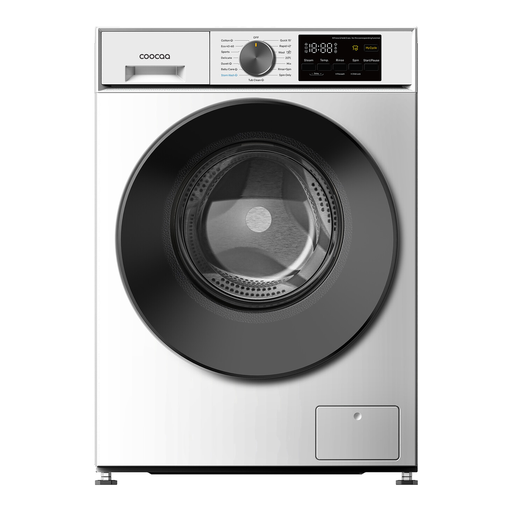
Coocaa Galaxy A3 Series F802A3ABC0
If you’re considering a front-loader, compare the stated capacity with your usual load of sheets and allow space for the door.
Front-loader; 8 kg; energy class A.
View at Joybuy
Frequently asked questions
How can I tell if my cotton sheets will fit in the drum?
Weigh your usual sorted load and look at the drum and opening as well as the maximum load capacity. According to the Consumentenbond, the stated load capacity applies to cotton washing; don’t cram bulky sheets into a full drum.
Can I always wash sheets on eco 40-60?
No, always follow the care label first. The eco 40-60 programme is designed for normally soiled cotton that the label says can be washed at 40 or 60 °C.
What should I check before using the machine for the first time?
Follow the instructions for your specific model. Bosch recommends, among other things, a stable surface, suitable water supply and drainage, an earthed socket and removing the transit bolts; also check for leaks.
Does the retailer have to take away my old washing machine when I buy a new one?
When you buy a new, similar appliance, the retailer must take away the old one free of charge under the Dutch take-back scheme; this also applies to online purchases. Disconnection and installation are not automatically included.
Who should I contact if my washing machine is faulty?
In the Netherlands, the retailer is your point of contact if a product you bought is faulty. According to the Dutch government, the retailer cannot simply send you to the manufacturer; this is separate from any additional warranty.


