
Narrow laundry space
You have limited width or little room in front of a front-loader, but can keep the top of the machine clear. The Consumers' Association highlights the space needed to open a top-loader as an important consideration.


First, measure the available space, including room for hoses and for opening the door or lid. Then weigh the cotton sheets you usually wash together. A shallow front-loader works well when depth is limited, while a top-loader can be a good option if width is restricted. A washer-dryer is worth considering if you also want to dry your sheets in the same space; check the separate washing and drying capacities.
You have limited width or little room in front of a front-loader, but can keep the top of the machine clear. The Consumers' Association highlights the space needed to open a top-loader as an important consideration.
There is room in front of a front-loader, but it needs to be shallow without having a drum that is too small for the cotton sheets you usually wash together.
You want to wash and tumble-dry cotton sheets, but do not have space for a separate dryer. If so, check the difference between the washing capacity and the capacity for a complete wash-and-dry cycle.
Best for: limited depth, provided there is enough room for its width and door.
Bear in mind: the cabinet depth is not the full space required; allow for hoses and the door opening.
Best for: a narrow space or limited room in front of the machine, provided the lid can open fully.
Bear in mind: keep the top clear so you can open and operate it.
Best for: a space that can accommodate the width, depth and door opening of your chosen model.
Bear in mind: this will not solve the problem if your alcove is too narrow; measure the whole installation space.
Best for: situations where you want to dry your washing too, but do not have space for a separate dryer.
Bear in mind: drying capacity may be lower than washing capacity. Milieu Centraal recommends separate appliances if you have room, as they use less energy together than a washer-dryer.
| Consideration | What should you check? | Who is this important for? |
|---|---|---|
| Installation space and access | Measure the width, height and depth, allowing for hoses and the space needed to open the door or lid. Follow the model's installation instructions. | If the alcove is narrow or the machine will stand close to a wall, you will want to be sure it fits and can be opened; around 36% of consumers put physical fit first. |
| Load capacity for cotton sheets | Weigh the load you usually wash together and compare it with the stated cotton capacity. The Consumers' Association suggests choosing around 2 kg above your usual weighed load as a guide, not as a fixed minimum. | If you want to wash sheets together without cramming them into a drum that is too small, use your usual load as a guide; around 29% of consumers prioritise having enough capacity for sheets. |
| Energy and water use | Compare kWh per 100 Eco 40-60 cycles and water use per cycle on the same basis. Energy-label figures are based on Eco 40-60; check the manual for other programmes. | If you expect to use a machine frequently, you will want to compare its energy use on the label; around 21% of consumers make running costs their first consideration. |
| Drying in the same space | Check washing and drying capacities separately, then compare the capacity for a complete wash-and-dry cycle with your own load of sheets. | If there is no room for a separate dryer, you will want to know whether your sheets will fit in one continuous cycle; around 14% of consumers prioritise drying in the same space. |
Hoses and an outward-opening door or top lid need extra space beyond the stated cabinet dimensions.
Measure the alcove and the clear space needed to use the machine, and check the manual for your chosen model before ordering.
The stated capacity applies to cotton. A large drum is not automatically the right choice if your usual loads are much smaller.
Weigh the sheets you usually wash together and compare that load with the cotton capacity and the size of the door opening.
According to Bosch, the Bosch WNA13400EU has an 8 kg capacity for washing alone, while the capacity for washing and drying in one cycle is up to 5 kg.
With a washer-dryer, check both capacities and compare the drying capacity with your own load of sheets.
This may mean splitting a load or running an extra drying cycle.
The LTR7573A top-loader is a specific model to consider if width and space in front of the machine are key factors.
The BM3WFU3741W is an example of a front-loader for anyone looking to keep the depth to a minimum.
The WGE02404NL is an example of a standard front-loader. The WNA13400EU shows why you should check washing and drying capacity separately for a washer-dryer.
These product picks focus on washing cotton sheets with a suitable capacity, including front-loaders for spaces where depth is a consideration.
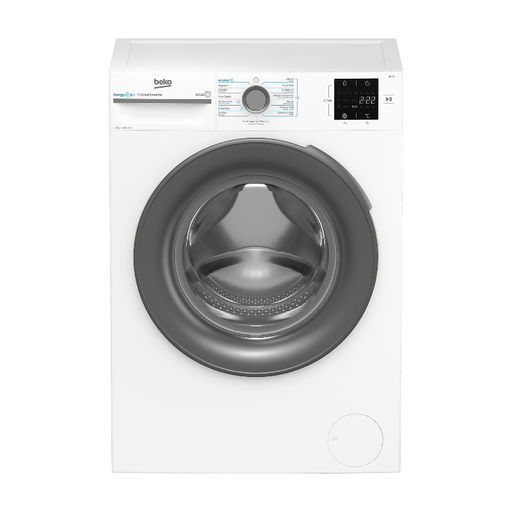 No image available
The listed cotton programme and capacity make this model worth comparing with the weight of your load of sheets.
Capacity: 7 kg. The product information lists 15 programmes, a cotton programme and 1400 rpm.
As a front-loader, this model needs space for the door and hoses; measure the full installation space.
 No image available
The stated design depth and capacity make this model worth considering if you are looking for a shallow front-loader for cotton sheets.
Capacity: 7 kg. The product information lists a design depth of 400 mm and 16 programmes.
As well as the stated design depth, check the space needed for hoses and the door opening.
 No image available
The stated dimensions and capacity give you concrete details to compare with your available space and load of sheets.
Capacity: 7 kg. Stated dimensions: 595 × 440 × 850 mm. The product information lists 15 programmes.
Also measure the space needed for the door and hoses; the stated dimensions alone do not give the full installation space required.
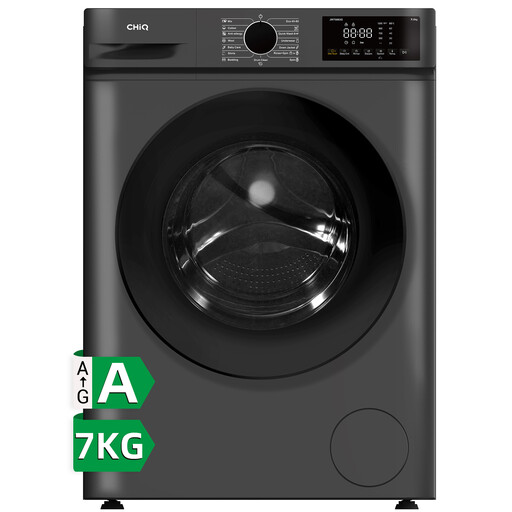 No image available
The stated depth and capacity make this model worth comparing if your space is shallow and your load of sheets is within 7 kg.
Capacity: 7 kg. The product information lists a depth of 47 cm and 16 programmes.
As well as the cabinet depth, check the clear space needed for hoses and the door.
 No image available
With a stated capacity of 8 kg, this model is worth considering if your weighed load of sheets fits and the machine's dimensions suit your space.
Capacity: 8 kg. Stated dimensions: 847 × 596 × 577 mm. The product specifications list 47 kWh per 100 Eco 40-60 cycles and energy class A.
As a front-loader, this model needs space for the door and hoses; compare label figures on the same test basis.
Weigh the sheets you normally wash together and compare the load with the stated cotton capacity. Also check the drum and door opening. The Consumers' Association suggests choosing around 2 kg above your usual weighed load as a guide to help prevent overloading.
You can if the care label allows washing at 40 or 60 °C and the sheets are normally soiled. The programme name does not mean the water actually reaches 60 °C; for other washing needs, follow the fabric care label and the manual.
Follow the manual for your chosen model. For its machines, Bosch recommends, among other things, a stable surface, accessible water supply and drainage, an earthed socket, removing the transit bolts and checking for leaks after connection.
No. According to the Government of the Netherlands, there is no fixed statutory guarantee period in the Netherlands: you are entitled to a product that meets what you can reasonably expect of it. If a product is faulty, contact the seller; the manufacturer's guarantee is separate.
Yes. According to the Government of the Netherlands, the old-for-new scheme also applies to private purchases made online. The seller must take back a similar old appliance free of charge; arrange the practical details of the handover when your new machine is delivered.