Who is this guide for?

Tenants with a narrow space for a washing machine

You want to know whether the machine, hoses and doorway will fit. The Consumers’ Association describes top-loaders as narrower than front-loaders; if you choose a top-loader, make sure there is also enough clearance above it.

People washing larger sets of sheets

You want to wash your usual dry load of cotton sheets without cramming them into the drum. The Consumers’ Association points out that the stated load capacity applies to a cotton wash.

Tenants unsure about their connections

You want to check in advance that the water supply, drain and electricity supply are suitable, and whether installation would require alterations to the rented property. The Dutch Government explains when changes to a rented property may require permission.

What should you look for when choosing?

Narrow top-loader

Choose this option if: width is your main constraint and your load fits within the cotton programme’s limits.

Keep in mind: you will need space above the machine to open the lid. AEG Netherlands lists the AEG LTR6363A as 397 mm wide, with a capacity of 6 kg.

Shallower front-loader

Choose this option if: you have around 60 cm of width but limited depth, and want the stated drum capacity to suit your sheet-washing load.

Keep in mind: the cabinet depth is not the full depth needed for installation; allow for the hoses and the open door. Beko lists the BM3WFU38412CW as having a cabinet depth of 54,6 cm.

Standard front-loader

Choose this option if: there is enough room for the machine and access to it, and the drum suits your usual cotton load.

Keep in mind: measure the space in front of the door too. Bosch lists the WGE03408NL as 598 mm wide and 588 mm deep.

What to consider What should you check? Who is this important for?
Fit and access Measure the recess, access route, space behind the machine and clearance for the door to open. Compare these measurements with the exact model’s dimensions. If I have a narrow recess, I want to know whether the machine will fit, along with the space needed for the hoses and opening. Around 31% of consumers make fit and access their top priority.
Room for cotton sheets Weigh a typical dry load and check the cotton programme’s maximum load and how much room there is when loading the machine. I want to fit my usual load of sheets without cramming them in, with a capacity that suits my load. Around 25% of consumers put drum capacity first.
Connections and installation Check the tap, drain, earthed socket and floor. Discuss any necessary alterations to the rented property with your landlord in advance. If I am unsure about the facilities, I want to know whether the machine can be installed without making an unwanted alteration to my rented home. Around 19% of consumers say connections and installation are their main concern.
Noise and vibration Compare the spin-noise ratings of the exact models and check that the machine can stand level and stable. If my washing machine is close to my living or sleeping area, I mainly want to minimise disruption during the spin cycle. Around 13% of consumers put noise and vibration first.
Energy use and additional costs Compare energy and water figures on a like-for-like basis, and ask separately about any installation costs. I want to take running costs into account and find out in advance about any additional costs for installation. Around 12% of consumers put energy use and additional costs first.

Common mistakes

  • Measuring only the cabinet width

    Hoses, the access route and the open door or top lid all need extra space. A model that seems to fit based on the recess width alone may not be suitable for the space.

    Measure the route to the washing machine space and the clearance around the exact model before ordering. The Consumers’ Association advises allowing for hoses, the door and ventilation.

  • Assuming a larger drum is always better

    The stated capacity alone does not tell you whether your usual load of sheets will fit in the drum without being crammed in. A larger drum is not automatically an advantage for small loads.

    Weigh your usual dry load of sheets, check the cotton programme’s maximum load and make sure the sheets will fit easily into the drum.

  • Treating top-loaders and front-loaders as interchangeable

    A top-loader needs space above it for the lid to open, while a front-loader needs enough room for the door. The two types therefore need different amounts of clearance.

    First work out which way space is limited, then choose a model to suit your usual load of sheets.

  • Treating the guarantee, installation and collection as one service

    Statutory consumer rights, any manufacturer’s guarantee, installation and collection of an old appliance are separate matters. The Dutch Government explains statutory consumer rights separately from additional guarantees and the old-for-new scheme.

    Ask separately about installation terms and remember your statutory rights if a product is faulty. According to the Dutch Government, the old-for-new scheme applies when you buy a similar new appliance and hand in your old one.

    Installation may be charged separately. Ask in advance how much installation and any additional work will cost.

Brands worth comparing

AEG

The LTR6363A is a top-loader for a washing space where width is limited.

  • AEG lists this model as 397 mm wide, with a capacity of 6 kg and a cotton programme.
  • Check whether 6 kg is enough for your load of sheets and whether there is enough clearance above the lid.

Beko

The BM3WFU38412CW is a front-loader for comparing cabinet depth and stated capacity with the space available and your laundry load.

  • Beko lists this model as having a cabinet depth of 54,6 cm and a capacity of 8 kg.
  • Allow for the hoses and the open door when measuring; cabinet depth alone does not determine whether the machine will fit.

Bosch

The WGE03408NL is a front-loader to consider if a standard-width machine will fit in your washing space.

  • Bosch lists it as 598 mm wide, 588 mm deep and with a capacity of 8 kg.
  • Bosch states that this model does not have AquaStop. Check whether this feature matters to you.

Whirlpool

Whirlpool offers a range of top-loaders to include in your comparison if this style suits your space.

  • The range gives you another brand to consider when comparing top-loaders.
  • Dimensions and capacity may vary by model, so check the details for the exact model.

Compare Joybuy products

Compare these Joybuy washing machines by their stated dimensions and capacity for washing cotton sheets in a compact home.
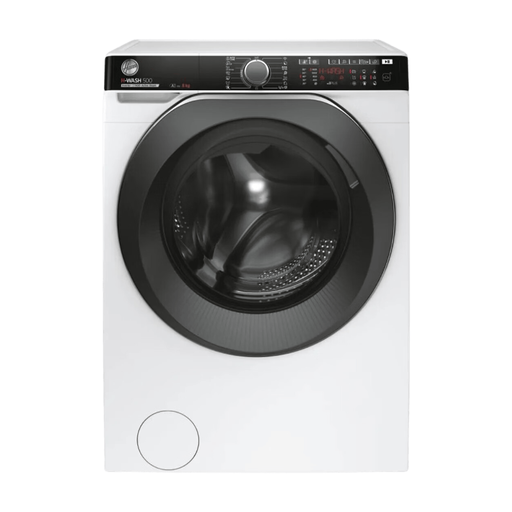
Hoover HWP 48AMBC7/1-S washing machine

Hoover HWP 48AMBC7/1-S

A front-loader to consider if its stated capacity suits your usual load of sheets.

Capacity: 8 kg; cotton programme; dimensions: 600 × 540 × 850 mm.

View at Joybuy

Midea MF110W80BA10/W-NL washing machine

Midea MF110W80BA10/W-NL

Compare the stated load capacity and programmes with your own cotton-sheet washing needs.

Capacity: 8 kg; cotton and bedding programmes; dimensions: 850 × 595 × 475 mm.

View at Joybuy

Beko BM3WFU38412CW washing machine

Beko BM3WFU38412CW

An option to consider if the available width and depth suit the space, and its stated load capacity is right for your sheets.

Capacity: 8 kg; cotton programme; dimensions: 84,5 × 60 × 54,6 cm.

View at Joybuy

TCL FF1006WB0 washing machine

TCL FF1006WB0

Compare the stated depth with the space available, and check that the capacity suits your dry load of sheets.

Capacity: 6 kg; stated depth: 45 cm.

View at Joybuy
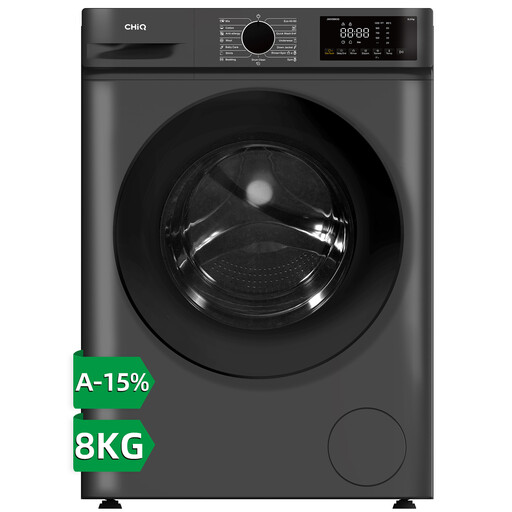
CHiQ JW85883G washing machine

CHiQ JW85883G

A model to consider if its stated capacity suits your load of sheets and the cabinet depth fits the space.

Capacity: 8 kg; stated cabinet depth: 52 cm.

View at Joybuy

Frequently asked questions

Do you need your landlord’s permission to install a washing machine?

Not simply because you want to install a washing machine. According to the Dutch Government, you do not need permission for a minor alteration that can be reversed without significant cost. If a change is not easy to reverse, discuss it with your landlord beforehand and check what applies in your circumstances.

Can you always wash sheets on eco 40-60?

Only if the care label says the sheets can be washed at 40 or 60 °C and they are normally soiled. The European Commission describes eco 40-60 as a programme for normally soiled cotton that can be washed at 40 or 60 °C according to the care label. Check the programme’s maximum load too.

What should you check when installing the machine and moving house later?

Check the connections and make sure the floor is stable beforehand, then follow the model’s installation instructions. Remove the transit bolts as directed and keep them safe. The Consumers’ Association advises using them to secure the drum during transport.

Are you only entitled to a two-year guarantee in the Netherlands?

No. According to the Dutch Government, there is no fixed period for statutory consumer rights in the Netherlands. What you can expect from a product depends, among other things, on the product itself and normal use. If a product is faulty, contact the seller. A manufacturer’s guarantee or additional guarantee is on top of your statutory rights.

Can you hand in your old washing machine free of charge when buying a new one?

Yes. The Dutch Government describes the old-for-new scheme for a similar old appliance from a private individual, including when buying online. The seller must not charge for taking it back. Ask separately about the cost of disconnecting, positioning or installing the new machine.
