
Moving to a home with your own laundry space
You want to wash your sheets before you move, then use a machine that fits in your new home. Consider the load, dimensions, connections and transport.


Don’t buy a washing machine just for one load: first check whether an existing or shared machine is available and suitable for your load and the programme you want. If you also want to do your own washing after the move, match the drum capacity to your usual laundry load and measure both laundry spaces and access routes. The Consumentenbond advises against choosing a larger drum than you can usually fill. For your sheets, check the care label too: Eco 40-60 isn’t automatically the right choice if you need a particular level of hygiene.
You want to wash your sheets before you move, then use a machine that fits in your new home. Consider the load, dimensions, connections and transport.
You want to choose a programme that suits the care label and the level of cleaning you need. The programme name alone won’t tell you whether it’s suitable for your sheets.
You expect to do laundry regularly after the move too, and want to weigh up the drum capacity and energy use against your usual loads and the practicalities of installation.
| What to consider | What to check | Who is this important for? |
|---|---|---|
| Suitable drum capacity | Weigh a typical laundry load and consider how many sheets you wash together. Also check the maximum load for the programme you choose. | I want to wash my sheets without ending up with a drum that’s too large for my usual laundry loads. Around 33% of consumers put choosing a suitable drum capacity first. |
| Space and transport | Measure the height, width, depth and access routes at both locations; check the connections and the transport instructions in the manual. | I want to be sure the machine will fit in both my current and new laundry space and can be moved safely. Around 27% of consumers pay most attention to installation and transport. |
| Cleaning your sheets | Read the care label and check which cotton or hygiene programmes the model offers and what load is allowed for each. | I want to choose a programme that suits both the care label and the level of cleaning I need. Around 27% of consumers prioritise this. |
| Energy use and running costs | Compare energy and water use on the same label basis. Check separately what delivery and installation include. | I want to know how much the machine uses on the programmes I choose and what I need to arrange for installation. Around 13% of consumers focus mainly on energy use and additional purchase costs. |
The energy label provides information about Eco 40-60; a different programme may use more or less. The Consumentenbond therefore advises against using the label to predict the energy use of every cotton wash. The European Commission describes Eco 40-60 as intended for normally soiled cotton that, according to its care label, can be washed at 40 or 60 °C. If hygienic cleaning is needed, check whether the care label allows a standard cotton programme at 60 °C or a suitable hygiene programme.
A large drum isn’t automatically the right choice if you usually don’t fill it for everyday laundry.
Weigh a typical laundry load and work out separately how you’ll split your sheets across washes before choosing the drum capacity.
The programme name doesn’t guarantee that the laundry will actually reach 60 °C. This can matter if you need a particular level of cleaning.
Follow the care label and check which programme and temperature the exact model offers.
Depth, access routes, connections and transport can also determine whether a machine will work in both laundry spaces.
Measure the available space and check in advance what you’ll need to arrange for delivery, installation and transport preparation.
The examples below relate to specific models and product ranges; they aren’t recommendations for an entire brand. Always check the dimensions and features of the exact version.
The BM3WFU38412CW is a freestanding front-loading washing machine with an 8 kg capacity, a cotton programme and a stated depth of 54,6 cm.
According to Bosch, the Serie 4 WAN2827DNL has an 8 kg capacity, spins at up to 1400 rpm and measures 845 × 598 × 590 mm.
The 6000 ProSense LR6ALPHEN is an 8kg model with stated dimensions of 847 × 596 × 602 mm.
According to Miele, the WEA135 WCS 8kg Active has an 8 kg capacity, spins at 1400 rpm, and has a cotton programme and an extra rinse cycle.
These freestanding washing machines are for anyone who wants to do their own laundry after moving too. Compare the capacity with your usual load and check the available space, connections and care label.
 No image available
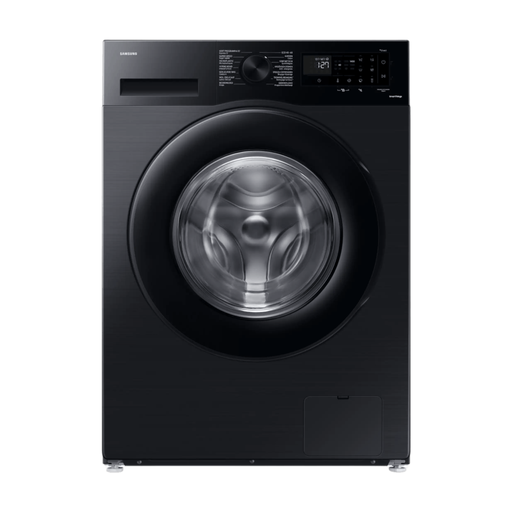
This freestanding front-loader could be a good fit if you’ll be doing laundry regularly after moving and your usual load suits its capacity.
The product information lists an 11 kg capacity, 1400 rpm, Eco 40-60, a cotton programme and a bedding programme. It also mentions automatic load detection and Hygienic Steam; check the care label and the programme conditions.
The product name mentions AI Ecobubble™, Wi-Fi and SmartThings.
 No image available
This freestanding model could be a good fit if you’ll be doing your own laundry after moving and 8 kg suits your usual load.
The product information lists an 8 kg capacity, 1400 rpm and 16 programmes, including cotton, bedding and Allergy Care. Check whether a programme suits the care label and the permitted load.
For this model, the product information specifies a 220–240 V connection with a 10 A circuit; check that these connection requirements suit your laundry space.
 No image available
This freestanding front-loader could be a good fit if you want to do your own laundry after moving and 8 kg suits your usual load.
The product information lists an 8 kg capacity, 1351 rpm, energy class A and 33 kWh per 100 Eco 40-60 cycles. It also lists 16 programmes, including quick cycles; check that the programme suits the care label and the load.
 No image available
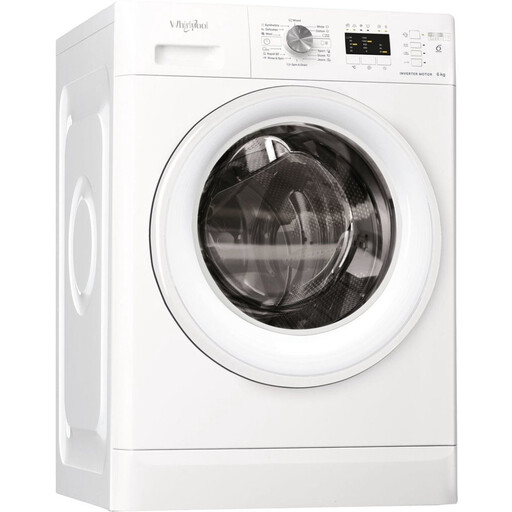
This front-loader could be a good fit if 6 kg suits your usual laundry load and the cotton programme is right for the care label on your sheets.
The product information lists a 6 kg capacity, 1200 rpm and dimensions of 59,5 × 57,5 × 84,5 cm. Measure the available space at both locations.
 No image available
The stated depth can help you compare it with your laundry space; choose this capacity only if it also suits your usual laundry load.
This freestanding model lists an 8 kg capacity, 1400 rpm and a depth of 54,6 cm. The product information mentions a cotton programme and Hygiene+; check the programme conditions against the care label.
Beko lists energy class A and 47 kWh per 100 Eco cycles. The stated spin noise level is 76 dBA.
Always check the care label first. Eco 40-60 is intended for normally soiled cotton that can be washed at 40 or 60 °C according to the label, but it doesn’t mean the laundry will necessarily reach 60 °C. If hygienic cleaning is needed and the label allows it, consider a standard cotton programme at 60 °C or a suitable hygiene programme.
Follow the manual’s instructions for preparing and transporting the machine safely, including using transit bolts where specified. Also check the access routes and connections at your new home. The Consumentenbond advises securing the drum with transit bolts during transport to prevent damage.
For purchases in the Netherlands, the Dutch government says the like-for-like take-back scheme applies to similar appliances: the retailer must take the old appliance free of charge, including for online purchases. Agree in advance how collection will work on delivery day; installation of the new machine is a separate service.
The label gives figures for Eco 40-60 and doesn’t automatically predict the energy use of a different cotton programme. Compare the energy and water figures on the same label basis, and bear in mind which programme you’ll actually use.
A manufacturer’s guarantee doesn’t replace your statutory rights. ACM ConsuWijzer explains that you have statutory rights as well as any retailer’s guarantee; contact the retailer if the product is faulty.