What should you look for when buying?
First, choose a drum that suits your usual total wash load and the space available. Then compare the programmes and their conditions with the care label and the time you have available.
| Factor to consider |
What to look for |
Who is this important to? |
| Washing cotton |
Check that the programme and temperature are suitable for the care label and level of soiling. |
If I want to wash the pyjama appropriately, I check its care label and the type of dirt. Around 33% of consumers say a suitable cotton-wash programme is their main buying priority. |
| Time until you can wear it again |
Check the permitted fabric types and load for quick programmes on each model; also look at the spin settings. |
If I need the pyjama again soon, I want to know whether a quick programme is actually suitable for this garment and load. Around 27% of consumers prioritise speed. |
| Consumption for small loads |
Choose a capacity that suits your usual wash load and compare energy-label figures on a like-for-like basis. |
If I often run small washes, I don’t want to choose a drum designed mainly for larger loads. Around 20% of consumers focus on capacity and consumption in relation to their own routine. |
| Where it will go at home |
Measure the machine, access route and installation space; check the connections and installation instructions. |
If space or access is limited, I want to know in advance whether the machine will fit and can be connected properly. Around 20% of consumers consider installation the most important requirement. |
Washing machines at Joybuy
This selection includes freestanding washing machines with a range of drum capacities and listed cotton, Eco 40-60 or quick programmes. For each model, check that the programmes and permitted load suit the care label and your usual washing routine.
 No image available
Midea MF110W80BA10/W-NL
Worth considering if you’re looking for cotton and Eco 40–60 programmes, and want the option of a quick cycle when it’s suitable for the load.
Capacity: 8 kg. Stated spin speed: 1400 rpm. Check the permitted load for each programme in the manual.
Joybuy
 No image available
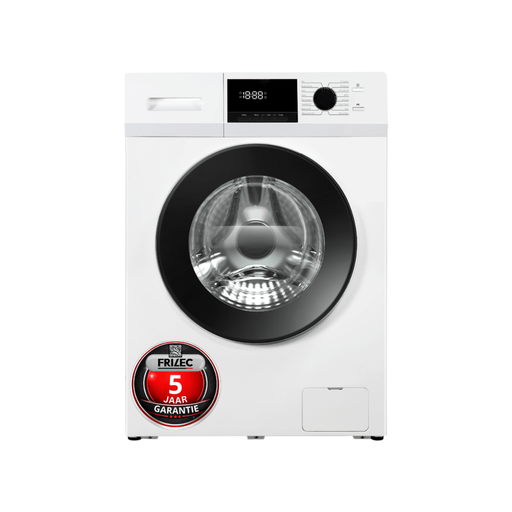
Frilec KOBLENZ8314WA-342
Worth considering if you want to compare cotton and Quick Wash programmes; first check whether the quick cycle is suitable for the pyjama and the load.
Capacity: 8 kg. Stated depth: 57,5 cm; also measure the access route and available installation space.
Joybuy
 No image available
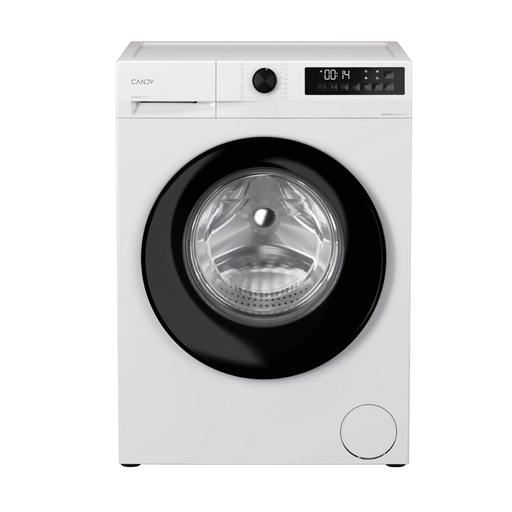
Candy GD 49B8-S
Worth considering if you want to compare different quick cycles; check which cycle is suitable for the care label and the amount of washing.
Capacity: 9 kg. Stated spin speed: 1351 rpm. Quick cycles range from 14 to 59 minutes; check the permitted load for each programme.
Joybuy
 No image available
Beko BM3WFU38412CW
Worth considering if you’re looking for cotton and Eco 40–60 programmes, and also want to assess a quick cycle for lightly soiled laundry.
Capacity: 8 kg. Stated spin speed: 1400 rpm. The 14-minute Daily Xpress cycle is designed for lightly soiled loads.
Joybuy
 No image available
TCL FF1006WB0
Worth considering if installation space is limited or a quick cycle is important; check that the programme is suitable for cotton and the load in question.
Capacity: 6 kg. Stated depth: 45 cm. The product name lists a 15-minute Quick Wash and energy class B.
Joybuy
Frequently asked questions
Does a cotton pyjama that has got wet always need to be washed at 60 °C?
No. Rainwater alone isn’t a reason to automatically choose 60 °C. Follow the care label and check how soiled the pyjama is; Milieu Centraal recommends 60 °C for specific hygiene situations, not as a general rule for clothes that have got wet.
Can I wash my cotton pyjama on Eco 40-60?
According to the European Commission, this programme is designed for normally soiled cotton that can be washed at 40 °C or 60 °C according to the care label. So check the label first and allow for a longer programme duration.
What should I check before using the machine for the first time?
Check the dimensions and connection options, and follow the installation instructions. The Consumers’ Association advises, among other things, removing the transit bolts before use, levelling the machine and correctly connecting the water supply, drain and earthed socket.
Who should I contact if my washing machine develops a fault?
In the Netherlands, the seller must offer a solution if the product doesn’t meet the terms of the purchase. The Dutch government makes clear that a manufacturer’s or additional warranty doesn’t replace this legal right.
Is an energy label required, and what can I do with my old washing machine?
The Dutch government states that household appliances must have an energy label. According to the government, you can return an old washing machine to the shop or online retailer where you buy a new, similar appliance, or take it to your local council recycling centre.


